- 4.1 “Without the latter’s consent …”
- 4.2 What can we do about Solzhenitsyn?
- 4.3 External costs
PART TWO
- 4.3 External costs (concluded)
- 4.4 The psychiatric Gulag
SOURCES
*
Judgement in Moscow (online)
*
4.3 External costs (concluded)
The tense relations with the Italian Communist Party were less noticeable and less public. They were no less dangerous, however, and they were also getting worse.
In August 1976, responding to a letter to Brezhnev about my case from Enrico Berlinguer, the PCI general secretary, the Politburo displayed the utmost respect and diplomacy (R 29 August 1976, St 22-15): “From your letter we may conclude that Italian comrades, apparently, do not have enough information about the anti-Soviet activities of Bukovsky.” After listing the usual “evidence”, the leadership wrote:” … As you see, Comrade Berlinguer, it is not a question of a way of thinking, but of specific anti-Soviet acts by a citizen who bears full responsibility for what he does. He is not in prison for his convictions and opinions. He was convicted not for ideas, but for acts that he has committed, and these have been punished by a court.”
Italian Communist Party
Over time the tone of the exchanges began to change. The PCI continued to participate in various human rights campaigns and the response grew sharper. In September the following year, Boris Ponomaryov and Vasily Kuznetsov reported to the Central Committee (R 27 September 1977, 14 pp – St 4407):
“a new wave in the anti-Soviet and anti-socialist campaign is building up in Italy, with the main emphasis on the so-called ‘dissidents’. Active preparations are under way for the so-called “Sakharov Hearings” in Rome (25-27 November), a “discussion about dissidents” in Florence, and an international exhibition of art in Venice (the Biennale) to promote the activities of the dissidents (15 November to 17 December).
“These demonstrations, organised by imperialist propaganda services, are timed to follow immediately after our main events marking the 60th anniversary of the October Revolution and are aimed at discrediting real socialism. Preparation for these events has the full approval of the Italian authorities, which clearly contradicts the spirit of the Helsinki Agreements. In several instances representatives of the Italian Communist Party are letting themselves be led by the organisers of the said events, joining in certain of them, and the Party press of the PCI includes various materials about “dissidents”, thereby objectively helping to intensify interest in them on the part of Italian society.”
The proposed plan of “informational and propaganda events to counteract anti-Soviet operations in Italy” included a wide range of measures. There would be official protests by the Soviet embassy; publications in the Soviet press; talks and presentations by Soviet journalists, writers and cultural figures on Italian TV; a week of Soviet films in Italy; and a delegation of Soviet writers would visit Italy and speak in public.
Subsequent events did not help to improve relations.
The trials of the Helsinki Group activists, the invasion of Afghanistan, the exiling of Sakharov to Gorky and the introduction of martial law in Poland, provided new reasons to disagree. By 1980 Moscow was already looking towards a split within the PCI and giving support to a group within the Italian Party “that has adopted positions friendly towards us and is critical of the erroneous actions of the PCI leadership” (R 2 September 1980, St 226/3).
*
This was only part of the costs the regime had to bear, due to its repressive policies, and it indicated how successful our campaign had been in the West. Communist Parties in Western Europe were not keen to sign up, but they could not afford to discredit themselves by standing on the side-lines. The public reaction was too strong for any politician to ignore.
Not surprisingly, the campaign very soon became a factor in international relations, as was shown by the 1974 Jackson-Vanik Amendment to the US Trade Act, and the addition of the “third basket” to the Helsinki Agreement. By the time Jimmy Carter became US President in 1977, human rights had become almost the key issue in relations between East and West.
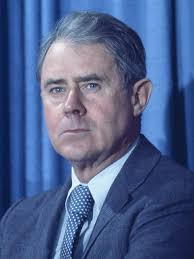
Cyrus Vance
Such a development was most undesirable for the USSR and threatened the country with political isolation. The Politburo sent instructions to the Soviet ambassador in Washington (18 February 1977*, Pb 46/X):
“Meet with Vance and tell him that you have been instructed to inform President Carter and the Secretary of State of the following. Such interference in our internal affairs may be made on the pretext of concern about “human rights”, but that does not change the essence of the matter.
“Naturally, everyone is entitled to his own view of things, including the state of freedom and human rights in one country or another. We have our own understanding of these issues and their current state in the USA. It is quite another matter, however, to introduce those views in relations between States, thereby complicating them…. It is not hard to imagine what would happen if, drawing on our own moral values, we began to link the development of relations with the USA and other capitalist countries with the real problems that exist in those countries, such as the unemployment of millions, the infringement of the rights of ethnic minorities, racial discrimination, the unequal position of women, the violation of citizens’ rights by State bodies, the persecution of individuals with progressive views, and so on.”
My meeting with President Carter took place exactly ten days after this démarche and, evidently, threw the Politburo into a panic. The Soviet leadership did not know how to react or what to tell the people.

Bukovsky with President Carter
Finally, TASS produced the draft statement the Politburo had instructed it to prepare (01 March 1977*, St 46/15):
“Reception at the White House
“Washington, 1 March (TASS). Today US President J. Carter received Bukovsky, a criminal expelled from the Soviet Union, who is also known as an active opponent of the development of Soviet-American relations.
“A spokesman for the White House announced that the conversation lasted for an hour and was conducted in a friendly atmosphere (this phrase to be corrected in accordance with the report from the White House, which will be made after 11 pm Moscow Time).”
That was how the announcement was printed in Soviet newspapers.
The uproar did not last long. By May of that year the entire Soviet machinery of “ideological warfare” was up and running. All the Friends and fellow-travellers went into action; every kind of blackmail, threat, promise and bribe was put to use.
The regime was fighting to the death for its “sovereign right” to send us to prison and psychiatric hospital or, as the mood took the Soviet leadership, to exile us within the country or deport us to another. Instructions about the “hullabaloo in the West over human rights” were sent by the Politburo to every Soviet ambassador and consul, signalling the start of the offensive (19 May 1977*, Pb 56/68):
“Recently a wide and coordinated campaign has unfolded in the West concerning the phoney ‘violations of human rights’ in the Soviet Union and other socialist countries.
“Those behind this outcry, which has a frankly provocative and demagogic character, are, as often in the past, first and foremost the reactionary, anti-communist and anti-Soviet forces in the USA and certain West European States. It is to be noted that in this instance official circles in Washington have zealously joined in the campaign, including the highest political echelons of the new American administration.
“Soviet embassies and other diplomatic missions must work in a determined and systematic fashion to decisively counteract this hostile campaign, actively exposing its demagogic and defamatory nature, which is a dangerous political trend for the cause of peace, denoting the interference in the internal affairs of other States…. This work must be carried out as an offensive, in close coordination with the embassies of fraternal countries, considering, naturally, the distinctive conditions of the country where you are serving, the position of its government and the political outlook of a certain audience or individual.”
There followed twenty pages of instructions, counter-arguments, specific measures and hidden threats. Those who represented the Soviet Union around the world were to
“Emphasise, above all, that such campaigns, naturally, are not capable of shaking to the slightest degree the stability of the socialist system, but can have a negative effect on the relaxation of tension [détente], obstructing the positive processes that have been taking place in international relations over the last few years …
“Refute assertions that the campaign about “human rights” which is hostile to the socialist countries and, in particular, public statements on this subject by certain highly-placed official figures in the West, are not interference in the internal affairs of other States but a form of ideological struggle, that the socialist countries themselves supposedly recognise….
“Emphasise that we indeed recognise the ideological struggle and the struggle between socio-political worldviews, and that this struggle does not cease in a period of international relaxation. Such a struggle, however, has nothing in common with the methods and tactics of ideological sabotage, and the creation of illegal organisations in other countries …
“Bearing in mind that the propaganda campaign inspired by Washington arouses a negative reaction in the ruling circles of several Western countries stress should be laid in all conversations about human rights on exposing what happens within the USA itself. Arguments should be skilfully used to discredit the attempts of the United States to present itself as a model of democratic rights and the supreme world arbiter …
“All the active staff of our embassies and diplomatic missions and our correspondents should be prepared for discussions about human rights, so that they will convey the facts to as many people as possible who have an influence on State policy and the public mood in the country where you are stationed …
“You must work systematically to uncover the weak areas in the policy and practice of Western countries in the field of human rights, paying particular attention to the corresponding legislation and judicial and penal practices of those countries and pass to the Centre suggestions as to how we can strengthen our propaganda counter-attack against Western countries that try to exert political pressure on us using the pretext of ‘defending human rights’.”
Western politicians could not long withstand such a concerted assault, especially when human rights, contrary to Soviet assertions, were merely a fashion in the West and not a long-term strategy.
Some in the West feared a return of the Cold War; others strove to preserve detente; President Carter dearly needed an agreement on a reduction in strategic weapons. If the Western campaign for human rights had not come to a halt by the end of that year it had certainly lost momentum. At the Belgrade Conference, summoned in November 1977 to monitor observation of the Helsinki Accords by the party-signatories, only those who spoke for NGOs were not afraid to criticise the USSR. Governments restricted themselves to generalised and vague formulas.
Why this happened we shall discuss later. For its part, the Soviet regime was ready to face enormous costs abroad to block the emergence of a peaceful and law-abiding opposition at home. It knew it could not endure even a symbolic opposition. There were attempts, naturally, to minimise these external costs. Repressive measures were used only in extreme situations, and reliance was placed on more covert forms of harassment and persecution (the abuse of psychiatry, “compromising measures”, deportation, and so on). Andropov formulated such a policy (29 December 1975*, 3213-A), soon after the signing of the Helsinki Accords:
“All the above confirms that our Party is pursuing the correct policy in its decisive struggle ‘to shield Soviet society from the actions of hostile elements’. Accordingly, State Security bodies will continue firmly to obstruct any anti-Soviet activities within our country …
“The KGB will be watching closely to make sure the so-called dissidents cannot create an organised anti-Soviet underground and carry out anti-Soviet activities, including those pursued from ‘legal positions’ … It is expedient to pursue the proven policy of a sensible combination of prophylactic and other KGB measures with criminal prosecution in those cases where this is essential.”
*
4.4: The psychiatric Gulag
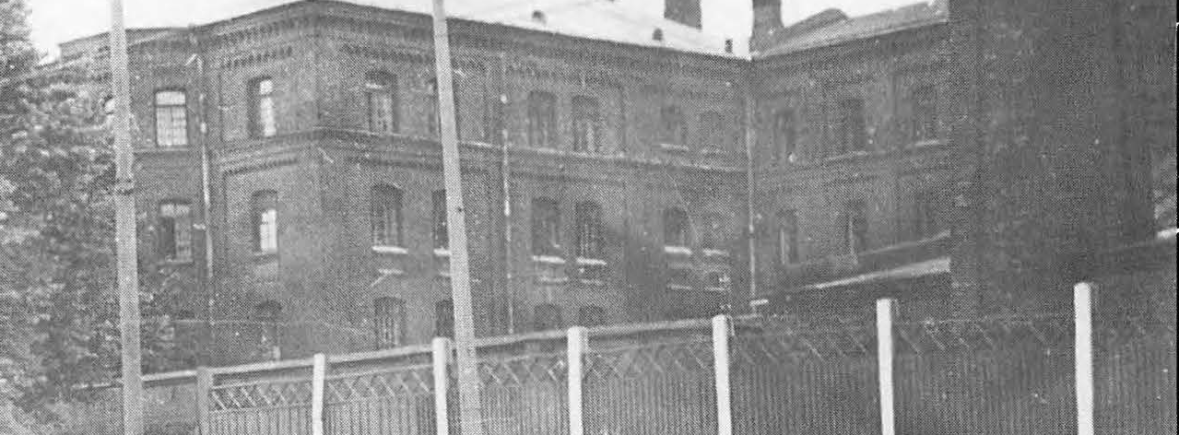
[Feature photo, Leningrad SPH]
As I searched through the Soviet archives I most wanted to lay hands on documents about the abuse of psychiatry. They were proving the hardest to find. Was my search being sabotaged – or did such evidence not exist?
Time passed and the deadline for my appearance before the Constitutional Court was approaching. I began quietly to panic. This should be my “star turn” and concerned one of the most malevolent crimes of the post-Stalin era, the “Soviet version of the gas chamber”, in Solzhenitsyn’s apt expression.
*
The subject was especially important to me. I had served my last sentence and been expelled from the USSR for exposing the Soviet abuse of psychiatry; it was a cause for which I continued to fight in the West and, at last, won a victory. I had no thought of ascribing success to myself alone. On the contrary, it was one of our achievements that a vast number of psychiatrists, legal experts, and public figures from all over the world joined the campaign against punitive psychiatry.
Whatever the political climate, the campaign continued to grow, reaching its peak in 1977 when the World Congress of Psychiatrists, meeting in Honolulu, condemned Soviet abuses. It did not then fade away as happened with other campaigns, but continued to exert a constant influence on world public opinion. In 1983, the Soviet delegation was expelled from the Congress: or, rather, those representing psychiatry in the USSR left because they realised that expulsion was inevitable.

World Psychiatric Association
It was the most convincing victory of our glasnost. I started the campaign and risked my life for it, but I did not know whether my hunches were correct. In 1970, I sent material to the West about six political prisoners held in psychiatric hospitals: there was no doubt they were sane. Yet I did not and could not know whether our treatment was coincidence, a local initiative by the authorities or the KGB, or a deliberate policy of the Soviet regime. All we had was guesswork and indirect evidence. We knew, for instance, that a first wave of “psychiatric” repression took place under Khrushchov, soon after 1959 when he declared that there were no political prisoners in the USSR, only mentally ill people. The confirmation was purely empirical: I was confined to the madhouse in 1963 and saw it functioning for myself. After Khrushchev was removed the wave retreated for a while, only to return in late 1968, early 1969. At least, a fair number of our friends were sent to psychiatric hospitals at that time.
It was easy to guess why these waves came and went. A growth in popular dissatisfaction and protest met with a reluctance by the Soviet authorities to increase visible levels of repression (and external “costs”) during periods of detente. This made sense and fitted the evidence, but remained no more than speculation. The suggestion that the Politburo had no understanding of psychiatry and simply “trusted the doctors” could not be rejected.
What would I do if no documents appeared? Perhaps they did not exist, just as documents directly concerning the “Final Solution of the Jewish problem” were not found in the archives of the Third Reich. In the end, what I found exceeded my expectations.
xxx
The response to our Pushkin Square protest on 22 January 1967, for instance, was not entirely straightforward. The day after we were picked up, KGB Chairman Semichastny and Procurator-General Rudenko reported to the Politburo (27 January 1967*, Pb 32/5):
“Since 1965 there have been repeated attempts to organise various gatherings and provocative protests in Moscow, in support of Sinyavsky and Daniel, in ‘memory of the victims of Stalinism’, or making demagogic demands for laws to be reconsidered. …
“A group of 35-40 people has emerged which is carrying out its politically harmful activities by preparing and distributing anti-Soviet literature and organising various types of demonstration and gathering. The group’s participants transmit an appeal to the Western press, which publishes the materials they prepare, trying to distribute them across the Soviet Union.”
After providing a detailed account of our actions, and a list of our surnames and of those who, in their opinion, had encouraged us to demonstrate, they wrote, as if in passing:
“It should be noted that several of these people are mentally ill. The hostile activities of former Major-General Grigorenko, P.G. (b. 1907) and Volpin, A.S. (b. 1924), who were earlier charged with criminal offences and released in connection with their mental illnesses, have also been documented.”
They then listed the usual propaganda and prophylactic measures:
“Since we believe that bringing criminal charges against the said individuals will provoke a definite reaction within the country and abroad, we suggest it would be expedient to instruct the Central Committee Propaganda Department and the Moscow City Committee of the CPSU to carry out the necessary educational work at industrial enterprises, offices and, especially, among students, including speeches by Party officials, authoritative propagandists, leading officials from the Procuracy and State Security.
“The KGB and the USSR Procuracy intend to carry out prophylactic measures at the places of work and study of those individuals who have displayed anti-social behaviour by reason of their political immaturity and lack of sufficient experience of life.
“Simultaneously, it would be expedient to prepare an extended report in “Izvestiya”, explaining the measures being taken and instruct the USSR Ministry of Foreign Affairs, the KGB and the Procuracy to inform our correspondents abroad.”
Most of all, it seems, the KGB and the Procurator-General’s Office feared a repetition of the outcry only a year before when Sinyavsky and Daniel were convicted.

Communist Party of the Soviet Union
Their inclination was to apply the “psychiatric method”, at least to “certain individuals who are suffering from mental illness”. The Politburo, however, did not agree. An excerpt from the minutes of its 9 February 1967 meeting (p. 1 of 27 January 1967 document) reads
“(1) This matter is not to be included for discussion.
“(2) Instruct Comrades Suslov, Pelshe and Semichastny to consider these issues in the light of the exchange of opinions at the Politburo and, if necessary, to make suggestions to the Central Committee (including responsibility of authors for passing their manuscripts for publication abroad, etc.)“
No new Politburo decisions were taken on the subject, and in June Semichastny was retired and replaced as head of the KGB by Andropov, who had attended the Politburo meeting in February. A few months later we were tried and found guilty. Not one of us was declared insane.
*
We can only guess what really took place at the Politburo meeting.
Why did the Party leaders disagree with their legal authorities? The only explanation that comes to my mind is that the proposals seemed too soft. It is easy to imagine Suslov saying: “What does this mean, comrades? That we have taken fright at bourgeois propaganda? That they won the Sinyavsky-Daniel case and we are nervous about using the full force of the law to punish those who follow in their footsteps, publishing their libels abroad?”
It also seems likely that Suslov had long wanted to install his own protégé Andropov and replace Semichastny, who had held his post since the Khrushchov years. Whatever the reason (and we shall not learn it now) “psychiatric measures” did not gain their approval. After Khrushchev was removed they seemed too soft a punishment, perhaps, and too great a concession to the West.
A couple of years later the situation changed considerably. In late 1969 and early 1970 several people were declared insane – Pyotr Grigorenko, Natalya Gorbanevskaya and Victor Fainberg among others. Semichastny was right that our trials would provoke a considerable reaction. Detente with the West was beginning and there was an urgent need to deal with a growing number of protesters in ways that would not attract world public opinion.
By 1970 the Politburo was already holding serious discussions about the “psychiatric method” as a powerful means of mass repression. The documents were most intriguing, not least because they were awarded a level of secrecy (cf. Chapter One, part one) I had hitherto not encountered in the archives.
They were marked Top Secret (Special File) and along the margin of this excerpt from the Politburo’s discussion ran the following warning (22 January 1970*, Pb 151/XIII):
“NOTE:
“A comrade who receives conspiratorial documents may not pass them to another or acquaint anyone else with their contents unless the Central Committee has specifically given permission.
“It is strictly forbidden to copy these documents or make notes from them.
“A note and date on which they were read is to be made personally on each document by the comrade to whom they are addressed, signed with his own name.”
The main text of this “conspiratorial” document was as follows:
“Instruct the USSR Ministry of Health, the KGB and the USSR Ministry of Internal Affairs, with the participation of the USSR State Planning Commission and the Council of Ministers of Union Republics, to present proposals to the Central Committee for the 1st half of 1970 about the detection, registration and organisation of treatment and, in certain cases, the isolation, of the mentally ill within the country.”
The initiative, naturally, came from Andropov, who had circulated a report (dated 15 December 1969) from the KGB in the Krasnodar Region to illustrate what was going on across the country, drawing his Politburo colleagues’ attention to “… the presence within the region of a considerable number of mentally ill individuals, who are nurturing terrorist and other socially dangerous intentions.”
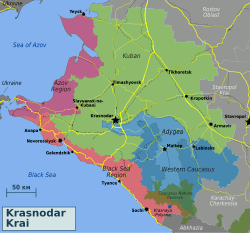
Krasnodar Region (Krai)
This unique document (22 January 1970*, Pb 151/XIII) deserves to be quoted in full:
“The KGB for the Krasnodar Region is in possession of materials showing that a considerable number of mentally ill individuals in the Region are: engaged in socially dangerous and hostile behaviour; nurturing criminal, politically harmful intentions; and introducing demoralising factors into the life of the Soviet people.
Over the past two years more than 180 such people have come to the attention of the KGB in the region. Some of them issue terrorist threats, voice an intention to kill Party activists or commit other crimes. G.A. Bychkov and G.B. Mikov made malicious anti-Soviet statements and threats against certain leaders of the Party and the Soviet government. A.P. Vorona also made terrorist threats, drew up a list of Party activists “due for extermination” in the Krymsk district, and tried to set up an anti-Soviet group. S.A. Soin has voiced malicious, crazy intentions to visit Lenin’s mausoleum, bring him back to life with the help of a cinema camera, and then return him to the dead again. G.V. Vatishchev visited the Mausoleum where he committed a brazen and cynical act. O.V. Dmitriev attacked a sergeant in the government’s security force and wounded him. In September 1969, V.M. Pikalov voiced threats of physical reprisals against one of the leading officials of the Anapa city committee of the CPSU, he also prepared, copied and distributed defamatory documents.
“A number of mentally ill individuals have committed dangerous crimes on the State frontier, trying to gain access to ships travelling abroad, with the purpose of leaving the country. In 1969 of the 50 persons trying to illegally cross the State border, or gain access to ships travelling abroad on the area covered by border guard No 32, nineteen were mentally subnormal. The most dangerous crimes were committed by: P.A. Skrylyov who seized an AN-2 airplane, flew towards Turkey and was shot down over neutral waters by anti-aircraft battery; N.A. Korotenko who escaped from the conscription centre in the town of Kropotkin to Novorossiysk and tried to board an Italian ship; V.I. Pavlov who prepared to betray the Motherland in a boat with an outboard engine near Sochi in 1968, and had already been detained for similar attempts in Batumi; and V.A. Grekalov who persistently sought for ways to flee abroad.
“Certain sick individuals travel to Moscow and try, with a fanatical persistence, to meet with foreigners, gain access to the embassies of capitalist countries with crazy intentions or with requests to be granted political asylum. In November this year, P.L. Rybka visited the French embassy; A.I. Cherep tried several times in 1969 to visit the US embassy; S.V. Rezak tried to gain access to the US embassy; N.I. Leibovsky met with English people at the Inprodmash exhibition, asked them for political asylum, and tried to pass them certain documents.
“Many people suffering from mental illnesses try to create new ‘parties’, various organisations and councils, and they draw up and distribute draft statutes, programmes and laws. N.S. Shevnin nurtured and forced on others the crazy idea of creating “councils to oversee the activities of the CPSU Politburo and local Party bodies” and for this purpose sought to find and persuade fellow-thinkers; he made trips to Moscow to meet with figures from Communist and workers’ parties to “discuss” this issue; and he blackmailed individuals who did not wish to support him and issued threats in a letter to the secretary of the Novocherkassk city committee of the CPSU in the Rostov Region, linked to the well-known events in 1962 [Cf. CCE 51.3]. V.A. Pak has systematically prepared and distributed documents of a politically harmful content, and demanded the creation of a so-called world government.
“Many mentally ill individuals write masses of letters containing defamatory, anti-Soviet fabrications and threats to various regional and central organisations. Among them D.I. Mikhalchuk, who was trying to emigrate, wrote to the Presidium of the USSR Supreme Soviet in 5 April 1969: ‘Do you want my actions to be just like those near the Borovitsky Gates?’ … In a conversation with the chairman of the Belorechensk city executive committee Mikhalchuk said he could not vouch for himself and might commit a crime.
“Among the mentally ill quite a few are inclined to commit assault, rape and murder and several have successfully attempted to commit such audacious crimes. For example, during an aggravated period of illness L.G. Buznitsky cut off the head of his ten-year-old son, B.N. Onelyan killed her husband and A.M. Ponomarenko murdered his sister.
“According to the information of the mental health clinics in the Krasnodar Region there are many aggressive and malicious individuals among the 55,800 mentally ill, and 700 of them are a danger to society. The largest numbers live in Krasnodar, Sochi, Novorossiysk, Maikop, Gelendjik, and in the Eisk and Krymsk districts.
“To prevent dangerous consequences on the part of the named category of individual the State security bodies in the Region are obliged to take the necessary measures, which requires a great deal of effort and funds.
“At present, according to the regional health department, 11-12,000 individuals required hospital treatment but the in-patient facilities of the necessary type have beds for only 3,785.
“To prevent dangerous behaviour by individuals suffering from mental illnesses, it is our view (and this view is shared by those in charge of the Region’s health services) that further improvement is required in the measures used to identify, register, hospitalise and treat these individuals, and to oversee their behaviour outside treatment centres.
“The Regional Party Committee and the Regional executive committee have been given general information about the issue.”
*
This is an extraordinary document.
There can be no doubt that it was inspired by Andropov. The head of a regional KGB directorate had no reason to write his boss such an extensive memorandum, neither was it the practice to do so. The officer concerned, Major-General Smorodinsky, had certainly informed Andropov about each incident as it occurred. It is inconceivable that the downing of an aircraft “in neutral waters by Soviet anti-aircraft defence” was not promptly reported to Moscow. KGB headquarters were certainly informed about visits by inhabitants of the region to foreign embassies, as and when they occurred, and to the Lenin Mausoleum, especially the “brazen and cynical act” that one of them committed there.
It is also clear that the episodes were deliberately selected to stress the danger of terrorist acts by mentally ill individuals. This was, let us recall, the year which began with the famous attempt on 22 January 1969 to assassinate Brezhnev as he drove into the Kremlin, “the incident at the Borovitsky Gates”. His attacker, Ilyn, was immediately declared insane and locked up for life in the Kazan Special Psychiatric Hospital (he emerged only in the late 1980s, when he was found to display no signs of mental illness). The man behind the report and his readers knew exactly how to interpret “psychiatric illness” and “a danger to the public”: people driven to desperation, for whom the “prophylactic measures” of the KGB were no longer effective. And this explains why the Krasnodar Region on the Black Sea was selected. There were many government resorts in the Region and it was also close to the border with Turkey, a capitalist country. The number of desperate acts was greater there than the average for the USSR as a whole. Andropov was not telling the truth, of course, when he said in his preliminary remarks that a “similar situation may be found in other parts of the country”. This could not be true of the inland regions, far from any border. No one would attempt to seize an airplane in the Ryazan Region because you could not fly to a capitalist country from there. No “ships bound for foreign ports” were to be found there, or other installations that might provoke Soviet people into action. The statistics of “psychiatric illness” would be incomparably lower there.
Finally, let us examine the figures cited in the report. The total number of mentally ill people in the Region was 55,800, of whom 11-12,000 needed to be kept in hospital and of those 700 were “a danger to society”. If the situation was similar everywhere, and the USSR was made up of about one hundred comparable regions, the Politburo members could easily appreciate the scale of the problem. This meant there were approximately 70,000 dangerous patients and 1.2 million who needed to be permanently treated in hospital. What was proposed was the creation of a psychiatric Gulag, no less. The Politburo agreed to its creation, moreover, and urgently. The question must be solved within six months!
It is easy to understand why Andropov decided to take extra precautions and forwarded the “report” of his subordinate to the Politburo, something he never made a habit of doing before or after this document. Only three years earlier his predecessor Semichastny had been fired, perhaps, because his proposal to use psychiatric hospitals was seen as being soft on the enemy. Where was the guarantee that the Politburo would not shy away from the suggestion a second time? Andropov was now proposing its universal application, moreover, and a shift in the regime’s punitive policies. So, he tried scaring the Soviet leaders with talk of the outrages perpetrated by the insane in the Krasnodar Region.
xxx
When I was freed from the camps in January 1970 I had not the faintest idea, naturally, that the Politburo had just taken a decision that would result in my return to prison. Not one of us could have imagined anything of the kind. We simply noticed that the numbers declared insane in our cases had grown noticeably.
It was also obvious that Soviet psychiatrists were hard at work on a diagnostic approach that could be conveniently and widely applied to political opponents and anyone dissatisfied with the regime. Dubious terms appeared, such as “reformist delirium” or the “sluggish schizophrenia” of Professor Snezhnevsky, until then a disputed diagnosis. Clearly, psychiatric measures were being prepared for use against us but we had no idea how extensive these preparations were.
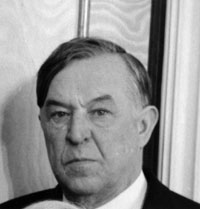
Andrei Snezhnevsky
Our campaign could not have been more timely. Six months had not passed, and the Politburo had yet to reach a final decision, when my first interviews with the Western press took place, followed that summer by a TV broadcast about the issue of punitive psychiatry. We caught the Soviet leadership at the scene of the crime, so to speak, and we did so quite by chance. It was like a stray shell during a war that hits an arms depot and wrecks a planned offensive. The regime was forced to defend itself in any way it could, and the decision to create a psychiatric Gulag was deferred, at least for the next two years. When the Soviet leaders returned to their discussion in January 1972, soon after my trial (was this a coincidence or not? I was convicted for libelling Soviet psychiatry), the situation was far too heated. There had been too much talk about the abuse of psychiatry for them to return to the original plan without provoking a still greater campaign. What kind of “conspiracy” could there be if all the media in the West were reporting on the repressive use of psychiatry in the Soviet Union?
This time the Politburo discussion was restricted to an analysis of the state of psychiatry in the USSR. A special government inquiry, the “Rakovsky Commission”, was set up to study the matter. Two years later it reported that, apart from any political concerns, the condition of Soviet psychiatry left much to be desired (22 February 1972*, St-31/19):
“According to the information of the USSR Ministry of Health a growth in mental illness has been noted within the country. If at the beginning of 1966 2,114,000 were registered at out-patient mental health institutions, by the beginning of 1971 this figure was 3,700,000 and 280,000 were being treated as in-patients.
“The number of beds for psychiatric treatment of the country’s population is less than half what is needed. The material conditions in the overwhelming majority of in-patient facilities for psychiatric patients are unsatisfactory. A considerable number of these facilities are in premises that have not been adapted for the purpose, and are unsuitable for the normal accommodation of patients. In many hospitals there is less than 2.0 to 2.5 cubic metres per patient, when the norm is 7 cubic metres. Not infrequently patients are accommodated two to a bed or on the floor. In a number of hospitals two-storey bunk beds have been constructed… Difficulties with placing mentally ill patients in hospitals and their premature release from an in-patient facility leads to the presence of seriously ill and often socially dangerous individuals among the population.
“According to the data of the USSR Ministry for Internal Affairs there has recently been an increase in the number of killings, assaults, robberies, thefts and other grave crimes committed by individuals suffering from mental illnesses. In 1970 they committed 6,493 crimes, including 937 murders. Moreover, individual crimes were committed with particular brutality, and were accompanied by large numbers of victims …
“The 5 July 1968 decree (No 517) of the CPSU Central Committee and the USSR Council of Ministers “On measures to further improve healthcare and the development of medical science in the country” envisaged the building and opening for use before 1975 of no less than 125 psychiatric hospital s, each with 500 or more beds. The 1971-1975 plan for the economy envisages the building and opening for use of 114 psychiatric hospitals with 43,800 beds.
“In 1971, the USSR Ministry of Health, together with the USSR Ministry of Internal Affairs and the KGB presented a draft decree to the USSR Council of Ministers for measures to further improve the medical care of the mentally ill….”
Nothing more happened for a long while. The subject became one of purely professional concern and lost its political edge.
*
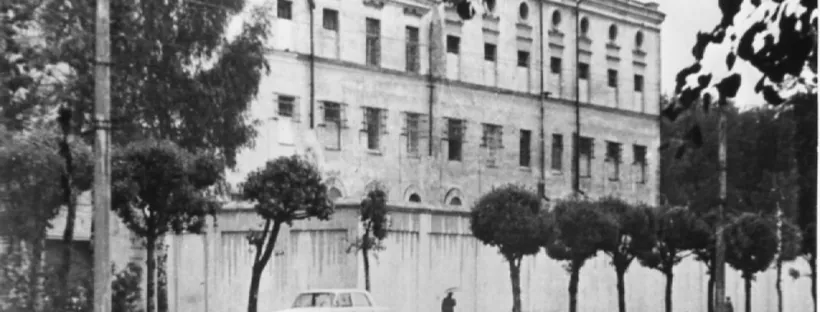
Sychovka Special Psychiatric Hospital
(Smolensk Region, RSFSR)
By the end of the 1970s the number of psychiatric hospitals in the country had grown steadily, as planned, but the number of political prisoners incarcerated in them did not keep pace with this expansion. This is not surprising, given the campaign around the world against the abuse of psychiatry (10 September 1976*). As Andropov reported to the Central Committee:
“In several Western countries an anti-Soviet campaign is being stirred up, using crude fabrications about the supposed use of psychiatry in the USSR as an instrument in the political struggle against ‘dissenters’. The ideological centres and special services of the Adversary are widely drawing the mass media into this, using scientific forums as a tribune, and inspiring anti-Soviet ‘demonstrations’ and ‘protests’ …
“The latest data show that this campaign is a thoroughly planned anti-Soviet operation. The organisers of such defamatory activities are evidently trying to prepare public opinion for an open condemnation of “the abuse of psychiatry in the USSR” at the coming 6th World Congress of Psychiatry (Honolulu, USA) in August 1977, and intend to provoke a negative political reaction on the eve of the celebrations to mark the 60th anniversary of the Great October Socialist Revolution …”
This was written, we may note, without a shade of irony, as though it was not Andropov who, only a few years earlier, had sent the Central Committee his materials and suggestions about the psychiatric Gulag. For its part the USSR Ministry of Health was working (22 October 1976, pp. 6-7 in 10 September 1976* file)
“to identify progressive-minded, major psychiatrists in the USA, Britain, France and other capitalist countries and to invite them to the USSR to participate in scientific conferences and symposia, and acquaint them with the achievements of psychiatric care in our country. The idea is to use their positive comments in propaganda work abroad …
“The USSR Ministry of Health and the USSR Ministry of Internal Affairs have organised inspections of special hospitals where the forced treatment of individuals with mental illnesses is taking place so as to improve the medical care in this category of hospital. Where necessary, it is intended to show certain hospitals of this kind to foreigners.”
Naturally, “progressive” Western colleagues would not be shown the ordinary psychiatric hospitals where there were not enough beds and the patients were either doubled up in a single bed or had to lie on the floor. Some of the visitors, incidentally, were so “progressive” that this would not have worried them (16 November 1976, pp. 12-13 in 10 September 1976* file). Yury Zhukov, a deputy of the USSR Supreme Soviet reported to the Central Committee:
“During the last day of the Portuguese parliamentary delegation’s visit to the USSR, which I was instructed to accompany, a leading specialist in neuropathology and psychiatry and parliamentary deputy of the Socialist Party, A. Fernandes da Fonseca, confidentially told me the following.
“According to his information, anti-Soviet American figures are preparing to use the coming World Congress of Psychiatry in 1977 in Honolulu to organise a fierce anti-Soviet campaign linked to the defamatory opinions that have been spread in the West about our supposed imprisonment of “dissenters” in psychiatric hospitals …
“In this connection A. Fernandes da Fonseca requested that he be sent the relevant data to prepare his speech at the Congress. In his words, these data would be used to acquaint leading psychiatrists from other countries where people speak Portuguese …
“Fernandes da Fonseca emphasised that general statements of a political character proving the absurdity of the American accusations were not needed now, but specific scientific material – diagnoses and evidence about the treatment of such people as Plyushch, Bukovsky and others who are being presented as “innocent victims” …. ?
I would have liked to meet this A. Fernandes da Fonseca, preferably in the presence of journalists or on television. He would not have had the nerve to face me, however, like all our other opponents of the Cold War era. If he was brought there by force he would still not repent.
He would assert, probably, that he “did not know”, that he had “believed” what he was told – and that the Americans were to blame for everything. In any case, neither Leonid Plyushch nor I received any apologies from him.
xxx
It hardly needs saying how pleased the USSR’s “plain-clothes psychiatrists” were to find such a volunteer who would allow them “in future to use his ability to spread the information we wanted” (13 December 1976, No 3193, p. 17 in 10 September 1976* file). They had altogether too much work to do.
Almost every year a “Plan of Measures for the Exposure of the anti-Soviet defamatory campaign concerning ‘political abuses’ in psychiatry” was put together and approved by the Central Committee. This impressive document contains a detailed presentation of an international counter-campaign which brought all contacts and assets into play: press and television, Soviet diplomacy and KGB operations. Before Soviet psychiatry was condemned in Honolulu, however, the measures were mainly defensive and of a propagandistic character. Thereafter they were a desperate battle for survival.
Condemnation in Honolulu was a cruel defeat for the Soviet regime, with repercussions far beyond the limits of psychiatry. This was, first and foremost, because the most desperate efforts by the Soviet foreign policy machine could not avert it (See Bukovsky’s “Punitive Psychiatry“, 1977). The men in charge of Soviet psychiatry, justifying their actions before the Central Committee, gave a detailed account of the measures they had taken (21 November 1977*, No 3042, pp 2-5):
“In preparation for the Congress the USSR Ministry of Health analysed the main anti-Soviet publications and prepared well-founded counter-arguments; a number of symposia were held with the participation of foreign specialists; and Soviet participation in the programmes of the World Health Organisation was increased. Immediately before the Congress Soviet psychiatrists travelled to Bulgaria, Hungary, the GDR and Czechoslovakia to agree the positions of the socialist countries.
“An authoritative Soviet delegation prepared for participation in the Congress and on arrival in Honolulu it immediately established active contacts with delegations from socialist and other countries (Mexico, Venezuela, Senegal, Nigeria, India, and so on). These contacts, and the further course of the Congress, confirmed that although the Congress was officially being run by the World Psychiatric Association, the entire practical preparation of the scientific and organisational programme was entirely in the hands of the American Psychiatric Association. …
“The premises where the sessions of the Congress took place were overflowing with anti-Soviet rubbish, leaflets with filthy attacks on Soviet psychiatry and some of its representatives. In the corridors scurried “former Soviet psychiatrists” who had been transported to the Congress …”
From the very first day the Soviet delegation consistently issued sharp protests.
However, the main clash with the anti-Soviets took place during the two sessions of the WPA General Assembly where the Congress organisers presented for discussion the “Hawaii Declaration” about the general ethical principles of modern psychiatry (to which the Soviet delegation subscribed) and a provocative Anglo-Australian resolution “condemning the abuse of psychiatry in the USSR” and an American proposal to set up a “Committee to Investigate Cases of Psychiatric Abuse”.
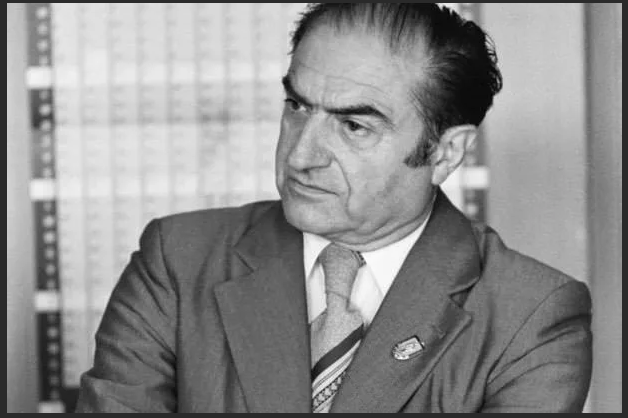
Eduard Babayan (1920-2009)
The Soviet representative at the Assembly (E.A. Babayan) protested against the inclusion of these proposals in the agenda as clearly defamatory and contrary to the Statutes of the WPA. He also spoke against the proposed procedure for discussing the day’s agenda, because it excluded any serious examination. Categorical protests were also raised against the system of voting, which was based on the number of votes (ranging from 30 to 1-2 votes) allocated in accordance with the funds contributed to the WPA budget by the national associations. No action was taken over these protests, however, due to the open pressure exerted by WPA president H. Romme (also President of the US Psychiatric Association) and references to the WPA statutes…. After this the WPA president grossly violated the procedure for conducting the session and forced a vote with infringements of the elementary demands of procedure….
As was widely noted in the corridors of the Congress and in the press, despite the formal “adoption of the defamatory Anglo-Australian resolution, the moral victory at the Congress went to Soviet psychiatry”.
Such a “victory”, naturally, did not suit the Central Committee and they set to work immediately after the World Congress in Honolulu (21 November 1977*, No 3042, p. 7):
“Soviet psychiatrists (A.V. Snezhnevsky, G.V. Morozov, E.A. Babayan, N.M. Zharikov, M.E. Vartanyan, V.E. Rozhnov and others) travelled to scientific meetings about psychiatry in the FRG, Switzerland, the GDR and the Hungarian People’s Republic, where they met with foreign scientists and informed them in detail about the real nature of events at the past Congress.
“In Geneva, a press conference was held (E.A. Babayan) about the results of the Congress which received objective coverage in certain Swiss newspapers.”
The plan for the 1978-1979 campaign, as approved by the Central Committee, included a vast number of propaganda measures, use of scientific contacts, publications and tactical approaches such as the following: “To work for a democratisation of the WPA statutes and the procedural rules for its supreme body, the General Assembly …”
Sometimes odd proposals were included. Before and after Honolulu one important measure was (R 14 April 1978, No 1644)
“gathering information about the fate of mentally ill persons, former Soviet citizens, who have left the USSR, in order to use these data in an acceptable form (bearing in mind the demands of medical ethics) to expose the defamatory character of the accusations made against Soviet psychiatry.
“Those in charge: USSR Ministry of Foreign Affairs, KGB, the USSR Ministry of Health.”
They wanted to find out which of us former inmates of Soviet psychiatric hospitals had subsequently received psychiatric treatment abroad.
Such cases could not be found and so they had to be invented. The KGB did not need asking twice. Soon in many Western, left-wing publications reports appeared that one or another of our friends had supposedly been sent to psychiatric hospitals when they were already living in the West. Such reports were published about Alexander Volpin who by then was living in the USA. With little hesitation, he brought a case of libel against these publications.
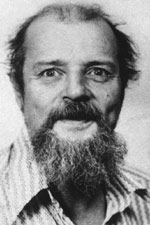
Alexander S. Yesenin-Volpin
(1924-2016)
In a panic, Andropov, Kuznetsov, Zamyatin and Tolkunov reported to the Central Committee (26 January 1977*, St 42/18):
“For clearly provocative and anti-Soviet purposes, reactionary Zionist circles in the USA have prompted the renegade Yesenin-Volpin to go to the American courts. He has brought a claim for defamation via publication against TASS, APN and the American newspaper “The Daily World” (an organ of the US Communist Party).
“The formal pretext is the use by “Izvestiya” and “Sovetskaya Rossiya” newspapers of material from the Italian left-wing magazine “Ragione” (May 1976), which exposes the defamatory and reactionary propaganda about the supposed incarceration of healthy people in psychiatric hospital s in the Soviet Union for political reasons. This article refers to Yesenin-Volpin as ‘that person whom the Western press made such efforts to defend, had barely arrived in Italy before he was again taken to a mental hospital; he is presently being treated by American psychiatrists’.“
TASS placed this item in Soviet newspapers, APN placed it in one of its publications in the FRG and “The Daily World” printed its own material based on this item.
“The American court has issued summonses to the New York offices of TASS and APN to appear in court. If they fail to appear before 2 February this year TASS and APN will automatically be recognised as guilty and will each have to pay Yesenin-Volpin 200,000 dollars.
“The lawsuit itself has been compiled in an anti-Soviet, provocative spirit about the so-called persecution of dissenters in the USSR, their imprisonment in psychiatric hospitals and similar nonsense. This is all intended to fan the latest campaign by US mass media in America against the Soviet Union.
“With the purpose of halting this trial the Soviet Ambassador in the USA talked to a deputy of the US Secretary of State, drawing his attention to unacceptable and groundless actions taken by the American court. The US Secretary of State did not give a direct response, claiming that ‘it was not such a simple case from the legal point of view’.
“So that representatives of TASS and APN do not appear in court and will not become deeply entangled in this provocative hearing, the Soviet ambassador has been permitted to employ an American lawyer. Using American legislation, the ambassador will work through the lawyer to end the hearing and have the lawsuit annulled.
“The ambassador has also been instructed to continue insisting to the State Department that urgent measures must be taken to end the case raised by Yesenin-Volpin’s lawsuit, since it is without foundation and clearly pursuing political aims hostile to the Soviet Union, as follows from the lawsuit itself. Furthermore, the Soviet ambassador was instructed to let the American side know that we would otherwise take retaliatory measures against American publications and their correspondents in Moscow, who not infrequently publish truly defamatory reports about the Soviet Union and its citizens.
“Depending on the response from the American side and the subsequent course of the case we consider it expedient to prepare, through the Committee for State Security, the necessary retaliatory measures. We also consider it expedient to continue the policy we have outlined towards the State Department.
“To not get deeply involved in these hearings, as is the intention of the Zionist circles which devised Yesenin-Volpin’s lawsuit, we consider that TASS and APN correspondents should not appear in court either now or in the future. It seems expedient to coordinate our actions with the Friends in the analogous lawsuit against “The Daily World”.
We request authorisation for the indicated course of action.”
The Central Committee, naturally, approved this course of action, shielding the unfortunate KGB which had been taken in by such obvious falsehood.
Everything that served the cause of socialism could be justified. The State Department, frightened by the threat of confrontation, also lost its nerve. I do not know how they could intervene in a court case – under American law such interference is a criminal act – but the case was never heard in court.
And that’s a pity. If the West had only shown the courage to not break its own laws and procedures to please the Soviet authorities, Communism would have ended much earlier and caused less suffering. The exemplary behaviour of psychiatrists in most Western countries was the best proof. As a consequence, the Soviet leaders were unable to create a psychiatric Gulag. Their grandiose plan was shelved and until 1989 they were forced to reassure the entire world and carry out endless “inspections”. Until the end, Moscow was unable to remove this taint.
Our glasnost proved so effective in this respect that by the late 1970s the KGB was concerned lest a famous dissident be sent to a psychiatric hospital accidentally, without their knowledge. Thanks to this fear, for example, they preferred not to arrest Alexander Zinoviev but deport him to the West. Andropov reported to the Central Committee (R 28 June 1978, 1311-A) in 1978:
“Materials in the possession of the KGB confirm that all the activities of Zinoviev are unlawful and there are legal grounds for charging him with criminal offences. However, it is not expedient at present, in our view, to apply this measure in halting Zinoviev’s anti-Soviet activities because certain people who know him well say that he was treated earlier for alcoholism and mental instability and suffers from megalomania.
“If criminal charges were brought against Zinoviev these circumstances might lead the court to declare him mentally ill and send him for enforced treatment. Considering the campaign that has been unleashed in the West about psychiatry in the USSR, this measure of restraint does not seem expedient.”
Only in 1989, however, at the height of the Gorbachov-Yakovlev “glasnost”, when it became profitable for the Soviet regime to admit its past crimes, did the Politburo finally adopt a decree “On improvements to legislation about the conditions and procedures for providing psychiatric care” (R 15 November 1989, Pb 171/21). It introduced legal guarantees against the abuse of psychiatry. This measure, it is true, was also in part forced on the Soviet leadership, a response to Western pressure.
xxx
After the Soviet Union came to an end independent groups of psychiatrists in Russia and Ukraine began monitoring their profession to ensure that the political abuse of psychiatry did not revive. They investigated suspect cases, studied complaints, visited psychiatric hospitals and, if necessary, petitioned the authorities to reconsider doubtful decisions. Such instances, however, were no more frequent now than in other countries.
Unlike many other aspects of Soviet life, the changes in psychiatry were striking.
Our epoch was indeed history. At the Leningrad Special Psychiatric Hospital [feature photo] where, once upon a time, I first became acquainted with General Pyotr Grigorenko, they showed visitors our “medical history”, just as tourists at the Peter and Paul Fortress were shown the cell where Bakunin was imprisoned.
As I prepared to address the Constitutional Court I went with a Russian TV crew to the “Central Institute of Forensic Psychiatry”, more commonly known as the Serbsky Institute.
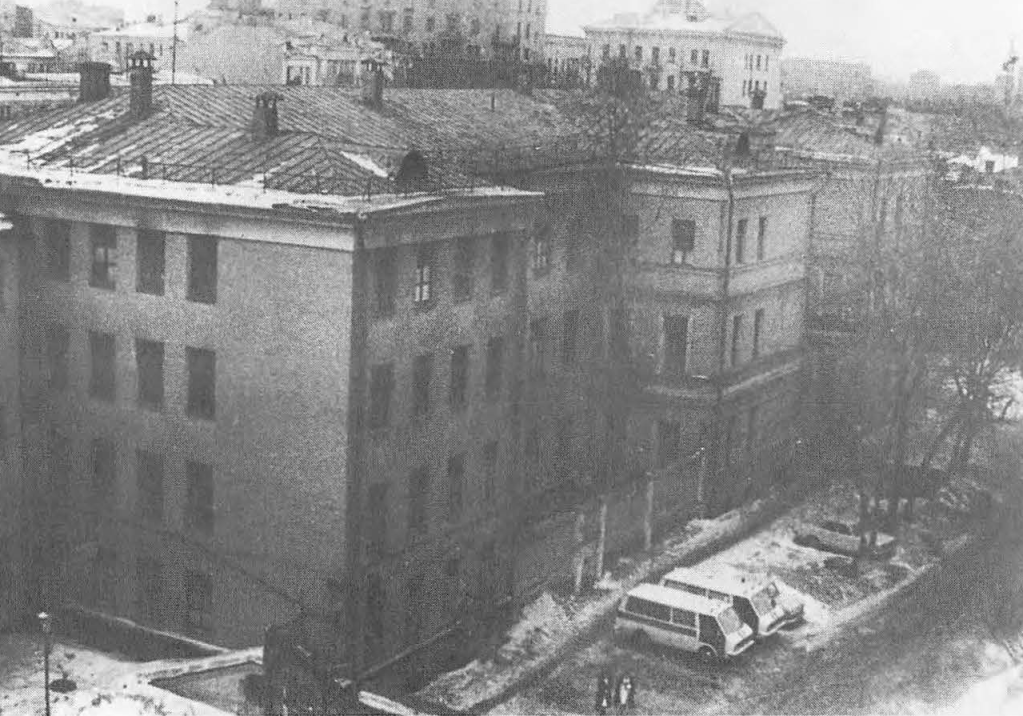
Serbsky Institute
At the entrance, we were greeted by its new director, a pleasant-looking young woman called Tatyana Dmitrieva. “I read your book,” she said, “and have long wanted to tell you that everything you wrote about our institute and the Special Psychiatric Hospitals is true.” I knew Dmitrieva was not playing a part. She had already said as much to the press.
It was thirty years since I first entered that malevolent institution. Of those who knew me as a patient, only two remained. One was the elderly care assistant Shura. The other was our Doctor Mengele, “Academician” Morozov; he preferred not to visit the Institute these days, it was said. Yet how final were the changes? No one had revoked our diagnoses, no one had yet apologised for the defamation to which we were subjected all those years, by the Soviet press and behind the scenes, in whispers and through “personal contacts”. Not one of those “Academicians” had been charged with crimes against humanity or deprived of their professorial title for violating the Hippocratic oath. On the contrary, many remained in charge of Russian psychiatry, like Vartanyan and Babayan, and continued to represent it abroad.
The present regime had no need of the “psychiatric method” of repression, but it might be required by the next. Would it be so difficult to restore? Fire that pleasant-looking young woman and send the handful of psychiatrists in the independent monitoring groups to the camps: that was all they had to do. Then psychiatry might again be put at the service of a future repressive regime in Russia, and whether its ideology was national socialism or international socialism would be of quite secondary importance.
Chapter 5: What ‘They’ Believed (part one) …
==========================================
SOURCES
Chapter Four: DEPORTATION OR THE MADHOUSE
An asterisk (*) and bold type indicate that files from the Bukovsky Archive has been fully or partially translated into English. 14 of the 49 links are to untranslated files, all available online.
(The archival description of the various sources mentioned in the text was added to the notes in the book version, indicating their size and contents and providing access to the original Russian text.)
text translated & edited, and links restored, by John Crowfoot
(21 June 2026)
========================
 The Bukovsky Archives