PART ONE
- 5.1 Yury Andropov
- 5.2 The NTS and the dissident movement
- 5.3 The Party’s most powerful weapon
- 5.3 The Party’s most powerful weapon (concluded)
- 5.4 Intelligentsia dolorosa
SOURCES
*
Judgement in Moscow (online)
*
The use of psychiatry as an instrument of political repression was undoubtedly the most graphic post-war crime against humanity. For decades, for centuries to come, our descendants will remember the psikhushka, the madhouse of the post-Stalin period, as we still recall the guillotine of the French Revolution, Stalin’s Gulag, and Hitler’s gas chambers. The documents just quoted show that this was a policy approved by the Politburo: it was no coincidence or whim of the perpetrators.
Yet after reading countless resolutions, instructions and reports I still could not assert with any confidence that the Soviet leadership understood what it was doing. For all their practical no-nonsense approach, the members of the Politburo inhabited the fantastic world of socialist realism where it was impossible to tell fact from fiction, or separate information from propaganda. This was especially true of those who, because of their ideology, regarded truth as an arbitrary, class-determined matter. They subjected it, as they subjected legality, to the principle of expedience. Perhaps such terms as good and evil, or truth and falsehood, are inapplicable to the rulers of the USSR, especially when the Newspeak of Soviet Communism gave these concepts, and many others with which we are familiar, quite a different meaning.
When they accused us of “libelling the Soviet system” and insistently defined our statements, publications and samizdat materials as “defamatory” in all their documents and resolutions, did they truly believe (consciously or not) that we were distorting reality? Of course not. In their language, however, reality meant something different. Their ideology rejected anything of universal human value, and that included the meaning of words. There could not simply be reality – it must be either bourgeois or socialist reality. When they talked of our “libelling socialist reality” it meant that what we said or wrote did not correspond to the image of “actually existing socialism” which the Politburo itself was creating. By definition, that image could contain no “congenital flaws” or defects, there were only “individual shortcomings” or “problems of growth”.
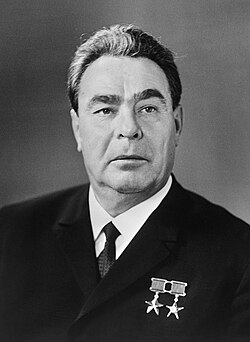
Leonid Brezhnev
It is easy to see, in a simply linguistic sense, what absurdities resulted. In his letter to Brezhnev about the deportation of Solzhenitsyn, for instance, Andropov wrote that although the Gulag Archipelago was indubitably anti-Soviet “the facts described in this book indeed took place” (7 February 1974*). In other documents the phrase “defamatory facts” appears – a combination that cannot be explained outside the Soviet system.
Over time matters became more complicated as the concepts were internalised and the language grew simpler. The adjective “socialist” ceased to be attached to every noun: its implied presence was taken for granted. It was, therefore, impossible to assert, “There is no democracy in the USSR”, let alone that “There is no real democracy in the Soviet Union”. No democracy?! There was socialist democracy – and, unlike bourgeois democracy, it was the genuine item. If in making similar statements you were accused of “defamatory fabrications”, that meant Article 190 of the Criminal Code and a short term of imprisonment or exile. If, on the other hand, you were guilty of “anti-Soviet fabrications”, that would mean Article 70 and up to seven years’ imprisonment, plus exile. The expression “ideologically harmful”, meanwhile, indicated that you were fortunate. You might be sacked from your job, expelled from the Party or the Komsomol, dismissed from your institute, or suffer other unpleasantness of that type, but you would be subjected only to “prophylactic measures”. (In the 1930s the distinctions were more ominous: “an Enemy of the People, 1st category” signified execution, while those in the second category faced the camps or exile, see 4 February 1938*.)
It is impossible, therefore, to say what the members of the Politburo “actually” thought. There was no way out of the enchanted circle of socialist realism. One Politburo member could not simply say to another, “In your report, Ivan Ivanovich, you said that the well-being of the Soviet people is steadily increasing. May I ask, what is really going on?” These men were the supreme creators and administrators of the world of socialist realism, and for them “reality” was what the Party said it was. If the well-being of ordinary people should constantly improve under socialism, then that was what it did … in every report and memorandum. If in the 1930s the Party decided that “the class struggle intensifies the closer we come to building socialism”, then the number of “Enemies of the People” grew correspondingly. Did they believe that their colleagues and comrades of yesterday had today become “Enemies of the People”? Would it have astonished them to learn that the numbers of such “enemies” now ran into the hundreds, thousands and tens of thousands (and always in suspiciously round figures)? Such questions are meaningless. They were never discussed, of that I am sure, and probably never occurred to the Soviet leaders. Their discussions and decisions focused on something else, the scale and expediency of the purges. In the same way, none of the Politburo was worried if we dissidents were truly suffering from mental illness or not. A sudden growth of over 40% in the number of mentally ill people in the Soviet Union (22 February 1972* (St 31/19, p. 3) aroused in them neither amazement nor doubt.
Having read so many documents written (or signed) by the Politburo I still cannot make up my mind: did they believe their ideology, or was all they said and did total hypocrisy? Lenin and his immediate entourage certainly did believe. For all Stalin’s cynicism, I will concede that he believed in the “historical justification” of his activities and, towards the end, thought of himself as a demi-god who embodied “historical truth”. Without a doubt, Khrushchov had some naive, peasant faith in socialism. But can you tell me what Brezhnev or Chernenko believed? Of course, neither were endowed with great intellect or inclined to self-analysis, yet they must have believed something. They must have possessed “goals” that guided their actions.
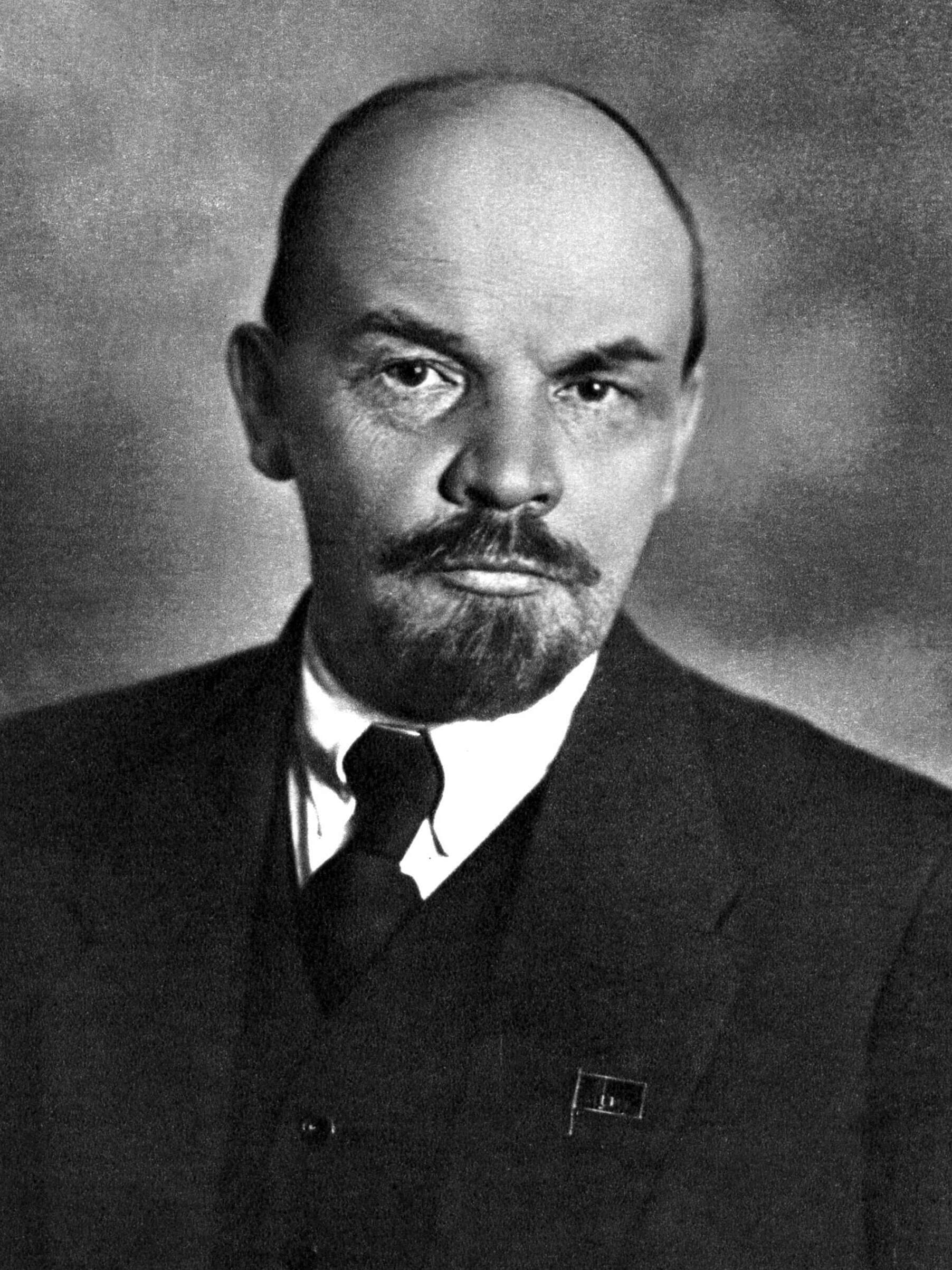
Vladimir Ulyanov (Lenin)
After liquidating the bourgeois classes, say, Lenin acted to achieve his goal of a classless earthly paradise. Any person, in Stalin’s view, who “objectively” harmed the cause of socialism was “subjectively” an accomplice of the class enemy – and anyone Stalin considered his personal foe “objectively” harmed the cause of socialism. Khrushchov, perhaps, believed in all sincerity that there could be no internal enemies under socialism and, therefore, only mentally unwell individuals would harbour feelings of hostility towards the most advanced socio-political system in the history of mankind.
Each successive Soviet leader had a logic of his own, no matter how inhumane and distorted it might be, and there was a certain congruence between personality and deed, goals and actions. What, however, are we to make of Andropov’s statement, writing to Procurator-General Rudenko in 1968 (R 1 April 1968, 718-A NA), that “disdaining the interests of the State, [Ilya Gabai and Anatoly Marchenko] had lost their sense of civic responsibility and were directly aiding our class enemies by their actions”. Did he really believe that “class enemies” continued to exist within the Soviet Union in the regime’s 51st year of existence, and that the Soviet State had “class interests”? Was it really Andropov’s view that every Soviet citizen had a duty to defend those interests? Or was this phrase merely a nod towards the Party jargon in which they had to communicate?
When in 1970 Andropov circulated the report about the “epidemic levels” of mental illness in the Krasnodar Region, did he not realise what he was doing? Perhaps the Politburo really believed that anyone who tried to “betray the Motherland with an outboard engine”, i.e. leave the country, was automatically insane. Only a few years later Andropov would tell the Politburo that there were hundreds of thousands of people in the Soviet Union who were hostile to the regime and that it could not avoid taking repressive measures (29 December 1975*, 3213-A).
Yet in 1977 I was told the following story. Soon after my meeting with President Carter, Brezhnev asked for the file on my activities abroad and, having read the contents, supposedly said to his aides: “Comrades, what have you been up to? You always told me he was” (he twirled a finger at his temple) “but he isn’t, you know.” Had Brezhnev truly believed we were mad?
*
5.1: Yury Andropov
It was because I read so many of Andropov’s notes and reports, perhaps, or for some other reason, that I became greatly intrigued by the question of what he believed.
Typical apparatchiki like Party ideologue Mikhail Suslov had been accustomed to hypocrisy all their lives and could no longer distinguish between life and ideology. Fossilised specimens such as Brezhnev and Chernenko would hardly have been capable of much thought in the best years of their lives. Andropov did not give the impression of being a fool or a fanatic. Unlike his Party colleagues, he did not look like someone who believed his own propaganda. On the contrary, all the signs are that he realised that the Party ideologists (and ideology) were themselves creating the enemies of the system whom Andropov would later have to fight.
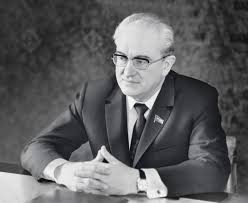
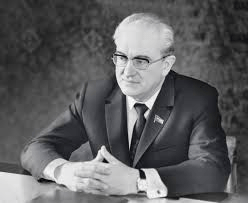
Yury Andropov
In his efforts to reduce these problems to a minimum, Andropov became involved in issues affecting the arts and the Party’s policy towards culture. In the mid-1970s, for instance, he wrote to the Central Committee about the artist Ilya Glazunov’s “frame of mind” (8 October 1976*, 2280-A):
“The artist I. Glazunov, who has been working in Moscow since 1957, has been variously received in different strata of the creative community. On the one hand, a group of persons has grown up around Glazunov who see him as a gifted artist; on the other, he is regarded as totally without talent, someone who is reviving petty-bourgeois tastes in the pictorial arts. At the same time, Glazunov has regularly been invited over several years to visit leading public and State figures who commission him to paint their portraits. Glazunov’s fame as a portrait-painter is quite high. He has painted President Kekkonen of Finland, the kings of Sweden and Laos, Indira Gandhi, Allende, Corvalan and many others. His exhibitions have been held in a number of countries, and positive reviews have appeared in the foreign press. At the request of Soviet organisations, he has made visits to Vietnam and Chile, and the cycle of paintings he made there have been shown at personal exhibitions.
“Glazunov’s position, his enthusiastic support abroad and apprehensive reception among Soviet artists, has led to certain difficulties in his development as an artist and, what is more complicated still, in his world-view.
“Glazunov is a person without a sufficiently clear position, and there are, without doubt, defects in his art. Most often he adopts the stance of a Russophile, and this frequently descends into an openly anti-Semitic frame of mind. The confusion in his political views sometimes not only arouses caution but revulsion. His brash character and elements of conceit also do not help in establishing normal relations within the creative milieu. However, it would hardly be expedient to reject Glazunov for those reasons.
“Demonstrative non-recognition by the Union of Artists has intensified the negative in Glazunov and could lead to undesirable consequences if we consider that Western representatives not only promote him but also try to influence him and, in particular, encourage him to leave the Soviet Union.”
Andropov concluded that a “close watch” should be kept on the artist and it might help to “involve him in some public cause, such as the creation of a museum of Russian furniture in Moscow, something that he and his entourage have been trying persistently to secure.” Yet another museum appeared in Moscow, Ilya Glazunov’s views became yet more confused, but “consequences” that were “undesirable” for Andropov were thereby avoided.
He did not always manage to avert them – far from it: the system generated enemies faster than he could intervene, and he could not always rein in the “ideologists” (10 October 1974*, Pb 55/12):
“The Committee for State Security has learned that the sculptor and member of the Artists’ Union E. I. Neizvestny intends to move and settle abroad in the near future. This decision, supposedly, has been prompted by his dissatisfaction that due interest is not being taken in his art by the relevant organisations and cultural institutions. They are to blame for his lack of commissions and enforced reliance on occasional work.
“The available information indicates that Neizvestny is hoping to receive an invitation from some influential Western person. That person is presumed to be the American Senator Edward Kennedy, whose personal representative visited Neizvestny during the senator’s last visit to the USSR…
“If Neizvestny is refused permission to travel abroad he intends to draw worldwide public attention to himself. In so doing he is counting on the support of certain figures in the Italian and French Communist Parties and the Vatican.
“In view of the above we believe it expedient to consider giving Neizvestny a State commission to produce a monumental work on a contemporary theme that would be in keeping with his creative plans.”
Ernst Neizvestny was no Glazunov, however. There was nothing wrong with his mind.
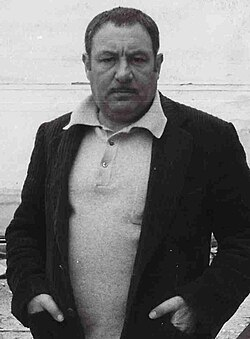
Ernst Neizvestny
(1925-2016; 1975 photo)
Persecution and bans by the Party authorities continued. He received a few commissions after Andropov’s letter but within two years the sculptor preferred to emigrate and, as he would relate, this happened not without the help of the KGB chairman.
I have already cited Andropov’s note concerning Alexander Zinoviev.
The KGB chairman recommended that he should not be imprisoned because he might unintentionally be declared insane and shut up in a psychiatric hospital! As if such a thing could happen at the court’s behest without Andropov’s knowledge: when a preliminary examination was suggested, it was the Central Committee that took the decision. However, Andropov wanted to be rid of this unnecessary distraction and so he scared his Politburo colleagues with the possibility of a scandal on matters about which they were already anxious.
These and other episodes earned Andropov the reputation of a liberal. After he was made General Secretary in 1983 this turned into the myth of the “closet liberal” that was promoted in the West – and not without his assistance, one presumes. In reality, he was no more of a liberal than Beria, who began the process of de-Stalinisation. Like Beria, Andropov expected to be appointed Party leader and he did not want the reputation of a scourge of the intelligentsia. He also evidently realised that his predecessors’ policies had led the Soviet Union into a dead end and that some change of course was needed (again there is a parallel with Beria in 1953). Observing in 1968 how direct repression only aided the growth of our movement, Andropov was ever more inclined to recommend preventative “prophylactic” measures that, furthermore, were more in conformity with the goals of the regime’s foreign policy. By the 1970s he had become one of the architects of Soviet foreign policy and its overall curator, and this inclined him yet more to rely on “KGB special measures”.
This approach indubitably reduced the “costs” of socialism, at home and abroad, and helped to create a more civilised image for the regime. Having read so many of Andropov’s texts, however, and observed his deft manoeuvres in the Politburo, I cannot shake off the feeling that he simply liked such methods and was psychologically inclined to act in that way. This was why, perhaps, international terrorism, Soviet black propaganda and national-liberation movements in the Third World expanded and flourished under his direction. It was when Andropov was guiding Brezhnev, furthermore, that the fatal policy of détente flourished, permitting the Soviet regime to wage a one-sided ideological war against the West, and to do so with Western funding. When détente reached a crisis point in 1980 Andropov was behind the spectacular expansion of the “struggle for peace” in Western Europe. Finally, after he was gone, his pupil and successor, Mikhail Gorbachov, turned the entire domestic and foreign policy of the USSR into a vast KGB operation called “perestroika”.
Andropov was evidently by nature a manipulator, and if he believed in anything it was that history was nothing but a succession of conspiracies. One of his 1978 reports entitled “Our relations with the Vatican” (I could not manage to take a copy and hardly had more than a glance at its contents) quite seriously interpreted the election of Cardinal Wojtyla as Pope John Paul II as part of an international conspiracy aimed at splitting Poland away from the Soviet bloc. Look at all the Poles who now occupied positions of influence: Brzezinski in Washington, Wojtyla in Rome. It could not be a coincidence (although how Brzezinski influenced the decision in Rome is not known). As my KGB interrogator used to say, “if there are more than three coincidences, then there are none”. Seemingly, his boss had not advanced far beyond this piece of KGB folklore. Although I came across no documents on the subject, I have no doubt that Andropov was behind the attempted assassination of Pope John Paul II some years later. Events proved Andropov “right”. Poland did begin to break away.
This belief in conspiracy is characteristic, to one degree or another, of all secret services. In Andropov’s case, it had its roots in Communist ideology. For it is only in the abstract that Marxism interprets history as the objective and inevitable struggle between classes. Read the classics – Marx, Engels and Lenin – as they analyse a more specific political situation in their contemporary world and you will see that all their “analysis” comes down to an exposure of the latest bourgeois plot against the proletariat. The political jargon they introduced speaks of this belief in conspiracy: enemies are no more than protégés and accomplices, lackeys and sycophants, mercenaries and provocateurs. In the most extreme cases they are renegades and traitors. Communist ideology is deeply paranoid, and those who were just pretending, and had no faith in its teaching whatsoever – and the Party leaders of the 1960s and 1970s, to my mind, fall into that category – inevitably acquired a certain paranoid and stereotypical way of thinking. Most them, submerged in the routine of daily concerns, hardly gave a thought to the philosophical foundations of Marxism-Leninism, but that is not important: the ideologues of the Party existed to remind them. It was enough for the practitioners to rely on their ingrained reflexes, and follow the logic of struggle and the celebrated Leninist principle, “who – whom?”
As is common among people who are not farsighted (and, in this instance, with little knowledge of Western life), they attributed their own methods and intentions to “the Adversary”, expecting a mirror image of their morality, responding to imagined “intrigues” with real conspiracies and to what they saw as “slander” with slander of their own. Like a boxer fighting his own shadow, there was no way they could win. Did they understand the futility of the situation? Like all Soviet people, they possessed the amazing capacity to say one thing, think another, and do something quite different. Evidently, they did not suffer in any respect from this splintering of personality and could both believe and not believe in their ideology: they loved and hated the system that enslaved them but also endowed them with almost superhuman powers.
Andropov was no exception, we must assume. It is said he did not like ideology and, certainly, he did not like ideologues. This is not surprising, because they interfered with his work, either limiting his field of action or creating new difficulties. This does not mean, however, that he consciously rejected the ideology of Marxism-Leninism or that he realised its absurdity. Like most of his colleagues who encountered discrepancies between ideology and real life, he was inclined to attribute these discrepancies to the schemes of the enemy and to tackle them by deploying the intrigues of the “Friends“. It was a more convenient approach, especially when both friends and enemies could always be found if you looked hard enough … What other way out was there for a man to whom the infallibility of the ideology was obligatory? Either the idea of revolution and socialism was perfect, but was being undermined by enemies; or else it was defective and then you yourself became an enemy. This was an iron logic of the kind that kept the wheels turning at the NKVD “Mill” near Khabarovsk (4 October 1956*, St 1061).
xxx
The appearance of our movement was not just a practical problem for the Politburo; it also presented them with a theoretical conundrum. It was all right for Lenin who had to deal with a real “class enemy”. For Stalin, it also made sense of a kind. His enemies, at least, were born before the October 1917 Revolution and had grown up in “bourgeois society”: they might well retain “vestiges of capitalism” in their thinking and behaviour. How could the appearance of an “enemy” be explained in the classless socialist paradise of the 1960s and 1970s?
Most us had been born and raised in the conditions the Soviet leaders had themselves prescribed. Figuratively speaking, and sometimes in reality, we were their children. It is not surprising, then, that the Soviet regime leapt at the “psychiatric” interpretation offered by Khrushchov, and chief Party ideologue Mikhail Suslov made great efforts to offer ideological grounds for the inevitable growth of mental illness under socialism (Marx, Engels and Lenin had nothing to say about it). Yet this loophole was closed thanks to a powerful campaign against punitive psychiatry. All that remained was to blame it on the intrigues of imperialism.
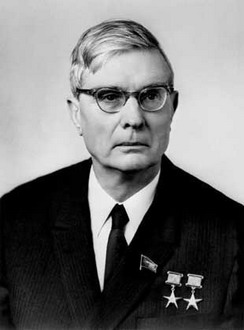
Mikhail Suslov
The regime could not admit that an individual was capable by himself of grasping the absurdity of the Soviet system. Hence the monotonous repetition in every document about us of clichéd formulas referring to the intrigues of the Adversary’s “special services” and “ideological centres” that supposedly directed our activities. This accounts for the comprehensive “class” definition offered by the Politburo in its letters to fraternal parties in 1975-1977 (see 4.3: “External Costs“). Since the exploiting classes had been “liquidated” in the USSR (15 March 1977*, Pb 49/XV, pp. 6-7), it followed that
“… the appearance of an insignificant handful of counter-revolutionaries who have detached themselves from the very foundations of our system and begun to struggle against it (and, as a rule, are linked with imperialist circles) in no way represents a logical outcome of the Soviet Union’s internal development…. The survivals of capitalism in the consciousness of some people are systematically inflamed and encouraged from outside the country by imperialist propaganda centres.
“As concerns the espionage and other subversive agencies of bourgeois States, and the émigré organisations linked to them, they have been attempting to use the backward mood among certain individuals in their own interests, which are hostile to socialism. As communists should be aware, this is inevitable so long as two systems, capitalist and socialist, confront one another on the world arena, and as long as the class struggle between them remains the main factor in world development.”
That was the ideological framework within which the KGB was supposed to work. It was easy, however, for the ideologues in the Politburo to dream up “class-based” explanations: they did not have to put them into practice. Neither did they have to take responsibility if the policy did not yield results. Andropov was supposed to locate these mythical “centres” and foil their plots, while knowing perfectly well that no such centres existed. It was a baffling task, especially during periods of détente, when Western governments did everything to demonstrate their friendliness towards the Soviet leadership. What could Andropov do but set up such a “subversive centre” himself. That was how the NTS, the “People’s Labour Union of Russian Solidarists”, entered our lives.
*
5.2: The NTS and the dissident movement
The KGB made every effort to link each one of us, justly or unjustly, with the People’s Labour Union (NTS). The confiscation during a search of the most innocent books issued by Possev Verlag, the NTS publishing house, was sufficient grounds for such an accusation. Whatever the truth, the Soviet press would talk as though you had been convicted and imprisoned for that alone. It was hard to avoid, moreover, when few other Russian-language publishers existed in the West until the mid-1970s. A manuscript sent abroad, even with a chance visitor, most frequently ended up with the NTS.
KGB reports and Central Committee documents always described the NTS as “one” of the subversive centres abroad, never naming others for reason of their non-existence. Official documents attributed the most elaborate intrigues to the NTS, and Soviet propaganda inflated its activities to a mythical level. The Politburo, when deciding the fate of Solzhenitsyn, did not fail to mention his “contacts with the NTS” as something particularly sinister. Did they believe this or not? In the minds of Soviet people the NTS was an omnipotent worldwide conspiracy with tentacles that reached everywhere.
People’s Labour Union (NTS)
It was actually an insignificant émigré organisation with a dubious past, a suspect present and an uncertain future. Created in Yugoslavia in 1930 by a group of pro-fascist young émigrés, it was at first strongly influenced by Mussolini and called itself the People’s Labour Union of the New Generation. During the Second World War, it worked with German military intelligence (the Abwehr) and published newspapers in parts of the Soviet Union occupied by the Germans. When the war ended the NTS fell into the hands of the Americans and the British and at the height of the Cold War until the death of Stalin in 1953 it was used to send agents into the Soviet Union, to recruit spies and gather information. The failure of several NTS operations made many suspect that the organisation had been infiltrated at a very high level by the KGB. A split in the organisation in 1955 almost destroyed it. By the time we appeared the two or three hundred NTS members led a pitiful existence, kept artificially alive by both the KGB and the CIA as an organisation for double agents.
Naturally, most NTS members had not the slightest suspicion about the role their organisation was playing. Only the leadership knew. A deeply conspiratorial organisation, it was based on principles resembling those of the pre-revolutionary Bolsheviks. As I confirmed when I myself left the Soviet Union, most NTS members were honest, often deeply religious individuals, who frequently had a fanatical devotion to their ideas and their leaders. They came, for the most part, from the second wave of emigration – those who had survived the war, capture, post-war internment and the return to Stalin of his fugitive slaves. Serving Russia and its future liberation was an almost religious mission, and it was impossible to tell them what was really going on in the Soviet Union.
*
To begin with, in the 1960s, we knew nothing of this story.
The KGB, on the other hand, had a very good idea what was going on inside the NTS and realised there could be no relations between us because we were poles apart in character. The NTS was an underground organisation, centralised and focused on armed struggle against the Soviet regime: it called for a violent uprising. We were emphatically open, non-violent, and legalist in our approach. As a matter of principle, we refused to create an organisation or any organisational structures. Nothing could do more damage to our reputation, from the KGB’s point of view, than to link us in the public mind with the NTS.
To our credit, we soon discovered what kind of body the NTS was, and we did not take the bait. This was partly because of our basic differences of approach, but our wariness owed still more to the insistence with which the KGB tried to link us. The NTS, meanwhile, was pushy and, evidently, in a hurry to carry out its appointed task. I remember my first suspicions in 1965 when a friend gave me an envelope from an NTS courier on a visit to Moscow. This was an unpleasant surprise. I had never asked for any contact with them in the past. What the envelope contained was yet more astonishing: in densely typed script there were instructions how to form a group of five (such cells were a favourite NTS tactic) and a letter addressed personally to me with the suggestion that I blow up the Lenin Mausoleum. There was also a colourless fluid for cryptographic messages and more instructions, this time on how to keep in touch with the NTS. In a word, the complete conspirator’s kit. If the KGB had burst into my apartment at that moment it would have made them a very nice present.
Then I just laughed at the luckless plotters and immediately burned their instructions and the letter. Thoughts of this incident did not desert me for a long while, however, and no matter how I turned it over in my mind it rang false. To begin with, I had only just been released from a psychiatric hospital and this was evidently known to my unexpected “instructor”. He probably thought I was indeed crazy and might carry out his orders. Who would want to blow up the Mausoleum on Red Square, and why? Obviously, an organisation that wanted to claim this as one of its operations; and the KGB would also make good use of any such attempted explosion. Such an outrage would lead to the arrest not only of myself but of all my friends as well. What if I had really been off my head?!
Soon such suspicions became universal. In 1968 the KGB tried, as one of the main accusations at the Galanskov-Ginzburg trial, to smear the accused with having links to the NTS. They were so eager that they tried too hard. Our ill-fated case the previous year led to the dismissal of KGB chief Semichastny. The Galanskov-Ginzburg trial [CCE 1.1] was Andropov’s first case as KGB chairman and he wanted to anticipate the Central Committee’s every desire. Once again, however, the case fell apart. Perhaps his Central Committee opponents intrigued against him, perhaps he had not read their wishes correctly. At the end of the pre-trial investigation, Andropov (and Procurator-General Rudenko) reported to the Central Committee (R 22 November 1967, 2840-A):
“The investigators have established that Ginzburg, Galanskov and Dobrovolsky maintained contacts with the foreign organisation NTS through foreigners who visited the USSR and themselves sent abroad anti-Soviet defamatory materials that were published in the anti-Soviet press and were actively used by the NTS in its hostile propaganda against the Soviet Union. In particular, Galanskov sent to the NTS the anti-Soviet collection “Phoenix”, which he had compiled; Ginzburg prepared the so-called White Book containing defamatory materials about the Sinyavsky-Daniel trial which was then sent abroad by Galanskov and published there in the NTS magazine “Grani” …
“Bearing in mind the political nature of the trial, and the anti-Soviet campaign being waged in the foreign press around Ginzburg and his accomplices, it is intended to hold the trial behind closed doors. Information about this trial that is favourable to us will be given to the foreign press via KGB and APN channels. A short report is to be published in “Vechernyaya Moskva” about the results of the trial (text attached).”
The Central Committee was dissatisfied, however, and in the margin of the report there appeared an ominous resolution, “to be discussed at the Politburo“.
The Party ideologues had serious objections (25 November 1967*, SF No. 4597):
“In their present form, the charges in the case of Ginzburg, Galanskov, Dobrovolsky and Lashkova have been drawn up so that both the items of the accusation and the presentation and argument of the charges place the investigators and the State prosecutor in a very unfavourable position.
“Holding the trial on the basis of this present version of the charges could lead to a new anti-Soviet campaign abroad like that which developed after the trial of Sinyavsky and Daniel. For in its present form the charge sheet lays emphasis on the gathering and, in part, the composition of tendentious (essentially anti-Soviet) materials to be sent abroad. This pushes into the background the better proven and, for the Soviet public and for that abroad, more convincing accusations. There are sufficient convincing facts in the case files for the trial to be used for the propagandistic exposure of the under-hand methods of the US intelligence service, working through one of its branches, the NTS, which, to deceive Soviet and foreign public opinion, is termed an ‘independent political organisation’.
“Since the charge sheet has already been handed to the accused and their lawyers and cannot be changed, it would be expedient during the judicial investigation and the speeches at the trial of the State prosecutor to construct the argument of the prosecution and of the judicial investigation based on the following main framework. It can be confirmed by facts at the disposal of the investigative bodies.
(1) It would be expedient to explain why Ginzburg, Galanskov, Dobrovolsky and Lashkova found themselves involved in anti-Soviet activities, and how they became infected with anti-Soviet attitudes …
(2) It would be expedient in presenting the evidence of their guilt to concentrate all attention on their links with the NTS … At the same time, while stressing these points it would be expedient to show that the accused, perhaps, did not fully appreciate the true purpose of their activities, which were concealed by NTS emissaries under phrases about “the fight for freedom and democracy, the fight against injustice” and so on. In essence, however, the accused were carrying out tasks of a branch of American intelligence and were being prepared for use, in the last instance, as a network of agents for American intelligence under the guise of the NTS …
(3) It would be expedient to reduce to a minimum, if they are to be mentioned at all, every reference in the charge sheet to distribution by the accused of the so-called “White Book”, the underground magazines “Phoenix” and “Syntax”, various appeals and documents linked to the “struggle” for the release of Sinyavsky and Daniel. In this way, the accusation will be concentrated around one indisputable fact: the accused acted on instruction from the NTS, a branch of American intelligence hiding behind the banner of a political anti-Soviet organisation …
“To ensure the trial’s success as propaganda, in the Soviet Union and abroad, it would be expedient before the trial takes place (and it would be desirable to limit the trial to one day’s duration), after ensuring that second-rank witnesses do not hear it, to do the following work:
(1) To prepare and circulate guidance to Soviet ambassadors which will outline the above-presented interpretation of the trial. This guidance should be sent in good time (one or two days before the trial begins) to Soviet ambassadors in a number of countries so they can inform the leadership of fraternal parties.
(2) Central Committee departments, together with the corresponding KGB directorates should prepare the necessary reports for newspapers about the course of the trial to be published in “Komsomolskaya pravda”, “Moskovskaya pravda”, and the weekly “Nedelya”. Similar accounts should be prepared for distribution abroad through the Novosti press agency and through radio broadcasts.”
Andropov tried to defend himself. That was exactly what he had in mind, he said, and tried to quote the law saying that a trial cannot be completed within a day as the ideologues demanded (R 3 December 1967, 2949-A). However, he did not dare to argue. He had only been chairman of the KGB for six months and, it would seem, his position was not yet secure.
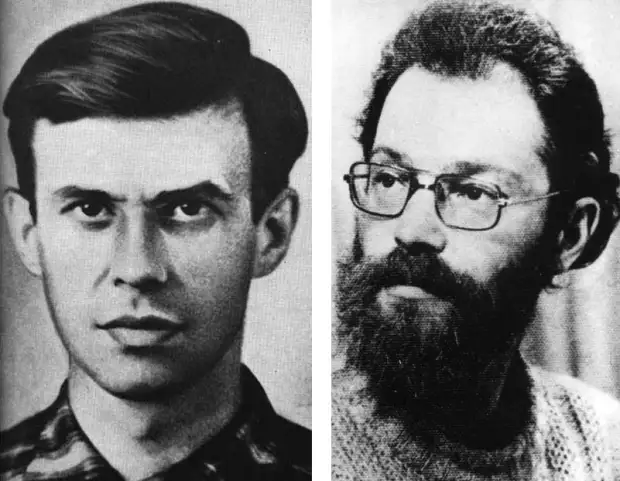
Galanskov and Ginzburg
On the whole, the trial proceeded as the Central Committee suggested. Instructed to accentuate the role of the NTS, Andropov exceeded himself. Originally scheduled to begin on 11 December 1967, the trial was abruptly deferred without any new deadline or explanation. It started only on 8 January 1968. Between these two dates an extremely important event occurred. As if to order, an NTS courier came to Moscow with materials “for the defence of Ginzburg and Galanskov”. He was arrested and appeared at the trial, if not as the main witness then as material evidence of the criminal connection. The trick was so obvious that no one was left in any doubt about the connections between the KGB and the NTS. Either the KGB had simply summoned the courier or, at least, knew of his impending arrival and delayed the trial deliberately in order until he had come.
That was not the end of the NTS saga. In every case the KGB continued its attempts to frame us with such connections, so as to report about its heroic struggle against “the Adversary’s subversive centres”. Sometimes an NTS cell, made up exclusively of KGB officers, would be created for the purposes of “prophylaxis”: it would identify “ideologically immature” citizens and continue the game with the “centre” abroad. On occasion, they managed to entice some young group into this trap, lured by the reputation the KGB itself had created for the NTS as the most terrible enemy of the regime. More often the “evidence” was forced from those who broke under interrogation. As a reward for unmasking the centre’s operations the prisoners were released almost at once; they were allowed to speak on television and sometimes permitted to emigrate. That was what happened, for instance, in the famous case of Yakir and Krasin in 1973 (R 27 August 1974, 2436-Ts), a tragic page in our history which we must pass by here (see CCE 28.2, CCE 29.8 and CCE 30.2).
Meanwhile, the NTS leadership, unabashed by its provocative role in these tragic events, kept up the game. Counting on gratitude in certain quarters, evidently, it advertised the part it had played, declaring verbally and in writing that the NTS had “created the dissidents“. After the tragic death of Yury Galanskov in a camp in 1972 the organisation announced that he had been a secret member of their central committee. Even for such people it was exceptionally cynical. Had it not been for my sudden release and exchange for the Chilean Communist Corvalan I have little doubt that such a fate awaited me.
After Alexander Volpin left Russia in 1972, he told me later, representatives of the NTS tried for a long while to persuade him to join their organisation. “Your friend Bukovsky is one of our members,” they said, evidently hoping that Alexander and I would never meet again. I was then on hunger strike in Vladimir Prison and the rumours of my condition were very grave. The “higher goals” of the NTS, its leaders believed, entirely justified their lies and claims about the non-existent successes of their hundreds and thousands of non-existent members in Russia. It was a distinguishing feature of the underground psychology and something we avoided, thanks to our principled refusal to operate underground or to adopt any of the tradecraft of the nasty spy novels of John le Carré and others.
By 1990 there was no longer any mystery. For years, former KGB Colonel Yaroslav Karpovich told the Soviet press (“Our man in the NTS”, Literaturnaya gazeta, 5 December 1990), he had belonged to the ruling circle of the NTS and was “their man in Moscow”. Some time later he added that Andropov had supervised the entire operation, under the guidance of Brezhnev (Karpovich interviewed by Dmitry Volchek on Radio Liberty in 1992, a total of 9 broadcasts).
Now tell me what it was the Soviet leaders really believed?
*
5.3: The Party’s most powerful weapon
This was by no means all that was involved in KGB operations. Unlike the Khabarovsk Mill, Andropov’s millstones produced no waste.
If they managed to link you to the NTS, that was excellent; if the charge didn’t stick, nothing was lost. The fantasy of the KGB always ran a few steps ahead of reality, covering for the blunders of colleagues, and ensured that you gained the necessary reputation. They openly referred to this among themselves as “compromising measures”.

Possev-Verlag
It was hard going in Alexander Ginzburg’s case, for example, but they did manage to smear him with a mythical connection to the NTS. Someone passed The White Book to Possev Verlag, which published it. The “fact” of his association with the NTS publishing house now needed to be worked up and presented in the most convincing fashion. It was not some unknown bureaucrat but the Politburo itself which then sent every Soviet ambassador the following guidance on the subject (22 December 1967*, Pb 63/122):
“In the next few days there will be an open trial at the Moscow City Court of the case of Ginzburg, Galanskov, Dobrovolsky and Lashkova.
“The usual anti-Soviet hullabaloo has been raised abroad around the forthcoming trial, and the accused are being presented as ‘young, talented writers’, ‘champions of free creativity’ and so on. In reality Ginzburg, Galanskov, Dobrovolsky and Lashkova have no connection with writers and literary work: the first two are white-collar employees, Dobrovolsky is a binder, and Lashkova is a typist. None has any literary works to his name.
“At different times agents of the NTS (a well-known branch of the CIA) have established contact with them in order to recruit them to carry out spying missions. To begin with foreign agents instructed them to recruit people for the NTS, supplying them with instructions as to the forms and methods of struggle with the socialist system, providing them with the means to duplicate leaflets of an anti-Soviet character and to maintain secret communications with those abroad….
“The Soviet security agencies believed it was necessary to halt the links of Ginzburg, Galanskov, Dobrovolsky and Lashkova with hostile intelligence organisations and not permit them to be drawn into grave crimes of espionage.
“Only if the leadership of the Friends apply to you are you to explain the above.
“Note: This communication is being sent to USSR ambassadors in European socialist countries (apart from Albania), and also to Austria, Australia, Argentina, Belgium, Brazil, Great Britain, Denmark, Italy, Canada, Norway, Syria, USA, Uruguay, FRG, Finland, France, Chile, Ceylon, Sweden.”
This was rather modest. They must have feared causing too much of a stir and hoped that the trial would pass off quietly. Usually the scope of the exercise was a great deal wider and the “measures” were implemented with more aggression. Then everything was used – diplomacy, the press and KGB assets.
*
It is typical how easily the KGB imagination made the leap between the NTS publishing house and “crimes of espionage”. There might be any number of such leaps before the compromising image had attained artistic perfection. No matter how hard the KGB tried, for instance, they could not link me with the NTS.

Enrico Berlinguer (PCI)
That accusation was never officially brought against me and it never figured in their “comprising measures” until 1976, the year I was deported from the USSR. Its first appearance, curiously enough, was in a letter sent by the Politburo to Enrico Berlinguer (R 29 August 1976, St 22-15, & Pb 24/25), the Italian Communist Party leader, four months before the exchange with Corvalan:
“After being discharged from a psychiatric hospital Bukovsky continued to engage in anti-Soviet activities. In November 1965, he set up a fighting ‘cell of five’ to prepare for armed insurrection against the Soviet regime. It was then that Bukovsky established contact with the NTS, the well known foreign anti-Soviet organisation.”
One can’t help wondering how the Politburo knew about the “instructions” in the conspirator’s kit, which I so diligently destroyed in 1965? Why recall their own failure, almost eleven years later? They must have known about my coming exchange and were working on a suitable image for me well in advance. Their efforts, unsuccessful in 1965, had not been in vain.
A powerful blast of propaganda followed me to the West. I was an ordinary criminal – how could it be otherwise, “there aren’t any political prisoners in the USSR”. I was a “failed student”: they knew perfectly well they themselves had expelled me from school. Finally, there were the fighting “cells of five”. At the time, I scratched my head and wondered where these cells had come from. The KGB’s efforts were unsuccessful in the West – the press there simply laughed at these conspiratorial inventions – but for years to come I was regarded by many as an unhinged “terrorist “. In such situations, the Soviet leadership was not chastened by failure. They knew that if a lie was repeated often enough it gained the semblance of truth, as Beaumarchais had noted long ago: “Vilify, Vilify, some of it will always stick.”
At times, this principle worked on the Soviet leaders themselves, it seems to me: telling each other, again and again, their own invented versions of reality, they began to believe their own lies. Nothing else would seem to explain the Politburo’s “reply to the proposal by the US Attorney General”, which astounded me when I came upon it (1 November 1979*, Pb 172/113):
“In a conversation with the Soviet ambassador to the USA about holding the [1980] Olympic Games in the USA and in the USSR, the American Minister of Justice Civiletti drew attention to the danger of increased activity by terrorists, the transporting of narcotics and the commission of other crimes during this period. In his view, it might be expedient to establish working contacts behind the scenes between the relevant Soviet and US agencies to ‘exchange ideas about specific concerns on these issues’ and then set up ‘special working groups to exchange information and for both sides to take measures’. Civiletti expressed a desire to receive a preliminary reaction to his proposal.
“As you know, we and the Americans have different approaches to the issue of terrorism. This is graphically demonstrated, for example, in attitudes to national-liberation movements and their organisations.
“Moreover, in the USA a halo of ‘martyrdom’ has been created around convicted terrorists in the USSR such as [Eduard] Kuznetsov who intended, with a group of accomplices, to seize an airplane and kill members of the crew [cf. CCE 17.6-1]. Kuznetsov and the renegade Bukovsky, also a supporter of terror, have been received at the White House by the US President. The two Brazinskas murderers have received asylum in the USA [October 1970 plane hijacking, tr].
“In view of the above, the USSR Committee for State Security does not think it would be expedient to establish contact with the American agencies via Soviet administrative bodies as proposed by the USA Minister of Justice. At the same time, we could reach mutual agreement to pass one another, via the usual diplomatic channels, information about supposed terrorist or other criminal activities linked to the holding of the Olympic Games.”
The first “terrorists” about whom their Soviet colleagues kindly warned the US administration were myself and Eduard Kuznetsov. One can only wonder what “information” they spread about us in secret if such a missive was despatched “via the usual diplomatic channels”.

New Times (1959 edn)
I gained some idea a few years later when the Soviet magazine New Times, published in nine languages and distributed throughout the world, carried an article under the mysterious and intriguing title, “Who killed Jessica Savitch?” (No 37, September 1985). Imagine my amazement when, skimming curiously through the article, I discovered it was declared that I had murdered this US television journalist.
Savitch was known for her pro-Soviet sympathies and had died in a car crash not long before. I had not done the deed with my own two hands, said the magazine, but in collusion with the infamous Meir Kahane, using the forces of his Jewish Defence League.
“The death of Jessica Savitch shows that the criminal world in the USA has acquired a new gang, headed by Bukovsky.
“Since he was a teenager he dreamed of leading a gang of terrorists, he was crazy about the idea of terror and particularly valued in others their readiness to kill. He was convicted and sentenced to imprisonment for organising a terrorist group, the members of which were instructed to “destroy people – hang them from the lamp-posts, shoot and strangle them” (these are Bukovsky’s words, and are taken from the trial records). In the West Bukovsky became a CIA agent and was given the freedom to practise his criminal inclinations. A Paris acquaintance of Bukovsky describes him as follows: ‘Vain and cruel to the point of sadism. Has a pathological greed for money. He is a criminal who sees no other pleasure than to take the life of another.’
“A partnership with the terrorist Rabbi Kahane and his league, who are protected by the Zionists bosses of the American Jewish community, makes the Bukovsky gang untouchable by the police.”
To begin with, I was taken aback. Nothing of this kind had happened before. I had grown accustomed to being called an agent of imperialism, a renegade and even a CIA agent and no longer reacted to these labels. This was no abstract accusation, however, but a real person whom I had supposedly murdered. What did it mean? Were they getting ready to frame me or even kill me? That was always their style, after all: action was accompanied by propaganda, and propaganda by action.

Jessica Savitch (1947-1983)
Suddenly incensed by it all, I asked a famous New York lawyer of my acquaintance to bring a case for libel against the authors, publishers and distributors of the magazine. They would be obliged, at least, to give testimony under oath and these wretches would let something slip. Whatever their intentions, they would not be keen to continue their operation if they had a summons to appear in court. That is what I thought. A summons could not be served on the authors and publishers, however: they were in Moscow. That left the distributor, the Kamkin bookstore created and run on Soviet funding for the purposes of distributing communist propaganda (see Chapter 1, part one: “Intellectual Shenanigans“). Yet according to American law, Mr Kamkin bore responsibility for spreading the libel only if we could prove that he knew the contents of his commodity: “If a bookseller offers for sale a newspaper or magazine in which articles of a scandalous nature are constantly published, the distribution of such a publication may be accompanied by the risk that defamatory attacks might be found in its articles”. And that was where the case, which dragged on for more than two years, came to a halt.
Chapter Five: What “They” Believed (part two) …
=========================================

