This was merely one episode in the game that the Politburo played with Sakharov.
Throughout 1985 and 1986 Gorbachov kept a close watch on everything that concerned the exiled scientist. The KGB sent him recordings of conversations in the couple’s Moscow apartment with American scientists Jeremy Stone and Frank von Hippel (R 1 January 1987), just as they had earlier passed on a stolen fragment of the “Memoirs” that Sakharov was then trying to write (R31 December 1985, 1776-B).
In June 1986, the Politburo again returned to the subject of Sakharov because of his letter to Gorbachov criticising the entire practice of political persecution. Giving his own account of such matters, Chebrikov told his colleagues the following (01 June 1986*, 1135-Ch):
“It should be noted that the number of people prosecuted for such crimes is insignificant and is showing a tendency to decline. At present the number serving sentences in corrective-labour institutions or in exile are 172 for anti-Soviet agitation and propaganda, 179 for spreading knowingly false fabrications denigrating the Soviet system, and 4 for breaking the laws separating Church and State and schools from the church.
“The twelve people mentioned in Sakharov’s letter (Marchenko, Osipova, [Ivan] Kovalyov, Nekipelov, Shikhanovich and others) were convicted for committing specific criminal acts that are covered by the norms of criminal legislation, and in strict accordance with the law. … As a result of systematic educational work certain individuals among those serving sentences (including Kovalyov, Osipova and Shikhanovich mentioned in the letter) have condemned their own actions, declared that they repent, and will refrain from engaging in unlawful activities in the future …
“The issues raised by Sakharov, evidently, are delusions that have been strengthened by the constant negative influence of his wife Bonner.
“In view of the above, it would not seem expedient to give a written answer to Sakharov. A senior official of the USSR Procuracy could be instructed to have a comprehensive discussion with him, in which substantiated replies are given to the issues raised in his letter.”
The problem of Sakharov and the issue of political prisoners were inextricably linked. One could not be resolved without the other, and a solution to the former presupposed a solution to the latter.
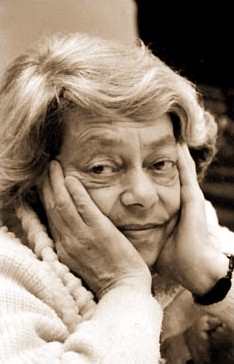
Bonner and Sakharov
The main principle behind the decision to free only those who had “disarmed ideologically” was, therefore, retained here as well. Presenting the Central Committee with his “proposals about Sakharov”, co-signed by Politburo member Ligachov and Marchuk, President of the USSR Academy of Sciences, KGB head Chebrikov wrote (9 December 1986*, 2407-Ch):
“The decision that it was necessary to halt Sakharov’s hostile activities was prompted by the subversive work he had conducted against the Soviet State over an extended period. He incited aggressive circles in capitalist States to intervene in the internal affairs of socialist countries, to engage in military confrontation with the Soviet Union; he inspired protests against the Soviet State’s policy of a relaxation in international tension [détente] and peaceful coexistence.
“At the same time, Sakharov took measures to bring together anti-Soviet elements within the country, inciting them to engage in extremist actions. He tried to establish contacts with anti-socialist groups in the Czechoslovak SSR, expressed solidarity with the Czechoslovak ‘Chartists’ [Charter 77] and representatives of the Polish so-called ‘Committee for Public Self-Defence’, calling on them to unite as an organisation in order to carry out anti-socialist activities.
“Thanks to the measures taken to influence Sakharov by the wise KGB, the dissident physicist had quietened down in Gorky and (most important of all) in the absence of his wife had come to his senses: once again he began to take an interest in science, he ‘criticised the US Star Wars (SDI) programme, made positive comments about the peace initiatives of the Soviet leadership and gave an objective assessment of the events at the Chernobyl nuclear power station’.“
Chebrikov continued
“As before, Bonner insistently opposes the said changes in Sakharov’s behaviour and way of life.
“In essence, she is encouraging her husband not to engage in scientific activities but directs him towards the preparation of provocative documents and forces him to keep a diary with the prospect of its publication abroad. Despite this, however, it would seem expedient to maintain efforts to draw Sakharov into scientific work which would be useful in itself and could help to restrain him from active participation in anti-social activities.
“It seems possible for these purposes to resolve at present the issue of Sakharov’s return to Moscow, since his further stay in Gorky could again prompt him to revive his anti-Soviet activities, if we also bear in mind the negative influence on him of his wife and the continuing interest in the West in the so-called ‘Sakharov problem’.
“We would like to believe Sakharov’s declaration that he was ready, on his return to Moscow, to give up his public activities.
“There could be certain negative aspects to Sakharov’s return to Moscow if we consider the anti-Soviet views of Bonner, her clear striving to provoke Sakharov into conflict with us, and her unconcealed wish to work with circles in the West opposed to our policies. Their apartment might again become a location for all kinds of press conferences involving foreign journalists, a place for anti-social elements to meet, draw up declarations and demands of a negative character. Sakharov himself will hardly refrain from taking part in cases concerning the so-called ‘defence of human rights’.
“Despite all that has been said, however, the return of Sakharov will have fewer political costs now than his continued isolation in Gorky. Furthermore, it is intended that the Committee for State Security will take measures to neutralise this possible negative behaviour.”
As a result, both Sakharov and the “pardoned” political prisoners returned not as victors or innocent victims, but as persons who had been “neutralised” and graciously forgiven.
There was no suggestion that they might be rehabilitated, as happened to many of Stalin’s victims under Khrushchov. Once again, the decision was guided by what was most expedient for the Party and the necessity to minimise the cost. What kind of “victory for democracy” was this? It was the Politburo and its “glasnost” which triumphed.
*
Those who had accepted pardons themselves knew it was a defeat.
Having sent off a request for a pardon, they were thereby accepting the expedient approach of the KGB, no matter what reasons led them to take this step. Those who agreed “to refrain from their past activities” might as well have not gone to prison in the first place. It was all the Soviet regime ever wanted from us. Those who took this step were rewarded: they were elected to local, regional and national Soviets and became “political figures”. Those who stood firm remained “anti-social elements”. Could anyone fail to understand what kind of activity was unacceptable when this deal opened the way for involvement in what was happening to the Soviet Union under glasnost? Did Gorbachov remind Sakharov of his promise “to withdraw from public activities” when he invited him, with a sweep of his hand, to open the Congress of People’s Deputies, Gorbachov’s pre-parliament, in the spring of 1989?
So ended our movement, in a split between those who undertook to “support Gorbachov” and those who refused to serve as a smokescreen behind which the General Secretary could ply his wiles. Those of us who had been deported to the West were quickly divided by the regime into good and bad dissidents: those who “recognised perestroika” and those who did not — like the Russian émigrés of the 1920s who were split between those who did and did not recognise the revolution. Moscow began letting the supporters of perestroika back into the country; articles were printed in the newspapers about their heroic past. Nothing was said about those who would not accept perestroika, as if we had never existed. Only Soviet diplomats began to give us a welcome smile when we happened to meet and were genuinely disappointed when they saw our outdated mistrust.
One of the first to go on a visit, of course, was Andrei Sinyavsky, the Writer Personified.
Grandly he explained to his audience, “I only ever had stylistic disagreements with the Soviet regime,” (Russkaya mysl, 27 January 1989). What an affected, snobbish and loathsome statement. He was talking about the monsters who had tormented millions and wrecked the country, as we now could sadly see. Would his differences with Hitler be no more than stylistic? And what did it mean: how would the Writer have preferred to kill people, in what other style? With Gorbachov, whom Sinyavsky declared “Dissident No 1”, the Writer evidently had no differences of syntax or grammar either.
“Why don’t you go back?” the journalists of perestroika asked me with surprise.
Were they being stupid or dishonest?
*
6.3: Last attempts
It was not enough to break the old opposition, however. A new opposition must not be allowed to form.
“A group of individuals is attempting to hold a gathering from 10 to 14 December this year in Moscow, a so-called seminar of independent non-governmental organisations in the USSR that participate in the Helsinki process for humanitarian issues.
“… Those who intend to head the sections are Grigoryants, [Sergei] Kovalyov, Bogoraz-Bruchman, Chornovol, Airikyan and others who were convicted of anti-Soviet activities in the past and were pardoned this year by an edict of the Presidium of the USSR Supreme Soviet. Timofeyev has announced that he will head the preparatory committee.
“An appeal is being circulated in which the organisers of the ‘seminar’ make demagogic statements about the necessity of creating international guarantees to ensure that member-States (of the Conference for Security and Cooperation in Europe) meet their obligations in the field of human rights, and to ‘devise methods of international monitoring of the implementation of decisions on the humanitarian aspects of the CSCE’.
“… Issues surrounding the organisation of this ‘seminar’ are constantly being raised at gatherings of the said persons in Moscow with the participation of foreign correspondents. Together with them, members of the Glasnost press-club do not hide their striving to unite the anti-social elements in our country and their claims to play a leading role in this.”
Larisa Bogoraz-Bruchman
This was happening not in 1968 or 1977 (cf. CCE 1.1 & CCE 44.2-2) but in 1987 at the height of perestroika, so rapturously then greeted by the West. The measures to prevent this gathering, however, would be directed by the same inventor of Party “glasnost”, Alexander Yakovlev:
“Overall it is clear that a provocative event is being prepared which, according to the organisers’ intentions and those inciting them from abroad, will in any case bring dividends: if the ‘seminar’ takes place, this will give added weight to ‘Glasnost’ and create a precedent of a kind; if it is prevented then this will be a pretext for raising an anti-Soviet commotion, especially since this enterprise is scheduled to take place on 10 December, on Human Rights Day, and has been timed to coincide with the Soviet-American summit meeting.
“In these circumstances, it is proposed that we operate in the following way.
“The executive committee of Mossoviet should give a negative answer to the request of the ‘seminar’ organisers about renting premises, explaining that until the necessary legislation has been drawn up, the 11 August 1967 regulation of the Mossoviet executive committee remains in force. This was taken in the interests of maintaining State security and public order and, in particular, envisages the obligation to observe the USSR Constitution and other legislative acts.
“Furthermore, the ‘Glasnost Press Club’ is not officially registered and it is not clear by what right it claims to be organising international events. We may suppose that when the request for renting premises is turned down the ‘seminar’ will take place in private apartments. In that case, however, the propaganda effect will be considerably reduced.
“A similar argument should be applied when refusing to grant visas to those foreign citizens who want to attend the ‘seminar’. It cannot be excluded that a certain number of foreigners will arrive as tourists and that certain Western journalists, accredited in Moscow, will take part in this gathering.
“Bearing in mind that one of the main goals of the ‘seminar’ organisers is to provoke a scandal, we should refrain at this moment from taking measures of restraint towards them.
“If the organisers do not pay attention to the Mossoviet decision, the Procuracy should issue them with a warning about the unlawful nature of the event under preparation.
“At the same time, there is the question not only of administrative but also political methods for neutralising the activities of such anti-social elements. As the first experience of projects under conditions of democratisation shows, the most promising work results from the painstaking individual efforts of Soviet, Party and non-governmental organisations, including those where people live, adopting where necessary a differentiated approach, while exposing in the mass media the true nature of these ‘rights activists’.”
Nothing had changed. The same disregard for the law, the same measures, the same KGB — and the same Alexander Yakovlev.
*
This time, however, the world’s sympathies were not on our side: it was not our glasnost that was winning now. It was not democracy but “democratisation”, not the market but “market socialism” that was triumphantly being introduced – but no one, not even Ronald Reagan or Margaret Thatcher, wanted to see that.
The Western press wrote enthusiastically about all those KGB “popular fronts” and other “NGOs”; their counterparts in the West hastened to establish working ties with them, while Western foundations provided them with equipment and funds. It was pointless to argue or explain. They thought you were an impostor and swindler who was trying for his own selfish reasons to take money away from deserving people, while they were battling for democracy against conservatives at home. Who were you anyway? And what were you doing here, in the West?
But what difference would it make? If you told them that glasnost and perestroika was an enormous spectacle organised by the KGB, and that all these “fronts” were set up by state security, they would look at you as if you were mad. Reagan and Thatcher themselves did not make such suggestions. Sakharov himself supported Gorbachov … Tell them that the whole show was intended to prevent the formation of truly independent social forces and the Western establishment would be quite content. They feared “independent” actors more than anyone else. That was why the dissidents never received real support from the West, either before, during or after perestroika. “You’re unpredictable,” I was told quite frankly by those who controlled such support. The agreement between the Western establishment and the Politburo was touching to behold: since both wanted a “controlled revolution”, they created their own puppet “revolutionaries”.
The Gorbachov Politburo was well aware of this. That was why they created their “non-governmental organisations” to “neutralise” us. In response to the threatened “human rights seminar” the Politburo resolved, among other measures that (4 December 1987*, p. 5):
“The Moscow City Committee of the CPSU (Comrade Karabasov), together with the Commission for International Cooperation on Humanitarian Problems and Human Rights at the Soviet Committee for European Security and Cooperation (Comrade Burlatsky) are to draw Party, Komsomol, Soviet and other organisations into systematic work to neutralise the activities of anti-social groups such as the ‘Glasnost press club’, including the exposure in the mass media of the real face of these ‘rights activists’.”
That was why those commissions headed by the Party “liberal” Fyodor Burlatsky were created, so that no Helsinki activities could escape their control. Yakovlev, Shevardnadze, Dobrynin and others proudly informed the Central Committee of their successes (4 December 1987*, pp. 6-9):
“… For the purposes of localising this political provocation, the following were not allowed into Moscow: representatives of several foreign anti-Soviet bodies, renegades from among the former Soviet citizens living abroad; members of Polish Solidarity; the Peace and Human Rights Group (GDR); and those who inspire nationalist and anti-social events – Airikyan (Armenia), Chornovol, … Goryn, Gel (Ukraine), Sadunaite (Lithuania) and certain others.
“The measures taken enabled us to reduce, to a certain extent, the range of participants in the so-called “seminar”. We prevented these hostile individuals from joining an organisation with anti-socialist elements from other socialist countries and wrecked an attempt to set up a permanently functioning centre within the Soviet Union. Having not received permission to use State premises for the seminar the provocateurs dispersed to private apartments…. Overall, they were able to attract to their provocative operation around 150 Soviet citizens (including more than 40 individuals from other cities and towns in the USSR). As has been established, most these individuals formerly participated in unlawful activities for which they were prosecuted, and they maintained and continue to maintain contacts with subversive organisations abroad.”
What was it that these criminal figures, these enemies of progress, were saying? Even in the conditions of Gorbachov’s glasnost they could not be allowed to hold their seminar. Perhaps they supported the Party “conservatives”? Perhaps they were speaking out against democratisation?
“These gatherings in private apartments were anti-Soviet in tendency.
“For example, in his speech Timofeyev (Glasnost Press Club) stressed:
‘The seminar should show the world that there are a great number of people in the USSR who are dissatisfied with the socialist system …’
“Krochik (the Trust group) call for the creation of ‘free trade unions’ in the country.
“Ogorodnikov (The Bulletin of the Christian Community) asserted that ‘The USSR is a totalitarian State’ and said it was necessary to struggle for a widening of the role of the church in the country’s political and social life.
“Novodvorskaya (Democracy and Humanism) declared: ‘There must be a non-violent political struggle against the Soviet government. The basic aim of our movement is constant opposition to the government. A demand for a multi-party system in the country’.
“Myasnikov (Glasnost bulletin) said that half the population in the USSR was impoverished, that there were many millions of unemployed people and slave labour in the country, while a quarter of the population did not have a home. Supposedly not one constitutional right is respected in the USSR.
“The contributions of certain participants included calls to fight for an unlimited right to enter and leave the country, to refuse to do military service, and to freely transmit any information abroad. Opposition to the Soviet authorities and the policies of the CPSU was also discussed, as was the creation of a means for influencing the development of the government’s domestic and foreign policy decisions.”
There was little new, in other words, compared to what the perestroika press was already saying, but the people saying such things were unacceptable – they could not be kept under control. Although the authors admitted that this “provocative operation overall did not attract the attention of Soviet citizens”, it should have been prevented since “there can be no doubt that its organisers are continuing their provocative activities”.
“It is envisaged that the Propaganda and International Departments of the Central Committee, together with the Ministry of Foreign Affairs and the KGB, will work on additional measures to expose the hostile and provocative character of the activities of the organisers and participants of the said operation, and to prevent similar events in the future.”
*
That event was, I would say, the only serious attempt to bring together an independent opposition within the Soviet Union. Yet what could this handful of people do when gripped in the suffocating embrace of the State – without funds and faced by the total indifference and, sometimes, hostility of the West and their own society?
Who needed these journals and newspapers with their tiny print-runs when any of perestroika’s media outlets had millions of readers or viewers? The time when a single word of truth proved stronger than a nuclear superpower had passed. Now all spoke the “truth”, a great many varieties of the “truth”, and all at the same time, moreover. The Soviet propaganda of the perestroika years taught people to lie inconsistently, thereby creating the discordant chorus of “socialism pluralism”. However much you might try to outshout them, your truth was only one among many.
Moreover, there was no longer any need to seek justification for collaborating with the authorities. Why ask for trouble and risk the batons of the new riot police for telling the whole truth when by telling no more than 75% you could become a statesman with your own personal motor vehicle? What was the hurry if today there was a ban but tomorrow it would be possible? It was a distinctive feature of Gorbachov’s “democratisation” that those who were under control were allowed a great deal more than the uncontrolled protestors who were dispersed with such brutality (R 11 May 1987, 6/2140, NA):
“The USSR Committee for State Security [KGB] has received information that the extremist-minded participants of the so-called ‘Democracy and Humanism’ seminar … are planning to hold a provocative demonstration on 30 October this year.
“They intend to carry out this protest under the slogan ‘We demand the release of all political prisoners’, ‘We demand a political amnesty’, ‘Rehabilitate the prisoners of conscience’, ‘Stop stifling free thought’, and ‘Revoke Articles 70, 72 and 190-1 of the RSFSR Criminal Code’.
“To give this provocation a mass character they intend to circulate an ‘appeal’ and a ‘declaration by participants in the demonstration for the release of political prisoners in the USSR’. Its organisers are counting on the participation of individuals who were formerly imprisoned for anti-Soviet activities and sent for compulsory treatment by the magistrates’ courts. They have informed foreign correspondents about the time and place of the protest. It is expected that tourists from Western countries will turn up there.
“The Committee for State Security together with the Ministry for Internal Affairs are taking measures to prevent the intended provocation.”
This was taking place at a time when political prisoners, supposedly, were being released and the Criminal Code itself was about to be re-examined. A demonstration on the subject, however, was a “provocation by extremists” which was banned by the Moscow City Soviet and dispersed by the police.
The émigré newspaper Russkaya mysl (Paris) reported on 6 November 1987 that 25 people had been detained before the demonstration began and taken to various police stations around the city and kept there for three hours. Why battle with the police in the square, the man in the street wondered, over something that could be written about in the official press? The intelligentsia took fright: “This could harm Gorbachov, you know.” The West spread its arms in disbelief, attributing everything to the intrigues of the “conservatives” in the Politburo.
In such conditions, it was not possible to organise a united and coordinated opposition. The few who attempted to do so, realising that they could do nothing in isolation from each other, withdrew to their own republics and looked inwards. In that effectively harmless state, however, the Soviet regime still could not tolerate them. Throughout the chaos of the perestroika years and Gorbachov’s crafty zigzags, only one policy remained unchanged and constant: no genuinely independent social structures must be allowed to come into existence, no real opposition must be permitted to consolidate. Four years before the end, the head of the KGB Kryuchkov made the following comments to Gorbachov when recommending that a KGB directorate be set up “to defend the constitutional order” (R 11 August 1987, Pb 164-87):
“… the special services and subversive centres of the Adversary are shifting their activities against the USSR to a new strategic and tactical platform…. By reviving nationalism, chauvinism and clericalism… they are trying to incite centres of social tension, anti-social behaviour and mass disturbances, inciting hostile elements to actions aimed at the violent overthrow of the Soviet regime. With particular insistence, they are trying to create legal and illegal groups of an unconstitutional tendency, to gain direct control over them, providing them with material and ideological support, urging them to commit extremist acts …
“Anti-socialist elements are carrying out their unlawful activities in a similar direction. Using some of the amateur organisations called into existence by the political activity of citizens, and hiding behind slogans of democratisation and the renewal of Soviet society, they are working to create structures opposed to the CPSU [my emphasis, VB] and other organised groups.”
The abolition in March 1990 of Article 6 of the 1977 Soviet Constitution [it made CPSU “the leading and guiding force of Soviet society”] meant that such attempts were no longer “anti-constitutional”, but the general course of Gorbachov’s reforms did not change.
Until the very end any independent groups were kept under constant pressure by the KGB, including those that were quite ready for some form of cooperation with the perestroika regime. If you think this was an oversight and that Gorbachov, deceived by the conservatives, was not aware of it, you would be mistaken, as his response to the following KGB report shows (27 July 1988*, 1541-K):
“According to information received, anti-social elements from among the so-called ‘rights activists’ and Jewish nationalists, incited from abroad, are planning to hold an international seminar in Moscow during the first ten days in December about ‘The KGB and perestroika’.
Hiding behind the process of glasnost and perestroika, the organisers of the seminar have the goal of ‘discrediting the USSR Committee for State Security’ by drawing the attention of wide circles among Soviet and world public opinion to its ‘activities and crimes’.
“In particular, it is proposed to hold a public discussion of such reports as ‘The function of the KGB in the epoch of New Thinking’, ‘The role of the KGB in crisis situations’, ‘The monopoly of information’, ‘Overcoming mystery and fear when faced by the KGB’, ‘The KGB and the national-democratic movement in the USSR’, and ‘The KGB and anti-Semitism’. Such organisations as Amnesty International and the International Helsinki Federation, which have demonstrated their abilities as ‘defenders of human rights in the socialist countries’, are being considered as possible sponsors.
“It is intended to invite famous Western political figures and Sovietologists, including Z. Brzezinski and R. Pipes, and former citizens of our country Alexeyeva, Bukovsky, Ginzburg, Orlov, Plyushch and others who are engaged in anti-Soviet activities abroad. It is proposed that the following will take part: well-known ‘rights activists’ such as Grigoryants and Timofeyev, representatives of the ‘national-democratic’ movements of Azerbaijan, Armenia, Georgia, Moldavia, the Baltic republics and Ukraine, and ‘authorities’ from among the Crimean Tatars and religious figures.
“The organisers of the seminar intend to send invitations to Chebrikov, Kryuchkov, [Procurator-General] Sukharev, and the head of the Visa and Registration Department [OVIR] at the Ministry of Internal Affairs; and to USSR People’s Deputies Adamovich, Afanasyev, Vlasov, Gdlyan, Ivanov, Korotich, the writer Semyonov, the poet Dementyev, former KGB chairmen Semichastny and Shelepin,… and to the chief editor of ‘Moscow News’, and to the TV programmes ‘Vzglyad’ and ‘Fifth Wheel’.”
A resolution has been added to this report:
“This event must be prevented at all costs. M. Gorbachov “.
*
6.4: Death throes
What subversive centres, what intrigues were there?
The bigger and more elaborate the lies of the Soviet leadership, the more the West lapped them up. Yesterday’s executioners advertised their former crimes and the world was touched: What frankness, how things have changed!
They went on killing people, suppressing the opposition, mistreating prisoners for the whole world to see – and the world only worried whether the Lord High Executioner himself might take harm. Like the writer Fonvizin as a small boy, they felt awfully sorry for Mama: she got so tired beating Papa.
“Why won’t you accept the obvious? Things are better now!” I was asked when I gave lectures.
“Sometimes a mortally sick person gets better before he dies,” I jokingly replied, for the first time not knowing what to say.
If they had not understood the Communist system by now, you would never make them understand. As for myself, those were the toughest, bitterest years of my life. I have always found it most difficult of all to cope with betrayal, even when it was only one person. Now almost the entire world had betrayed us, flattered by lies and the promise of a miraculous cure for a universal affliction – the promise, moreover, of a petty trickster. One after another, our allies disappeared. They were people whom I had considered friends and on whom I had depended in difficult moments: now I expected that they should place a similar, unconditional trust in me. We had been through so much together. As if smitten by some viral form of madness, they preferred to believe in someone they had never met and whom they had never looked in the eye. “O, you dissidents! You have a preconceived view of Gorbachov,” they would say.
“What is going on?” I thought painfully to myself. “Have I done anything underhand in my life, anything dishonest? Did I ever betray anyone or let them down?”
Justly or not, I took this as a personal insult: “Who do you believe – me or Gorbachov?” It was not me they believed.
I began, against my will, to compare biographies.
I was sent to prison at the age of 20 in 1963; Gorbachov, then 31, was Komsomol secretary for the Stavropol Region. Three years later I was incarcerated in a psychiatric hospital for organising the demonstration on Pushkin Square; in 1966 Gorbachov became secretary of the Stavropol Party committee. From 1967 to 1971 I was hardly out of prison before they picked me up again; meanwhile Gorbachov was advancing, step by step, up the Party ladder and, when they sentenced me to my last term of imprisonment at the beginning of the 1970s, he became first secretary of the Regional Party Committee and a member of the Central Committee.
Finally, Gorbachov became a secretary of the Central Committee in 1978 when, already forced to live abroad, I was torn between my studies in Cambridge and the need to campaign on behalf of my friends who were political prisoners in the Soviet Union. It was then I published To Build a Castle (1978), my first book. Gorbachov joined the Politburo in 1979, in time to approve the invasion of Afghanistan and the exiling of Sakharov to Gorky.
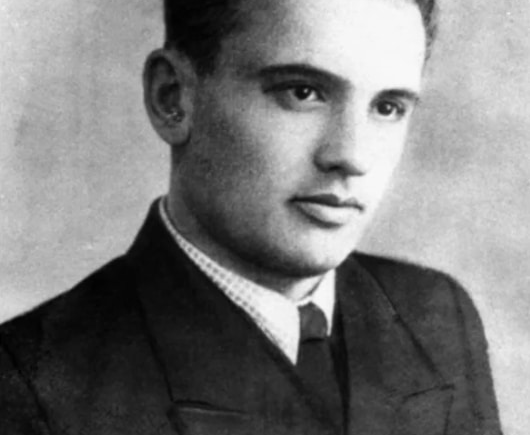
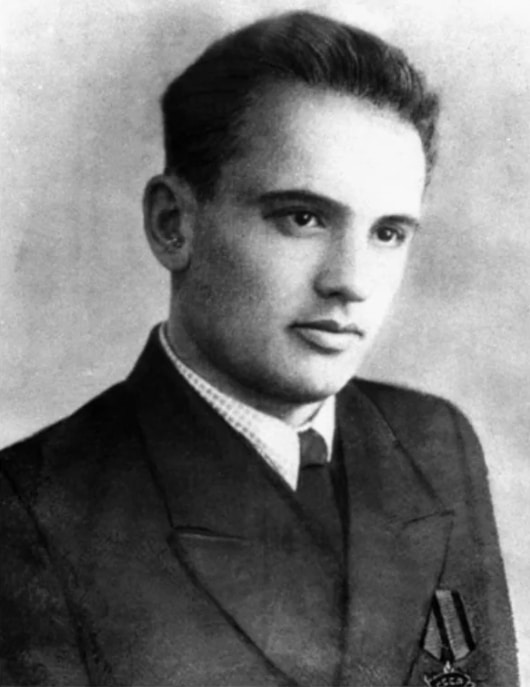
Gorbachov as a “young man”
The contrast was astonishing. Our lives overlapped (only 11 years separated us) and we had taken part in one and the same events. He could not help knowing what I knew, thinking about the same problems and seeking answers to the same questions. Quite consciously, however, Gorbachov chose to serve a lie, advancing through all the stages of submission to the Party while, quite as deliberately, I chose a life of incarceration in prison, labour camp and lunatic asylum because I refused to lie. Yet now the world believed him and not me. What should a man do, I ask you, when people will not believe him?
“You have suffered too much at the hands of that regime,” newspaper editors told me, “It’s hard for you to be objective.” They refused to publish any more of my articles. “Where have I suddenly acquired the reputation of an idiot, incapable of objectivity?” I tormented myself. They could see everything I had said and written. While they might not agree with my views, I had never written anything foolish or dishonest in my life.
They were very difficult years, years of crisis and an acute feeling that my life had been totally wasted. I understood the fate of the world, the future of my country, was being decided. Yet what could I do? How could I help a handful of people who had tried to oppose this epidemic of mendacity? In the whole wide world, there remained only two to three periodicals where I could still voice my opinions.
We were regarded as so many “leftovers from the Cold War” who were now obstructing the process of democratisation. A world gone mad saved the policies of the Soviet Communist Party from us. Moscow did not fail to make use of this. Their disinformation was now believed as eagerly as their propaganda, as this report by Chebrikov to Gorbachov shows (31 July 1986*, 1503-Ch):
“According to our information, a new period of activity has been noted in the USA in the anti-Soviet campaign about human rights, driven first of all by reactionary political and Zionist circles in the United States with the participation of certain renegades who left the USSR and were deprived of their Soviet citizenship. For the purposes of countering these hostile propaganda operations it would be expedient to prepare and implement certain measures to disrupt them. In particular, it should be conveyed to certain political, business and public circles in the USA which are interested in expanding ties with the USSR that the new anti-Soviet campaign… will significantly complicate the general political climate in Soviet-American relations and do substantial political and a certain economic harm to the United States.
Propaganda measures will be taken to expose the unlawful actions of several US embassy staff in the USSR and of foreign journalists accredited in our country, and of the emissaries of subversive centres abroad who have been sent to the Soviet Union and are using their stay in the country to gather and distribute anti-Soviet materials and to incite individual Soviet citizens to commit State crimes and other anti-social acts.
“Conditions will be created for journalists accredited with the USSR Ministry of Foreign Affairs to obtain documentary materials that expose the fabrications of bourgeois propaganda about the supposed violations of human rights in the USSR, and factual material that compromises the renegades whose names are actively used by Western mass media in conducting this anti-Soviet campaign.”
Among its six points the Resolution adopted on this matter by Gorbachov’s Central Committee contained the following instructions:
TASS, APN, Gosteleradio and the KGB are to prepare and transfer abroad materials that compromise the renegades whose names are being actively used by bourgeois propaganda for anti-Soviet purposes, and expose the role of the US embassy, foreign journalists accredited to work in the USSR…
The USSR Ministry of Foreign Affairs, APN and the KGB are to prepare and implement certain measures to convey to foreign correspondents accredited with the Ministry of Foreign affairs documentary material that exposes the fabrications of bourgeois propaganda about supposed “cases of human rights violations” in the USSR. In particular, a press conference should be held for Western journalists at which the nature of our policy concerning Jews leaving the USSR should be explained. In cooperation with the USSR Council of Ministers’ Council for Religious Affairs, interviews should be organised between Walker (Great Britain), Dederiks (FRG), Eaton (USA), An-Nauman (Kuwait) and others among the most objective foreign correspondents writing about Soviet realities and Metropolitans Juvenaly and Alexy, the Chairman of the All-Union Council of Evangelical Baptists Logvinenko, and Council general secretary Bychkov, the religious figures Kharksy and Kulakov, the Mufti Babakhanov, during which the assertions of Western mass media about “violations of the rights of believers in the USSR” are shown to be groundless.
The USSR Ministry of Foreign Affairs, Gosteleradio and the KGB are to aid those Western television journalists who are more objective in their coverage of Soviet policies by organising television broadcasts to West Europe and countries that have an anti-American bent, and with the involvement of leading Soviet political commentators, concerning the practical contribution of the USSR and other States in the revival of the process of detente in Europe.
I did not bother to check whether the journalists conducted those interviews with the Metropolitans of Orthodoxy and the Muftis of Islam. It changes nothing. In those years, the overwhelming majority of newspaper scribblers “wrote objectively about Soviet realities”. Those who tried to be less constrained found themselves censored by their own editors. It was then expected that journalists would write such ecstatic nonsense about the USSR that, it seemed, the paper itself should blush with shame.
I remember the title of one article in a Western (conservative!) newspaper: “Is there life after Gorbachov?” Own up. Who wrote those words? No one will come forward and admit it. If you rubbed the journalist’s nose in it he would deny it. It would be no bad thing to make them eat all those wasted pages that they managed to fill during perestroika.
*
6.5: A dirty trick
As concerns measures to “compromise the renegades”, they followed as inevitably as rain follows the frogs’ chorus and, of course, helped to force us into the isolation to which we had been doomed by Western Gorbomania. An item in a newspaper, a rumour there, and fewer and fewer doors remained open to us. In the end, they took away those modest subsidies on which independent publications in the USSR depended. This was achieved through a classic sequence of KGB measures.
The National Endowment for Democracy was set up under President Reagan by a decision of Congress as an independent public organisation intended to enable the spread of democracy throughout the world. To avoid any partisan sniping the board of directors was made up of representatives from both the Democrats and the Republicans, from the trade unions and the Chamber of Commerce, and the financial aid was openly distributed and in a deliberately “balanced” fashion. It gave money to black trade unions in South Africa and to Solidarity in Poland, to human rights organisations in Salvador and Argentina and to rights activists in the USSR.
It was all completely open and above board: the list of recipients, a description of their project and the sums they were receiving were published in the foundation’s annual statement. This was sent to the media, to NGOs and to Congressmen. The sums at their disposal were not large. The foundation had an annual total of about 3.5 million dollars to spend on the world, and of this the USSR received about 200,000 dollars a year – while Gorbachov was being given billions. The money was barely enough to help the remaining independent newspapers and magazines to keep going, like the Glasnost bulletin and the weekly Express Chronicle, and to pay for translation and distribution of their materials in the USA. That also was too much for Gorbachov’s “glasnost”.
In 1988, a rankly KGB-style exposé suddenly appeared in the 19 March issue of a little-known, left-wing US magazine called The Nation. It was entitled “US funds for Soviet dissidents, an International Story”. The authors Kevin Coogan and Katrina vanden Heuvel were not against the dissidents, they assured us, but felt concerned that they might be damaged by accepting “funds from the USA”. Soviet conservatives, well known for their paranoia, might use this as an excuse to harm glasnost. Worst of all, it disturbed the authors that we émigrés living in the West and obtaining the money from the US government were putting it to such a use that it “more resembled intelligence gathering than human rights activities”. Having planted this insinuation, the authors were at pains to stress that it was not they who had fabricated this accusation but as two sincerely concerned American journalists they worried that conservatives in Moscow might interpret the relationship in that way and make bad use of it. We Russian émigrés, by our thoughtlessness or self-interest, were not at all concerned about this. In the middle of the article, however, the conservatives and the conditional tense disappeared; a public foundation became the US government; and we were portrayed as merciless exploiters of unsuspecting Soviet dissidents who were concerned only about how to “use the Soviet human rights movement to gather political and military information about the USSR”.
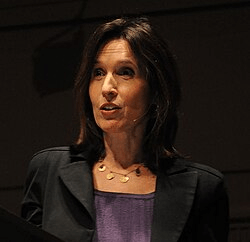
Katrina vanden Heuvel
This was exactly what the KGB wanted and had been trying, assiduously, to pin on us for the past 25 years. And, as is the custom with dirty tricks by the KGB, the article was instantly reprinted, in record time, by the Soviet press and left-wing publications around the world. In Denmark, the article appeared in the leftist Information periodical on 12-13 March, an entire week earlier than the US original, and without any ambiguity called itself, “Soviet dissidents are working as US spies “. It also carried a large photo of me in the centre of the piece, although I had not figured strongly in the original. This Danish version was summarised bySovetskaya Rossiya (24 March 1988) though without the authors’ “concern” about the fate of the dissidents, of course, under the striking title, “Export the information, it’s been paid for”; Za rubezhom (No. 13, 1988), meanwhile, rapidly produced a Russian translation of the original Nation article with a no less sensational title “Espionage under the guise of defending human rights” and sub-headings like “Today’s NTS”, “All is revealed”, etc. And so it continued, in the best traditions of KGB glasnost, from paper to paper, each citing the other, each more outspoken than the last. The campaign went on for six months as the KGB crushed the independent newspapers in the USSR, beating up their staff and destroying their equipment.
Earlier than all the other Soviet publications, however, Literaturnaya gazeta (23 March 1988) in the person of its New York “correspondent” Iona Andronov had bustled into action with a long article entitled “International Life. Pawns in Someone Else’s Game”. I put the word correspondent in inverted commas because it was already well known at the time that Andronov worked for the KGB. Subsequently I found documents in the archives that confirmed his allegiance to that body since at least 1972 when he became the New York correspondent of the KGB magazine New Times (R 27 January 1972, St 28-11). Whether he was in too much of a rush to publish his article or too eager to boast of his scoop, it followed from what he wrote that he had been behind the entire operation, perhaps editing the article of those concerned American journalists:
“A local journalist Kevin Coogan told me in greater detail the secrets of the New York publishers behind the pseudo “Glasnost” magazine. He took an interest earlier than I in the grubby background of the new anti-Soviet periodical and discovered semi-conspiratorial information about it. He was aided in this by a staffer at the liberal ‘Nation’ weekly Katrina van den Heuvel. Their jointly-authored article is ready for next week’s edition of ‘The Nation’. In the meantime, Coogan agreed to share his information with ‘Literaturnaya gazeta’ …”
There ensued an entire saga in which van den Heuvel and Coogan denied this account and protested against the use of their article “to harm dissidents”, while not denying their contacts with Andronov or that he had seen their article before publication, in an early draft.The New York Times took up our case (“Exiled Soviet dissidents’ group in dispute over threat to dissenters”, 12 April 1988), not to speak of more friendly publications that published the indignant reactions of dissidents “Glasnost, the KGB and The Nation”, Commentary, November 1988). But it was in vain, we lost the money nevertheless.
In that sense, the USA is an amazing country. On the one hand, the right to print defamatory material is acknowledged to be a sacred right of the press, enshrined in the First Amendment to the Constitution. On the other hand, it is a land of extreme conformists where any criticism of an individual in the press, be it knowingly defamatory, renders him unacceptable, especially when it comes to the provision of public funds – “too controversial” is how they put it in such cases. It is not, you will note, the libeller who becomes controversial but the person he or she has libelled. Naturally, this is widely used by all kinds of leftist good-for-nothings to stop you getting any money. Before this story blew up, when we were dangling by a thread, our pitiful support for the dissidents already irritated the Leftist establishment. Now a welcome excuse had appeared for declaring us “too controversial”.
What should I do? Chastened by my experience, three years earlier, of being accused by New Times (!) of the “murder” of Jessica Savitch (see Chapter 5,”5.3: The Party’s most powerful weapon“), I did not try to do anything through the American courts. Instead, using the fact that a tiny part of The Nation’s print-run (no more than one hundred copies) was distributed in Britain, I attempted to take them to court there. What unbelievable pretexts they dreamed up to delay and defer the case and keep it out of the courts! I shall not try the reader’s patience in listing these excuses. It is enough to say that the case dragged on for more than five years, passing from one court to another. Finally, it was quietly shelved by the House of Lords, the highest court in the land: the accused had petitioned the upper chamber of the Houses of Parliament to close the case since it had been going on for too long.
I had the pleasure of reading their petitions, masterpieces of cynical and brazen falsehood. We are suffering from nervous exhaustion, they wrote, after waiting to go to court for the past five years. We no longer remember the details of the case, and it would be unjust today to question us under oath. Anyway, everything has changed now and neither the USSR nor the KGB exists, they concluded. What is at dispute? Why stir up the past? I was never able to make them answerable before the law or, at least, to apologise. There was no chance to look the scum straight in the eye. If any of you have the occasion to do so, please do it for me if you meet either of them by chance.
xxx
At the end of this long chapter (“Back to the Future!”) – and, at the same time, of my life – what else remains for me to do but curse those unclean, two-faced creatures in East and West who have deprived my life of meaning and the world of a recovery from such a serious affliction.
May they admire their handiwork and rejoice how deftly they fooled everyone. Everyone, I say, and themselves too. For they will hardly feel at ease in a disintegrating world, wallowing in lies. A thief feels safest among honest people, as the liar does among the just: otherwise we would forever be cheating each other and stealing each other’s belongings. And there’s no future in that.
Yet everything could have turned out differently, if only people had displayed an ounce of conscience – no, I dare not put my confidence in that but, at the very least, just a little far-sightedness, keeping their minds and eyes on something a little further ahead than the triumph of that moment. Those are the qualities, supposedly, that distinguish us from our nearest relatives among the primates: go back far enough and it is the foundation of our civilisation. Is this not the way it ends, with no desire to think for one minute about the future? Forget the apes with their little brains. Mikhail Gorbachov is no fool. Did he feel content in the 1990s with his Nobel Prize? The cunning he showed and the intrigues he wove – and for what? To cling to power just one more day. He outplayed almost everyone and at the last was surrounded by the sycophants who were his downfall. There was no one to blame but himself. Gorbachov selected and promoted the most despicable of them, squeezing out anyone remotely honest and, finally, he played such a crafty hand that he doomed himself.
But what about our renowned intelligentsia! They also are not stupid; you can find some very bright people in Russia. For centuries, we nurtured our gifted scientists and writers, but it proved all in vain. They all pushed and shoved, trying to get nearer the trough; they wanted to have their cake and eat it too. That was all they had left in their heads, and now there was no feeding trough or anything to fill it with. They retreated to their chilly dachas and sat, throwing volumes of Lenin into the stove, as the mournful wind in the chimney wailed, “It’s all so unfair …!”
xxx
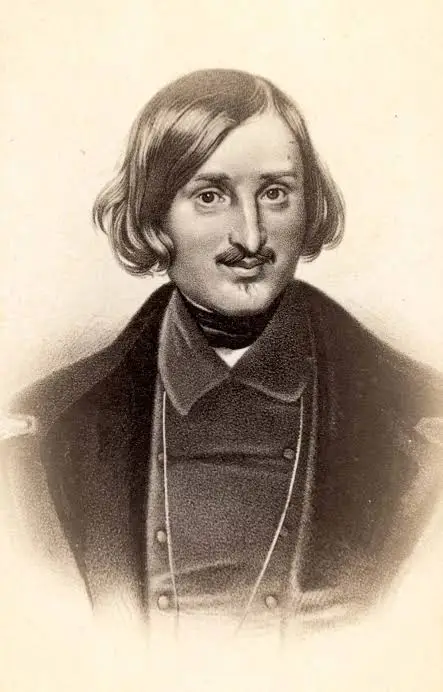
Nikolai Gogol
One hundred and thirty years before Gogol wrote:
“Whichever way you look, there’s nothing but swinish faces all around.”
What could I do if the ecological situation in Russia had not changed for the better in the meantime?
Truth to tell, if they gave me a second or a third life I would have achieved no more. I was not seeking victory but (Ecclesiastes, v. 6 “The emptiness of all endeavour”) had understood too soon:
“Unhappy the country where simple honesty is perceived at best as heroism and at worst as a form of insanity, for in such a country the earth will yield no bread.
“Unhappy the nation whose sense of dignity has deserted it, for its children will be monsters.
“And if a handful of people are not to be found in that country, that nation – at least one person who will take their common sin upon himself – then the wind will never return full circle …”
An asterisk following the date (*) and bold type indicate that a file from the Bukovsky Archive has been fully or partially translated into English. There are six untranslated [R] pdf files, one of which is not accessible online; that leaves 29 other notes.
(The archival description of the various sources mentioned in the text was added to the notes of the book version, indicating their size and contents, and providing access to the original Russian text.)
text translated & edited, and links restored, by John Crowfoot