PART ONE
- 6.1 The Letter of the Ten
- 6.2 Living Souls
- 6.2 Living Souls (concluded)
- 6.3 Last attempts
- 6.4 Death throes
- 6.5 A dirty trick
SOURCES
*
Judgement in Moscow (online)
*
It is hard to convey how ecstatic was the response of the Soviet intelligentsia tо the appearance of Gorbachov (Tchichikoff, wrote Bukovsky) and to his “glasnost“.
It was calculated to appeal to them – to them and to those like them in the West for whom glasnost, above all else, justified their collaboration with the regime. “You see?” the Soviet intelligentsia exclaimed triumphantly. “What need did we writers have for all that fuss and bother, for those movements?” “You see?” crowed their Western counterparts. “What was needed was cooperation, not confrontation!”
Overnight, the collaborators and conformists found themselves the greatest of heroes. The country choked with rapture at its own boldness. For decades, Soviet newspapers were filled with lies and people were almost coerced into buying them or taking out a subscription. Now they were sold out each morning. No one had watched Soviet television for years, apart, that is, from the football and hockey matches. Now people stared at their TV sets into the early hours, as if mesmerised, hurrying red-eyed to work the next morning. Yet there was nothing in all those newspapers or on the TV screen that people had not known, from Western radio stations or samizdat, since the early 1960s and the time of Khrushchov. If not from those sources, then they had learned such things from their father and mother, from friends and neighbours, and from their grandparents.
Of course, there was nothing new – but how bold it all was, how interesting!
*
Such was the scale of lies and dishonesty under Gorbachov that telling the truth became a form of deceit. Depicting themselves as courageous pioneers, writers, journalists and broadcasters lied to their readers and viewers; meanwhile the audience lied to themselves, pretending it was all new to them. It was not the novelty of the information, but that it was now officially permitted which fascinated them.
Without the slightest irony and to general rapture journalists and their audience began to talk about the “blank spots in our history” and the earlier crimes of the Soviet regime. Everyone knew, of course, about political repression, the destruction of the peasantry and the collectivisation of agriculture; they knew about the Great Terror of the 1930s, the Nazi-Soviet Pact of 1939, and the expulsion of entire nations from their homes during and after the war. There was not a family in the Soviet Union, after all, in which someone had not suffered or, at least, participated in these events. Before, however, it had been taboo; now one could openly refer to such things. Holding their breath, they asked one another in wonder, “Whatever are they going to say tomorrow?!”
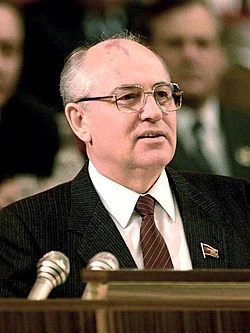
Mikhail Gorbachov
Meanwhile, the decades from Khrushchov to Gorbachov as they touched their own lives continued to gape, as one vast “blank spot” in recent history. Somehow it did not bother anyone. During the perestroika years, a great amount was written and said – too much, in fact – about the period from the Sixties to the Eighties. Journalists and specialists talked and wrote about the stagnation of the economy and ecological catastrophe; they began to discuss Hungary and Czechoslovakia and, in time, Afghanistan. Yet somehow it was not about them and their audience; it had happened to people who might as well have been living on Mars. It was as if they were in no way linked to what happened then. They had suffered, but only like the ever-adaptable TV commentator Vladimir Pozner. They had been victims, but no more than the poet and official “rebel” Yevgeny Yevtushenko. And if they had struggled, then their struggle most resembled that of Yury Andropov, the head of the KGB from 1967 to 1982. No, they “did not know”, or they “were afraid”, or they just “believed” what they were told at the time.
Our terminology and our definitions of “stagnation” and the “law-governed State” came into use, and sometimes entire passages were lifted from samizdat works. Typically, not one of those who borrowed our concepts or quoted from what we had written ever hinted at the source. None said where that strange word “glasnost” had suddenly come from. Our trials, our books, our deportation from the country and exchange for Soviet spies – it was as if they had never happened. (We could not visit Moscow. Until 1991 we remained on the KGB blacklist.) Two decades somehow vanished from recent Soviet history and life was beginning again from scratch. There was not so much a ban on certain subjects as an unwillingness to open a discussion. Everyone knew the inevitable question which would follow: “But what were you doing then?”
Consciously or not, the tribunes of perestroika and, incidentally, the “democrats” of the 1990s who rose from their ranks, nurtured a deep resentment towards us. They could never forgive us for being “clean-handed”; for not having guzzled with them at the Party trough; for not seeking those compromises with their conscience that made up their lives.
The fact of our existence destroyed their legend: if we existed, that meant there had been a choice, and it had been possible to live different lives.
*
6.1: The Letter of the Ten
Incensed by this fantastic dishonesty and, especially, by the Western euphoria about perestroika, ten writers — scientists, artists and dissidents from the USSR now living in the West — wrote and co-signed a letter in spring 1987 at the peak of “glasnost”. It was our attempt to bring public opinion in the West to its senses.
Subsequently known as the “Letter of the Ten”, it appeared in newspapers in most Western countries: in the London Times (17 March 1987) it was titled, “Still Waiting for Real Reform”; The New York Times (22 March 1987) turned it into a question: “Is Glasnost a Game of Mirrors?” Quite unexpectedly for us, it was also translated into Russian and published in Moscow News (29 March 1987), then the “progressive” flagship of perestroika.
In a restrained tone, we suggested it was too early to enthuse over the “reforms” of Gorbachov. As yet they were no more than promises and, moreover, expressed in a very opaque form, since the Soviet Union was still in thrall to Marxism-Leninism. Our letter was addressed to readers in the West, not in the USSR, but, Lord, how the Soviet “liberals” cursed us! In the old days, Pravda had never been so full of references to “renegades”, “outright anti-Sovietists” and, of course, “CIA agents”. Moscow News printed our letter to demonstrate the authenticity of “glasnost “. Then the Soviet newspapers took fright and one after another, resorting to worn-out KGB clichés, they began to denounce us. We had dared to challenge their “glasnost”. We were renegades and traitors who had deserted (!) the Motherland in search of an easy life, while they remained behind to suffer and struggle. We were enemies of the Motherland, they were fighting to make it a better place. Then, unbelievably, they began explaining to us the meaning of human rights …
Yet the more they berated us (they had no answer of substance), the more our letter spread across the Soviet Union, rewritten by thousands of hands, copied down from the news-stand outside the Moscow News offices on Pushkin Square. It was the first time material had entered samizdat from an official publication. The Party had to put up a serious defence. Moscow News was published mainly in foreign languages, and its small Russian print-run (chief editor Yegor Yakovlev, see “Night of the Looters“, 2.1) was for a narrow circle of reliable supporters of perestroika. The Politburo allowed all the other “progressive” newspapers and magazines to run a little ahead of the changes, thereby demonstrating their boldness.
Now they were forced to join in, organising “letters from workers” and printing round-table discussions in their pages. Ogonyok and other Soviet publications took up the discussion, in the best traditions of Alexander Yakovlev’s propaganda from the trials of the 1960s: See Ogonyok (No 13, March 1987), New Times (3 April 1987), Pravda (25 March 1987), Sovetskaya Kultura (1 April 1987) and Leninskaya smena (April 1987). The row carried on for months, but increasingly our floundering critics resembled insects trapped on fly-paper. It was a portent of where their game of “glasnost” might lead.
As the supporters of perestroika were angrily denouncing us in their “liberal” publications, in private we received quite different reproaches through common acquaintances: “Why did you put us on the spot like that? You provoked us into publishing your letter and now we’re in trouble. They threatened to close Moscow News. Why did you do it? We aren’t doing any harm, and we’re only misleading the West. You know and we know just what’s going on.” What could you say if they considered it normal to “mislead the West” (and inform on foreigners)? We were guilty, it seemed, of provoking them and getting them into trouble. One of my classmates, many years later, said something similar about my expulsion from university:
“You can’t imagine the trouble you got us into!”
“What do you mean?”
“It’s obvious! We started getting interested in samizdat, some of us were caught and they barely allowed us to graduate from university or defend our theses …”
“Sorry to hear that …” was all I could tell her.
What was I supposed to say? If they had not remembered my example they would indeed have lived a much happier life.
xxx
When Gorbachov and Yakovlev began their cunning game of glasnost they knew that they could depend on their own Soviet intelligentsia. If there was something that worried them at that moment it was the possibility of our influence.
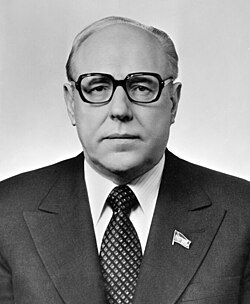
Chebrikov (1984 photo)
That was why their greatest concern was to isolate and obstruct the dissidents.
These concerns were there, of course, long before the Letter of the Ten and the official announcement of “glasnost” in mid-1986. KGB head Chebrikov then sent the following note to the Central Committee, 1 June 1986*, 1135‑Ch:
“Materials reaching the KGB shows that the Adversary is engaged in targeted subversive actions aimed at discrediting the Party’s policy of accelerating the socio-economic development of the country and the further improvement of social progress, and he is paying particular attention to representatives of the creative intelligentsia, first and foremost to figures in literature and the arts.
“Taking into account the universal increase in the political and work activity in the life of our country, Western special services and centres of ideological sabotage are modernising the forms and methods of their subversive activities. These are aimed at the ‘ideological deformation of socialist society’, the incitement of revisionist and oppositionist feelings and they are trying to push Soviet writers onto the path of a departure from socialist realism and Party-mindedness in literature. To achieve his hostile intrigues the Adversary is striving to lodge in the thinking of the creative intelligentsia a nihilistic assessment of the entire practice of the building of socialism in the USSR.”
The first source of concern were “political degenerates” among writers who had emigrated: Solzhenitsyn, Kopelev, Maximov, Aksyonov, and Vladimov were named (see CCE Name Index). They were, Chebrikov said, being “resuscitated” and encouraged by the special services of the Adversary to seek out like-minded individuals in the Soviet Union. The Party’s policy of further “democratisation” made certain writers a particular target:
“those writers who have earlier been ideologically unstable, and not always come through the test of their civic maturity and class conviction: writers who, directly or in a veiled form, have cast doubt on the correctness of Party policy as concerns collectivisation, dekulakisation, the struggle against Trotskyism, and CPSU policy towards ethnic groups; writers who declared that there is a lack of social justice and creative freedom in our country, demanding the “removal of censorship” and the release of literature and art from the supervision of Party bodies.
“These very issues, it may be noted, were those presented by Solzhenitsyn in 1967 in a provocative letter to the 4th Congress of Soviet Writers that then gained the support of 80 members of the USSR Union of Writers. Among them were Rybakov, Svetov, Soloukhin, Okudzhava, Iskander, Mozhayev, Roshchin and Kornilov.
“The information to hand shows that throughout the subsequent period these writers were under the constant attention of the special services and centres for ideological sabotage of the Adversary. At present their ideological operations has been significantly activated, both by the embassies of capitalist countries in Moscow and by periodic visits abroad as part of international cultural exchanges …”
Finally, “the Adversary” was trying to depict this as a new epoch far less dependent on the ideological policies of the Party
“… They are promoting their idea that on the basis of ‘common spiritual goals’ there can be a fusion of the creative process of the artistic intelligentsia in our country with former representatives who are actively engaged in anti-Soviet activities in the West and numbered among the ‘geniuses of Russian literature in exile’.
“According to our information, certain Soviet writers have spoken, in public statements and private conversations, in favour of a re-examination of attitudes towards the personalities and creative output of certain renegades and are insisting on the relevance of considering their works as an inseparable part of a ‘single Russian culture’.
“In particular, M. Roshchin and [Anatoly] Pristavkin have expressed an opinion about the possibility of Solzhenitsyn’s return to the USSR and the expediency of publishing his ‘works’ in our country in the near future. In April this year at a gathering of the association of Moscow poets, V. Leonovich publicly called for a reconsideration of attitudes towards the renegades [Vladimir] Voinovich and [Joseph] Brodsky, who are living in the West.
“In March 1986 during an evening event at the Mayakovsky Museum he voiced a high opinion of the work of the anti-Sovietist [Alexander] Galich, and expressed dissatisfaction that his courageous works are not published here. Speaking at the All-Union seminar of Slavists in Narva [Estonian SSR], Okudzhava called Galich ‘the first in importance among Russia’s bards’.
“Recently statements and letters in defence of particular individuals convicted of unlawful activities have been sent to various authorities and these are being used by the West for purposes hostile to the USSR, while their lampoons are currently declared in the West to be ‘an inseparable part of Russian literature’ …. The USSR Committee for State Security is taking the necessary measures to counteract the subversive efforts of the Adversary among the creative intelligentsia.”
This worried the Central Committee.
Gorbachov added a resolution to the report: “1. Send to members and candidate members of the Politburo and to secretaries of the Central Committee. 2. Comrades Ligachov and Yakovlev, please have a word with me.”
The tens of thousands of Soviet scribblers (left and right, progressive or reactionary) with their endless infighting and phoney rebelliousness suited the leadership very well. The Politburo’s discussion of the forthcoming Congress of the USSR Writers’ Union showed that the Party could manipulate any combination to suit its needs (26 June 1986*, Pb).
*
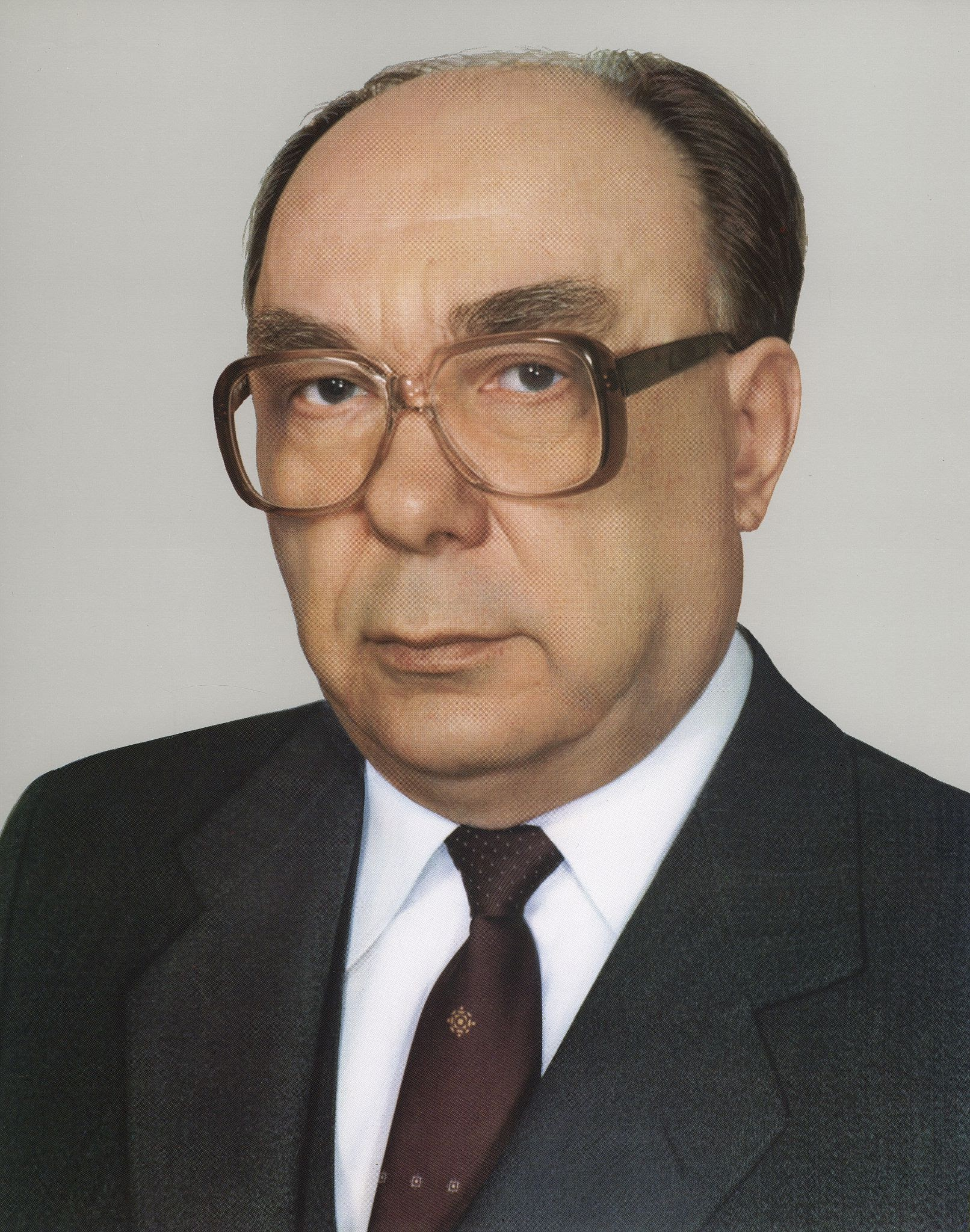
Alexander Yakovlev
26 JUNE 1986 (POLITBURO)
GORBACHOV. Let’s listen to what Comrade Yakovlev has to say about the way the USSR Congress of Writers is proceeding.
YAKOVLEV. On the whole, the Congress of Writers is keeping within the course set by Party decisions but not without controversy. … A periodic change in the membership of the board of the Writers’ Union is being raised in the speeches. It is suggested that they be elected for no more than two terms of office. The present leaders of the Writers’ Union are called the “children of their time”, and it is proposed that they depart with that time. The audience has met such declarations with ovations.
… About the possible composition of the new leadership of the Writers’ Union. Markov is presently in hospital. Perhaps we could envisage such a variant: Markov becomes board chairman and Bondarev, the first secretary. At the same time, however, a working bureau could be created made up of Comrades Bykov, Zalygin, Rasputin, Aitmatov and certain other writers. Comrades Yevtushenko, Voznesensky and Rozhdestvensky should not be discounted. We must be aware that the general feeling is such that the old leadership could be voted out.
GORBACHOV. I think we should not restrict ourselves to a single individual and should not struggle to draw the line when candidates are put forward for the board.
GROMYKO. Which alternative do the writers themselves favour?
YAKOVLEV. As concerns the first variant, the election of Comrade Markov as board chairman, we must bear in mind that he has already been part of the leadership of the Writers’ Union for a long while and is at this moment being criticised.
GORBACHOV. Of course, the election of Comrade Markov would be the best alternative. How is the candidacy of Comrade Bondarev regarded?
GROMYKO. He’s a major writer.
SOLOMENTSEV. He adheres to the correct course.
VOROTNIKOV. Comrade Bykov and certain others could be included in the proposal.
MEDVEDEV. But will Comrade Bondarev be voted out?
YAKOVLEV. That shouldn’t happen.
GORBACHOV. If Comrade Markov doesn’t get the votes, then Comrade Zalygin could be chosen. However, he’s getting on and not very strong. Probably we should rely on Comrade Bondarev.
ZIMYANIN. What about the secretariat of the Writers’ Union?
GORBACHOV. Let them remain.
YAKOVLEV. If we are relying on Comrade Bondarev as first secretary, then we should discuss this with Comrade Markov.
GORBACHOV. We should talk with Comrade Markov about everything. He must be given his due. Even if he is not elected, we must behave properly towards him.
YAKOVLEV. Should we talk to Comrade Bondarev?
LIGACHOV. After the board of the Writers’ Union has been elected.
GORBACHOV. Agreed. We shall still have to choose among those who are elected to the board. Philip Denisovich, what’s your opinion?
BOBKOV (KGB deputy director). If it gets out that Comrade Bondarev is favoured, he may not be elected. So, this fact should not be made public prematurely. As concerns Comrade Bondarev, he’s a good candidate.
GORBACHOV. Yes, we should not expose Comrade Bondarev to attack.
LIGACHOV. A change in the leadership of the Writers’ Union, speaking generally, is overdue.
GROMYKO. We must not feel alarmed by a change in the leadership of the Writers’ Union. It is important that the new leadership is creative and authoritative. There was a time, after all, when the Writers’ Union did not exist and there were authoritative figures in literature all the same.
GORBACHOV. Of course, we must take the general mood in favour of a renewal of the leadership into account. There’s no need to dramatize things.
Yegor Kuzmich [Ligachov] is right when he says that a freshening up of the leadership of the Writers’ Union is overdue. Let’s agree that our first choice is for Comrade Markov to be elected chairman and Comrade Bondarev, secretary. To that end, we must use our ability to influence things. There will be a meeting of the Party group at the Congress, won’t there?
YAKOVLEV. Yes.
GORBACHOV. Let’s leave it at that and let Comrade Yakovlev attend the Congress.
*
As a result, Comrade Markov became board chairman of the Union and the new Secretary, the “reserve option”, was Comrade Karpov, a retired major-general and patriot who was reputed to be a great liberal. What raptures these revolutionary changes evoked in both East and West! That was how the new era, the period of “their” glasnost, began.
xxx
Glasnost and Perestroika. The Soviet intelligentsia was not only taken in, it was constantly ready to sell itself for glasnost and perestroika. So was the whole world, however.
How could they resist a “young and energetic” General Secretary, especially one talking of reform, after the succession of despondent, unsmiling old men and their endless State funerals? Gorbachov had appeared after the sudden return of the Cold War in the early 1980s, with its crises, its arms race and the “struggle for peace”. How people longed to believe it was now all behind them! However much I explained that the Soviet system was not a monarchy and the General Secretary was not a king, who in the world did not then wish success to the new reforming monarch?
Of the hundreds and thousands of politicians, journalists and academics in the world, only a handful remained sufficiently sober and did not succumb to temptation. Those who decided to voice their doubts were yet fewer in number. No one wanted to listen. Yet all it took was one good look at Gorbachov, to listen once to his ungrammatical, clumsy and senseless chatter – translation greatly enhanced his words – to dispel any illusions. A superficial knowledge of the Soviet system was all it took to dispel such illusions: a liberal reformer could not be promoted within the Party. There are no such miracles.
And still everyone longed for a miracle. Sceptics were furiously silenced as if they were threatening the future of humanity: “Quiet! Don’t alarm people …” It was as if we were all accomplices in a worldwide conspiracy, and if anyone mentioned it aloud he would betray the conspirators and wake the drowsing enemy.
That is how the Soviet press, and the Soviet intelligentsia, regarded the “Letter of the Ten”: it was a “denunciation of our nation” (Pravda), and “An attempt to kill perestroika” (Moscow News). What was this perestroika, one could not help but wonder, if an insignificant word of doubt might kill it? And who was the denunciation addressed to? Where was this unseen enemy: in the West, or in the East? Who were we obliged to deceive for love of our native land? Not the Politburo, that was certain – they were the ones who had come up with the policy. That was the brilliance of this invention. No logical arguments had any effect. It was a kind of mass psychosis, comparable to the hysteria of the “peace movement” in the early 1980s, and it was inspired by the same Kremlin manipulators.
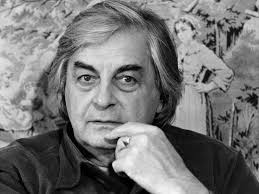
Yury Lyubimov
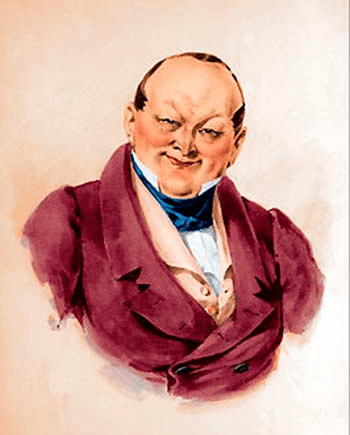
Gorbachov himself, of course, was not responsible. A provincial Party official, he was capable at best of a petty swindle, no more. With a professional eye for character, the theatre director Yury Lyubimov (who signed the “Letter of the Ten”) noted the amazing similarity between the new General Secretary and the portrait in Gogol’s Dead Souls of Russia’s most famous confidence trickster:
“He’s the spitting image of Tchitchikoff!
“A gentleman pleasant in all respects. Just re-read, for amusement’s sake, Gogol’s description of his immortal hero:
‘In the carriage sat a gentleman, not handsome but not of an unpleasant appearance; not too fat and not too thin; you could not say he was old nor that he was too young’.”
Gorbachov indeed. Everything but the birthmark on his forehead. The leadership had made him General Secretary for his rounded, pleasant features, as the man most suitable to carry out the grandiose “KGB operation” conceived and developed at the end of Brezhnev’s rule by Yury Andropov, the master of such schemes. “Hold on. Don’t be in a hurry,” KGB officers would then tell some of their most trusted contacts among the “liberal” intelligentsia. “Let us finish with the dissidents, and when Brezhnev dies great changes will begin.”
Gorbachov himself acknowledged as much when the failure of perestroika became obvious and he had to explain why the whole plan had been so badly thought out. “Not thought out?” he responded, indignantly. It had been very well thought out. One hundred and ten studies and proposals had been presented to the Central Committee by various think-tanks. “They all date back to a period when the April Plenum was still far in the future,” Gorbachov told figures from the world of “culture and science” assembled at the Central Committee in January 1988. (The text was printed a year later for all to read on the front page of Literaturnaya gazeta, 11 January 1989.)
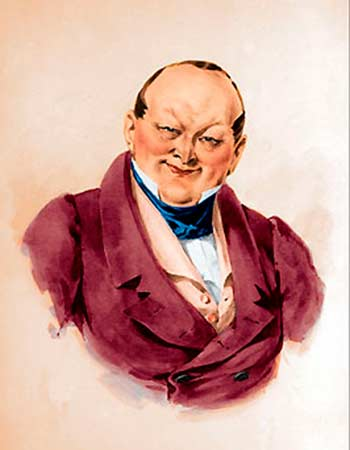
Ivan Tchitchikoff
Could a plan so well attuned to the psychology of the Western establishment have been the work of someone in charge of a run-down Regional Party Committee who joined the Central Committee only in 1978 (and with responsibility for agriculture, at that)? Gorbachov’s first visit to the West took place only in 1984, just before active preparations began to make him General Secretary.
The hand of a master of disinformation can be felt behind glasnost and perestroika, someone with 15 years as chairman of the KGB and a belief in conspiracy as the motive force in history. Who else would have thought of staging a hybrid of the Prague Spring and Lenin’s New Economic Policy in Moscow? Only Andropov would have thought of creating the semblance of political pluralism by using the methods of the KGB.
The word perestroika was itself a masterpiece of propaganda.
What on earth did it mean? Western libraries are full of books and studies about the period when the whole world, like so many parrots, started repeating this strange word, “pe-re-stroi-ka”. Yet there is hardly any secret. In construction perestroika is the equivalent of turning a shirt collar: material is re-used, with the clean, undamaged side facing outwards. It was still the same socialism, in other words, with a face-lift. After this KGB operation failed we learned exactly how the fictitious political parties and popular fronts, and the ultra-nationalist scarecrows like Pamyat, came into being. Alexander Yakovlev admitted that Zhirinovsky, leader of Russia’s “Liberal Democratic Party”, was a KGB project approved by the Kremlin in 1989.
The master stroke, however, remained the earlier legend of a struggle within the Politburo between “reformers” and “conservatives”. For seven years, this kept the entire world fretting over how to “save Gorbachov” and enabled him to milk the West, just in credits and loans, i.e. the money of Western tax-payers, to the tune of 45 BILLION DOLLARS – not to mention the Nobel Peace Prize for himself. Not a cent has since been found. God knows in which Swiss banks the money ended up.
*
Recalling those years, I cannot shake off a feeling of nausea.
The world was ready to justify or tolerate anything: the conflict Moscow encouraged between Armenia and Azerbaijan over the Karabakh enclave; the bloody suppression of demonstrations in Tbilisi in April 1989; and the slaughter in Baku in late 1990. The world went so far as to justify the provocative acts of Soviet special forces in the Baltic States in January 1991, although by then everyone could watch what was happening on their TV sets. Not one of these events could have taken place against the will of the General Secretary, as anyone familiar with the Soviet system knew. The only concern in the West, however, was that the golden dream of perestroika not be dispelled and that the conservatives did not overwhelm the reformers in the Politburo.
Thousands died, but the world was concerned only that this should not “harm Gorbachov “. The subject was practically inexhaustible. The media talked about “the struggle for the succession” or the “struggle for power”; some of the Politburo were labelled “enemies of perestroika”, while others were dutifully praised as reformers by countless journalists, observers and sundry “experts”. Whether those in the Western media or academic circles understood that they were being used as channels of disinformation, it should remain forever on their conscience. When it became obvious a decade later, not one of them repented. On the contrary, they continued to occupy elevated posts. Strobe Talbott who in January 1990 made Gorbachov Time’s “Man of the Decade”, became President Clinton’s chief adviser on relations with Russia.
Before me lay the minutes of the Politburo meeting at which Gorbachov was elected General Secretary: (R 11 March 1985, Pb, para 1). Elected unanimously, please note. Where was the struggle in this document? It was a long and boring text, made up of panegyrics to the new leader, delivered one after another by Grishin, Romanov, Chebrikov, Demichev, Ligachov …. Speeches by those who were most frequently named his rivals, and listed as Politburo conservatives and reactionaries, the enemies of his policies, by Western experts and journalists.
All the members of the Politburo, and all the secretaries of the Central Committee (bar one) were present. There is not a single hint of any “struggle for the succession” or shadow of a doubt about the choice. Where did the rumours (assertions) start that Gorbachov was elected with a bare majority of the vote? Perhaps the idea of perestroika came as a surprise to the Politburo and, perhaps, it subsequently prompted “a struggle for power”? On the contrary, the Soviet leadership knew very well what plan the new General Secretary was going to implement – that was why they stressed the energy and innovative approach of their candidate and the problems facing the USSR. The question of the succession had been resolved long before, under Andropov perhaps, and the meeting on 11 March 1985 was an empty formality.
After examining the minutes of dozens of Politburo meetings during Gorbachov’s time as General Secretary, I did not find the slightest trace of a struggle. The members of the Politburo disagreed, of course, they expressed doubts, and there were arguments about specific problems, as there had been under Brezhnev. overall, however, there were fewer disagreements and they were certainly less sharp than those in previous years between Andropov and the “ideologues”. If anyone among them was a conservative, it was Gorbachov, who always adopted a cautious position. Unpleasant problems, on the other hand, were quite deliberately given to those being designated “conservatives”, while pleasant problems were reserved for the “reformers”.
*
Some examples have their humorous moments (20 March 1986*, Pb).
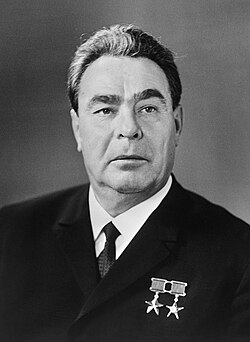
Leonid Brezhnev
(1906-1982; 1972 photo)
20 MARCH 1986 (POLITBURO)
GORBACHOV. There is one matter I have left until last. On my instructions it was included by Comrade Dolgikh. This is his note [reads aloud]. It concerns returning to the ice-breaker “L. Brezhnev” its former name, “Arctic”. A new ice-breaker can be called “L. Brezhnev”.
ZAIKOV. It already bears the nameplate “L. Brezhnev “.
ALIEV. We can launch it as “L. Brezhnev” but make no announcement.
RYZHKOV. It should be done without television and in one day.
GORBACHOV. Let us instruct Comrades Ligachov and Zaikov to think over the matter and put forward suggestions.
And there is one other item. [Reads letter from Stalin’s daughter, Svetlana Alliluyeva, out loud.] Of course, there is no rush to decide whether she may come. My first inclination – let her visit the USSR. But perhaps we should not be in a hurry and talk it over first.
CHEBRIKOV. Her first letters were fine, they showed gratitude. In this one, half of it is about problems she never mentioned before. She was taken to hospital this evening with a heart attack.
GORBACHOV. We must find out what her daughter thinks and hold a high-level meeting. My view is that we need to assess Stalin, Stalingrad, and so on. I’m from that kind of family myself. My uncle’s health was ruined. We were five children born to a mother from a very poor family. I received a medal for an essay “Stalin is our military glory, / the soaring inspiration of our youth!” Perhaps it would therefore be expedient to entrust this meeting to Comrade Solomentsev?
GROMYKO. Or to Comrade Ligachov, perhaps?…
GORBACHOV. Let us instruct Comrade Ligachov to meet her.
As we can see, until the end Gorbachov could not himself decide what family he came from. From a family that had suffered under Stalin or from one that was forever recalling the ardour of its Stalinist youth. It is not so very amusing, however. Their games cost us all too much.
*
6.2: Living Souls
In staging such an extravagant simulation of democracy, the main task of the Soviet authorities was not to lose the initiative and let a real opposition consolidate. The example of Solidarity in Poland must have hovered constantly before their eyes like a grim reminder.
Before setting up their own fictitious fronts and parties, the Soviet leadership had to put an end to opposition groups that had emerged during the previous twenty years of struggle against the regime. Above all, the stubborn zeks must be broken and deprived of their moral authority by forcing them to “disarm ideologically”. There could be no certainty of success with the West, if the issue of political prisoners was not dealt with first: it was too obvious to be overlooked.
The future winner of the Nobel Peace Prize set about this problem as soon as he came to power.
1985 gave no indication that Gorbachov was inclined to be merciful: on the contrary, the persecution and arrests increased. The Soviet Union must first be cleansed of potential oppositionists. In a Top Secret (Special File) report “Of Particular Importance” delivered personally to the new General Secretary by Chebrikov, the head of the KGB noted (19 February 1986*, 321/Ch-ov, figures in bold here were added to a pre-typed script):
“During the past year, State Security has intensified its struggle against acts of ideological sabotage by the class Adversary. … In Moscow, Leningrad and the capital cities of the Union Republics the subversive ideological operations of several hundred emissaries and functionaries of foreign anti-Soviet nationalist, Zionist and clerical organisations were prevented or halted. Three hundred such people were expelled from the country and 322 were banned from entering the USSR. …
“Twenty-five illegal nationalist groups were uncovered and liquidated at the stage of formation in the Ukraine, the Baltic republics and certain other places. Attempts by pro-Zionist elements to create a number of illegal groups were halted. 28 of those most actively involved in hostile activities were charged with criminal offences. Timely intervention prevented the formation of 93 youth groups on an ideologically harmful basis.
“Eleven leaders of illegal sects were charged with criminal offences for their hostile activities and other legal violations. The unlawful activities of many religious extremists were halted and several printing presses, temporary stores and warehouses of literature were destroyed. As a result, about 170 underground ‘schools’ for teaching religion to children have ceased to operate in Central Asia and the North Caucasus, and several congregations of such sects have sought legalisation.
“We have identified 1,275 authors and distributors of anonymous anti-Soviet and defamatory materials and criminal charges have been brought against 97 of them. … The KGB has taken an active part in the activities of the Party and the State to nurture a high political vigilance among Soviet people and a respect for the law, and has carried out major work to prevent criminal, anti-State deeds, politically harmful processes and behaviour. Preventive and prophylactic measures have been taken with respect to 15,271 individuals.
“A humane attitude to errant Soviet citizens has been combined with a decisive suppression of the criminal actions of hostile elements. Criminal charges have been brought against 57 persons for particularly dangerous State crimes, against 417 for other State crimes, and for other crimes, 61. The investigation of these cases has been conducted in strict accordance with criminal-procedural norms, under the oversight of the Procuracy.”
At the same time, however, pressure increased on those already imprisoned to make them recant their views. This pressure continued to grow in 1985 and throughout the following year, reaching a peak at the end of 1986. Gorbachov was clearly in a hurry. The problem required urgent solution before “glasnost” could be launched. At a Politburo meeting he asked Chebrikov to say something about the “kind of people who are serving sentences for crimes that Western propaganda classifies as political” (25 September 1986*, Pb).
*
25 SEPTEMBER 1986 (POLITBURO)
CHEBRIKOV. According to our legislation these are especially serious State crimes.
A total of 240 individuals have been prosecuted and are now serving sentences for committing these types of crime. These are people convicted of espionage, crossing the State frontier, distributing hostile leaflets, dealing in hard currency, and so on. Many of them have declared that they will no longer pursue their hostile activities. They link their declarations to the political changes following the April [1985] Plenum of the CPSU Central Committee and the 27th Party Congress [25 February-6 March 1986].
We could first release a third and then a half of these people. In that case only those who continue to adopt hostile positions towards our State would continue to remain imprisoned.
GORBACHOV. It seems this suggestion could be supported.
CHEBRIKOV. We shall proceed in a sensible fashion. To be sure that these individuals do not continue to engage in hostile activities, they will be kept under surveillance.
SHCHERBITSKY. How can it be explained that comparatively few people are being prosecuted for especially grave State crimes? Is it due to perestroika?
CHEBRIKOV. It is explained by the stress that the KGB lays on its prophylactic work. Many individuals have been exposed, if one can put it this way, on the brink of committing a criminal act. The means at the disposal of the KGB and the public are used to influence them.
GROMYKO. Which crimes are the most dangerous and what is the punishment for them?
CHEBRIKOV. Espionage. It is punished by execution or 15 years’ imprisonment. Polishchuk was executed for espionage. Yesterday Tolkachev was executed [for the same crime].
GORBACHOV. American intelligence paid him very generously. He was found in possession of two million roubles.
CHEBRIKOV. That agent provided the Adversary with very important military secrets.
GORBACHOV. Let us agree that we approve, in principle, the suggestions made by Comrade Chebrikov. Let the KGB put forward proposals in the established manner.
POLITBURO members. Agreed.
*
Currency speculators, spies and political opponents were deliberately mixed together, as if they did not understand the difference. That was clearly not the case. Who should “refuse to continue their hostile activities as a consequence of the April Plenum”? Not the currency speculators and spies, that’s for certain. Evidently, it was easier not to call things by their proper names.
Accordingly, towards the end of 1986 “proposals” were put forward in a joint report by the KGB, the Procurator-General, the Supreme Court, and the Ministry of Justice in the “accustomed manner” (26 December 1986*, 2521‑Ch):
“In recent years, we have successfully paralysed the illegal activities of the organisers, mentors and active participants of illegal groups: the Helsinki Groups, the Free Trade Unions, the Russian section of Amnesty International, the Political Prisoners’ Fund and other groups that the Adversary regarded as ‘forces capable of leading to a change in the existing State and social system of the USSR’. Over the period from 1982 to 1986 more than 100 people agreed to discontinue their unlawful activities and took the path to reformation. Some of them… spoke on television and issued public statements in newspapers, exposing the Western special services and their former fellow conspirators.
“In 1986, after submissions from the KGB, the Procuracy and the courts, the Presidium of the USSR Supreme Soviet and the Presidia of the Supreme Soviets of the Union Republics freed 24 persons from serving their sentence, and 4 others had sentences of imprisonment commuted to exile. The overwhelming majority of them understood the decisions taken towards them, except for [Irina] Ratushinskaya, who, after leaving for the West on private business, continues to make hostile statements.
“At present 301 individuals are serving sentences for committing crimes under the above Articles and 23 are under investigation.
“Our information shows that the changes in our society after the April [1985] Plenum of the CPSU Central Committee and the 27th Party Congress [25 February–6 March 1986] have influenced the thoughts and behaviour of some of those who were at one time under the influence of bourgeois propaganda and hostile elements, committed unlawful actions and were punished. Some of them have recognised the harm they did to the interests of society. Others are playing a waiting game. Several individuals have not changed their anti-Soviet views …“
In these conditions, the authors suggested, certain people who had been charged or convicted of the above offences could be offered a pardon and released if they agreed to meet certain conditions.
“It could be suggested to persons in the above category that they should make a declaration to the Presidium of the USSR Supreme Soviet that they would not henceforth engage in hostile or other unlawful activities. On receiving that declaration, such individuals could be individually freed from imprisonment or prosecution by a pardon issued by the Presidium of the USSR Supreme Soviet after submissions by the USSR Procuracy, the USSR Supreme Court, the USSR Ministry of Justice and the USSR KGB … Not for release would be especially dangerous recidivists and individuals who continued to maintain clearly hostile positions and refuse to give written assurances that they would end their anti-social activities.
“Such measures would permit those who have agreed not to continue their unlawful activities to take their place in society and, on the other hand, to identify those who earlier concealed the anti-Soviet nature of their efforts under the slogan of a struggle for ‘democratisation’ and ‘human rights’.
“Adoption of a positive decision on this matter would be politically advantageous and once again emphasise the humanism of the Soviet regime. In implementing the said measures, we may encounter backsliding and anti-social behaviour. That should not lead, in our view, to serious negative consequences.”
Gorbachov’s “democratisation” thus began by twisting the arms of political prisoners to the accompaniment of rapturous songs of praise in the West.
Of course, it was difficult for such an audience to grasp what it meant to spend three winter months in an unheated punishment block: a daily ration of 400 grams of bread, hot food every other day and, once or twice a week, a visit from a KGB officer with his unchanging demand: “Well, now have you grasped the meaning of the April Plenum?”
That was not all. They also put pressure on relatives and threatened the zeks with a new term of imprisonment. There were times when people were beaten up. There was no limit to the imagination of the KGB. Some dressed their charges in civilian clothing and took them home to show them how good it was to be free. At the end, the same question once again: “Well, are you ready to sign the statement now?”
*
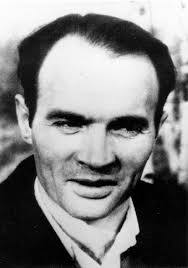
Anatoly Marchenko
This cruel game so infuriated Anatoly Marchenko that he announced he was beginning a limitless hunger strike, demanding the unconditional release of all political prisoners. In December 1986, after three months’ starvation, he died: 4 February 1987*, 206-B. Yet that extreme protest did not bring the West to its senses. An exceptionally shameless period was just beginning.
Marchenko’s death alarmed the Politburo. It was no part of their current plan to kill anyone, and there was some reaction, however feeble, from the West. The release of the prisoners had to be accelerated, and the pressure and demands on them reduced. The authorities began releasing any prisoner who submitted a request, whether he or she promised “to refrain from anti-social activities” or merely asked for a pardon. Chebrikov and Procurator-General Rekunkov personally reported to Gorbachov early the next year (1 February 1987*, 183-Ch):
“As of 15 January 1987, the number of individuals serving sentences for crimes covered by Articles 70 and 190 of the RSFSR Criminal Code and the corresponding articles of the criminal codes of the Union Republics was 288. Those imprisoned in corrective labour institutions for Anti-Soviet Agitation & Propaganda (Article 70) number 114, for Spreading knowingly false fabrications denigrating the Soviet State and social system (Article 190) number 119, and there are 55 individuals convicted under these articles who are now in exile.
“In carrying out CPSU Central Committee Resolution No 47/54 SF (31 December 1986) the Procuracy and the USSR Committee for State Security organised the necessary work among this category of individuals.
“As a result, 51 individuals submitted written declarations that they would henceforth refrain from unlawful activities. The Presidium of the USSR Supreme Soviet has taken a decision to pardon them.
“Thirteen new declarations have been submitted for examination. Work will continue with the remaining convicted prisoners and be completed in February.”
Twenty-one investigations (four under Article 70, and 17 under Article 190) were being closed, reported Chebrikov and Rekunkov. There were three more categories of prisoner:
“In the corrective-labour institutions and in exile there are 25 especially dangerous recidivists convicted under these articles to whom this procedure for liberation from punishment is not being extended. It would be possible to carry out educational work with them on a strictly individual basis. Those who are firmly on the road to correction, having condemned their past criminal activities and declared that they will not resume them henceforth, can be put forward for a pardon on general conditions ….
“As concerns those sentenced (10 people) under Article 142 of the RSFSR Criminal Code [Separation of the Church from the State] and corresponding articles in the criminal codes of other Union Republics, who organised illegal underground printing works, inspired anti-social behaviour among believers and unlawfully introduced children to religion, it seems expedient in the present case to put forward materials for their pardon on general grounds, if a statement is received from them that they will no longer engage in unlawful activities.
“A special category is made up of individuals (96 persons) who committed offences envisaged in the above articles of the criminal code when they were insane and were sent for compulsory medical treatment. Following the established twice-yearly medical assessment to determine which of them no longer presents a danger to society, they could be moved to psychiatric hospitals of an ordinary kind or be transferred to the care of relatives. At present, several individuals (Gershuni, Pervushin, Klebanov and others) are being freed after medical examination from compulsory treatment.”
Like battlefield despatches, such reports continued to reach Gorbachov’s desk almost every month until mid-1987. The latest of which I had sight was from May. It announced, incidentally, the following figures [R 11 May 1987, 6/2140, NA]:
“In March and April of this year, as a result of a decision by the appropriate authorities, 108 persons convicted of anti-Soviet agitation and propaganda [Article 70], and 64 persons serving a sentence for committing crimes envisaged by Article 190 of the RSFSR Criminal Code (and corresponding articles in the criminal codes of other Union Republics) were released through a process of individual pardons.
“As of 1 May 1987, 98 persons of this category of convictions continued to serve their sentences, 78 in places of confinement and 20 in exile. Among them are 24 who have previously been convicted and 74 who so far have refused to give assurances that they will end their criminal activities.”
Towards the end what we had most feared took place [see NOTE below].
Only those who were known in the West and were the subject of Western appeals were released, whether they themselves had made such a request or not. Most were then deported to the West and expelled from the USSR after being deprived of their citizenship. Yet this no longer aroused anyone’s interest or indignation. On the contrary, the West was ecstatic about Gorbachov’s liberalism and his tireless battles with the “conservatives”.
History has recorded that the reformer Gorbachov released the Soviet Union’s political prisoners, gradually, not all at once, because “the conservatives were putting up resistance” in the Politburo. Nevertheless, the story goes, he did release them. In fact, the last Soviet political prisoners were released by Yeltsin in February 1992 after the USSR had ceased to exist.
xxx
Without deciding what to do about Sakharov, then exiled to Gorky, Gorbachov could not fool even the gullible West for long. He took up this problem soon after he came to power and almost a year before the proclamation of his “glasnost” (29 August 1985*, Pb).
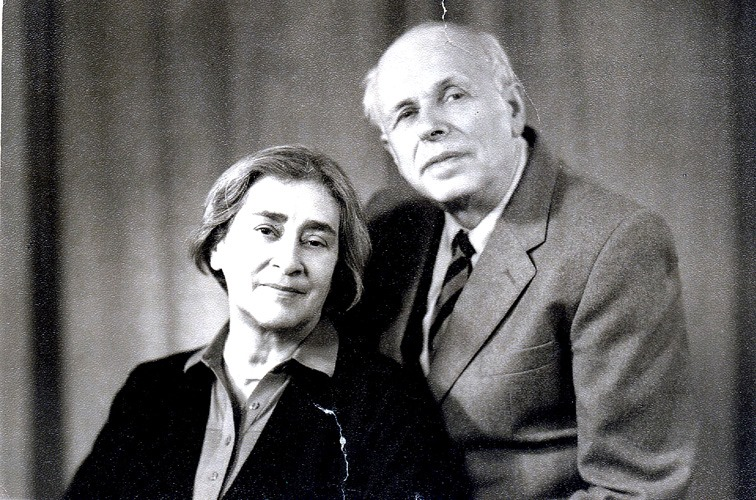
Bonner and Sakharov
29 AUGUST 1985 (POLITBURO)
GORBACHOV. At the end of July this year I received a letter from the notorious Sakharov. He requested permission for his wife Bonner to travel abroad for medical treatment and to see relations.
CHEBRIKOV. This is an old story, it’s been going on for twenty years now. During that period, various situations have arisen. The necessary measures were taken with regard to Sakharov and Bonner. Through all these years, however, actions that would violate legality were not permitted. That’s very important and should be emphasised.
Now Sakharov is 65 and Bonner is 63. Sakharov’s health is not brilliant. At present, he is being tested for cancer since he has begun to lose weight.
As a political figure, Sakharov has virtually lost his standing and has said nothing new recently. Perhaps it would make sense to let Bonner go abroad for three months. According to our present law people can interrupt their exile for a specific period (Bonner, as you know, is in exile). Of course, once she gets to the West she could make a declaration there, receive some prize or other, and so on. It also can’t be excluded that she might make a trip to the USA from Italy, where she is going for treatment. Permission for Bonner to travel abroad would look like a humane step.
She may behave in one of two ways after that. One, she returns to Gorky. Two, she remains abroad and begins to raise the question of re-uniting the family, i.e. that Sakharov should be given permission to leave. In this case, there might be an appeal by official figures in Western countries, and by certain representatives of Communist Parties. But we cannot let Sakharov out of the country. The Ministry for Medium Engineering objects, since Sakharov knows in detail the entire way that our nuclear weapons developed.
Specialists believe that if Sakharov is given a laboratory he can continue to work in the field of military research. Sakharov’s behaviour is shaped by the influence of Bonner.
GORBACHOV. That’s Zionism for you.
CHEBRIKOV. Bonner has total influence over him, 100 per cent. We expect that without her his behaviour could change. He has two daughters and one son from his first marriage. They behave well and could exercise a certain influence on their father.
GORBACHOV. Could we not do as follows, and ensure that Sakharov states in his letter that he realises that he cannot go abroad? Could we not get such a declaration from him?
CHEBRIKOV. This matter, it seems, should be resolved now. If we take a decision just before your meetings with Mitterrand and Reagan it would be interpreted as a concession on our part, and that’s undesirable.
GORBACHOV. Yes, we must take a decision.
ZIMYANIN. We should have no doubt that Bonner will be used against us in the West. However, her attempts to refer to the re-uniting with the family can be rebutted by our scientists, who could issue a statement with the necessary declarations. Comrade Slavsky [Minister for ‘Medium Machine Engineering’, i.e., atomic weapon manufacturer] is right: we cannot let Sakharov leave the country. We cannot expect decent behaviour from Bonner, however. She’s a wild beast in a skirt, a protégée of imperialism.
GORBACHOV. Which will cause more damage: letting Bonner go abroad or not?
SHEVARDNADZE. Of course, there are serious doubts about permitting Bonner to go abroad. However, we shall, at the same time, make political gains from doing so. We must take a decision now.
DOLGIKH. Can Sakharov not be influenced?
RYZHKOV. I am in favour of letting Bonner go abroad. It’s a humane step. If she stays there, of course, there’ll be a commotion. However, we shall then have an opportunity to influence Sakharov. Now he’s running off to hide in the hospital to feel a little freer.
SOKOLOV (Minister of Defence). It seems to me we must do it, we can’t be the worse for doing so.
KUZNETSOV. It’s a difficult case. If we do not allow Bonner to go for treatment this could be used in propaganda against us.
ALIEV. It’s hard to give a clear-cut answer to this question. At present Bonner is under control. She has grown more spiteful over recent years and once she is in the West she will let it all out. Bourgeois propaganda will have a specific person for holding various kinds of press conferences and other anti-Soviet operations. The situation will become more complicated if Sakharov asks to join his wife. So, there is an element of risk here. However, we must take that risk.
KAPITONOV. If we let Bonner go, this business will go on for a long time. She will have grounds for referring to the re-unification of the family.
GORBACHOV. Perhaps we should behave as follows. We shall confirm that we have received the letter, let us say, and paid it due attention and issued the necessary instructions. We must let it be understood that we could meet the request for Bonner to travel abroad but it all depends on what she will do there. For the time being it’s expedient to restrict ourselves to that.
*
Sakharov promised not to ask for invitations from abroad, as we know, and Bonner gave her word not to make political statements. Her trip passed off without incident.
Chapter 6: The Coming of Gorbachov (part two) …
=========================================
NOTE
RELEASING POLITICAL PRISONERS
In 1984, Kronid Lyubarsky’s annual “List of Political Prisoners” named 887 men and women, convicted and being held in camps and exile, prisons and psychiatric hospitals (336 in the latter).
*
Only 308 were released in 1987 (see R Vesti iz SSSR, 1987).
The slowness & incomplete nature of that process (not 140 in February, but 32 E) confirms what Bukovsky says.
======================================

