- 5.1 Yury Andropov
- 5.2 The NTS and the dissident movement
- 5.3 The Party’s most powerful weapon
PART TWO
- 5.3 The Party’s most powerful weapon (concluded)
- 5.4 Intelligentsia dolorosa
SOURCES
*
Judgement in Moscow (online)
*
5.3: The Party’s most powerful weapon (concluded)
“Is it worth getting upset?” people told me. “Soviet propaganda is so blatant that no one believes it anyway.”
“If the West read more Soviet propaganda”, others asserted, “that would expose the regime better than all of us.”
Had the world been in a normal, morally healthy condition that might have been true. Good-natured public laughter, the derision of the press and the indignation of politicians would then have greeted each new invention of the Central Committee’s Agitprop Department (or the KGB’s “A” Directorate). Alas, we were living in a different world, where a majority wanted to believe the Soviet regime – for reasons of ideological sympathy, for fear of nuclear catastrophe, because of a faith in “stability”, pragmatism, Divine Providence and God knows what else… For whatever reason, Soviet propaganda was more successful in the West than in the USSR. One only needs to recall the millions swept up by the “struggle for peace” in the early 1980s, the joy of the press when the “closet liberal” Yury Andropov became General Secretary in 1983, not to mention the universal celebrations that marked the Coming of Gorbachov and his “perestroika “. On the other hand, Western intellectuals seemed ready to believe any foul allegation against the “dissidents “. In public, the elite might extol our courage, but behind this facade of praise they nurtured an intense dislike. Our very existence was a threat to the illusions of some and a reproach to the deeply defensive conscience of others. Their admiration was in itself sickening, because it implied that our activities required super-human qualities and were therefore beyond the capacity of “normal” people.
The appearance of our movement in the USSR should have been the most optimistic news of the post-Khrushchov period, offering the hope that in time the Soviet threat could be peacefully removed. The slightest chance of that outcome, it might seem, should have forced the West to re-examine its strategy and focus its attention on achieving this goal. Nothing of the kind. We were declared, with admiration (and then with malice), to be an exception to the rule, and we had no significance for Western policies other than creating an additional headache. No matter how stupid, absurd and dishonest the Soviet campaign to smear our reputations, it usually aroused neither laughter nor indignation. On the contrary, it provided the West with a good excuse to wind down the campaign for human rights in the USSR at the most crucial moment.
In late spring 1977 Andropov reported to the Central Committee that the “materials exposing the provocative activities of US special services among “dissidents” in the USSR,” published with Central Committee approval in Izvestiya, had played “a definite part in discrediting the anti-Soviet campaign about “human rights” in the USA”. He was referring to the publication of a letter by a certain Lipavsky containing the standard “disclosures” made by your average KGB informer. An insignificant individual, no one knew who Lipavsky was. There were dozens of these “revelations” by people who gave way under interrogation or were broken in some other fashion but, as a rule, they had no impact. By then everyone was aware that the regime could squeeze any kind of “information” from people. If Bukharin, the “darling” of the Party, could publicly admit to sabotage at his show-trial in 1938, what could one expect of a nobody like Lipavsky? However, the West was already beginning to tire of the campaign for human rights in the Soviet Union. It demanded a reassessment of all its long-term policies and priorities, and there was enormous resistance to such radical change among the Western elite.
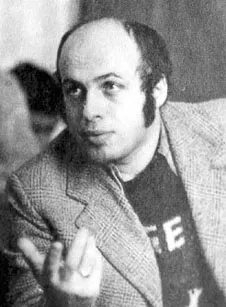
Anatoly Shcharansky
This accounts for the instant effect of some very crude disinformation (24 March 1977*, Pb 50/71) about Anatoly Shcharansky, then not yet under arrest:
“According to information received, this operation has prompted a serious reaction in the USA and other Western countries. Reports in American newspapers, on radio and television, are filled with public concern at the Carter administration’s policy of supporting ‘dissidents’ and openly interfering in the internal affairs of the USSR and other socialist countries. It is to be noted that commentaries in the American mass media cite no serious arguments in favour of this policy.
“The items published in “Izvestiya” have prompted dismay among American diplomats and correspondents accredited in the USSR and have exerted a restraining influence on their contacts with ‘dissidents’. Following instructions from Washington, they refuse to comment and resort to a bald denial of the facts presented in the open letter and article.
“Among themselves, meanwhile, staff at the US embassy express fears that the Soviet side might demand the expulsion of American diplomat [Joseph] Presel who has been compromised by his links with the CIA, and might organise a press conference with the author of the open letter and publish new revelations in other newspapers. There is now a certain confusion among pro-Zionist individuals and ‘dissidents’ who maintain active contacts with American representatives in the USSR.”
Enthused by the unexpected success of this rather ordinary piece of disinformation, Andropov proposed to widen his campaign, and the Politburo gave the go-ahead
“The Committee for State Security thinks that after USA Secretary of State Vance has visited our country the following operation should be carried out to further discredit the role of the US special services in the anti-Soviet campaign:
“Organise an interview between the author of the open letter, S.L. Lipavsky, and an American or other Western correspondent, with the participation of a Soviet journalist, for subsequent publication in “Izvestiya” and the foreign press;
“In reports and broadcasts, via TASS, APN and Gosteleradio, use articles prepared by the Committee for State Security giving factual evidence … that the Lipavsky case is no exception and that ‘dissidents’ are being used by the US special services for espionage and subversive activities against the USSR;
“Use means available to the Committee for State Security to organise letters from individual Soviet citizens and collectives to Washington and the US embassy in Moscow, protesting against the interference of the USA in the internal affairs of the USSR;
“To not provoke retaliatory measures by the American authorities against staff at Soviet organisations in the USA, go no further than compromising the first secretary of the US Embassy Presel and the correspondent Osnos, without resorting to their official deportation from the USSR.“
There is no doubt that if the US administration had stood firm at that moment, and if Western society had voiced sufficient indignation, Andropov would have quietened down and the Politburo would not have dared to frame Shcharansky as a spy. Instead, President Carter began to apologise and give public assurances that he had consulted the CIA and it seemed that Shcharansky had not been spying for them. When Cyrus Vance, the Secretary of State, came to Moscow he adopted a yet more ingratiating position. Of course, they had to “save détente“. Jewish organisations in the West also took fright: this would not affect emigration, they hoped.
The West, in short, folded like someone faced by his first KGB interrogation. What had begun as a very ordinary KGB provocation now turned into a grandiose success for their propaganda (29 March 1977*, 647-A):
“The Committee for State Security has received information that American diplomats and foreign correspondents in Moscow consider that the articles and comments in the Soviet press, radio and television broadcasts rebutting the anti-Soviet campaign in the West about the ‘violation of human rights’ show the firm resolve of the Soviet Union not to permit interference in its internal affairs, especially on the eve of US Secretary of State Vance’s visit to the USSR. In their view, the ‘culminating moment in these measures taken by Moscow’ was the arrest by the Soviet authorities of the ‘dissident’ Shcharansky. This shows the unbending intention of the USSR to take the measures envisaged by law against such renegades.
“According to remarks by the American journalist Akselbank, the publication of revelations in the newspaper “Izvestiya” and the subsequent arrest of Shcharansky put the American side in an awkward position. If this situation is strengthened by new evidence of the use of ‘dissidents’ by US special services for the purposes of espionage, it will seriously hamper the West in its propaganda about the ‘defence of human rights’ in the USSR and strengthen Moscow’s position on the subject.
“Another American journalist, Rezini, has stated that punishment of espionage on behalf of a foreign power does not raise anyone’s doubts, including American legal specialists. There are no grounds for fears that this will offend Vance, although he may express dissatisfaction … After the arrest of Shcharansky the ‘dissidents’, headed by Sakharov, organised an improvised press conference on 16 March this year in a private apartment, to which they invited certain American and other Western journalists and handed out previously prepared declarations of a defamatory nature. According to information received, the US embassy in its report for the State department about this press conference singled out Sakharov’s statement that ‘in the present critical situation in which the Soviet movement for human rights finds itself, it would be very useful if the US Congress and the President reacted in some way to the arrest of Shcharansky. Any weakening in pressure from abroad at such a critical moment is extremely undesirable’.
“Responding to a question from one of the foreign journalists as to whether Sakharov intended to meet with Vance during his visit to the USSR, he said that he did not desire such a meeting if it would put the Secretary of State in a difficult position, and would not himself ask for a meeting.
“At a closed press conference for American correspondents at the US embassy on 18 March this year an embassy spokesman was evasive in his comment about the appeal by Sakharov and other ‘dissidents’ to the USA for help, saying he did not know what the reaction of the US government would be.
“Asked by a correspondent if the arrest of Shcharansky might make Vance’s visit to the USSR more difficult, the embassy spokesman responded that the Carter administration did not link human rights with detente.
“According to information we are receiving, US mass media acknowledge that a ‘specific and serious accusation of treason’ has been brought against Shcharansky and that this will place those who try to speak in his defence in a difficult position.”
The West thereby surrendered not only Shcharansky but also positions that it had done nothing to win. The laughable proposition of the Politburo ideologues, that the dissidents were weapons of “the subversive centres of imperialism”, unexpectedly acquired legitimacy, even for its authors.
xxx
A year later, building on this success, the Soviet leadership made short work of the Helsinki movement in the USSR. The Western campaign for human rights in the Soviet Union effectively came to an end. For a long while, as we have seen, the Politburo could not summon the determination to put the Helsinki Group activists on trial (1 April 1978*, 785-A). Deferring their trials for a year, the Soviet leaders prepared thoroughly. Considering the passions then aroused by human rights, there was too much at stake.
“As of today, the situation does not permit the holding of judicial hearings. In particular, we have in mind the uncertainty that has appeared recently in the actions of the Adversary to discredit measures taken towards these criminals. He has significantly muted his tone in attempts to assert that the investigators supposedly do not possess substantial evidence of the guilt of those prosecuted for criminal offences. Furthermore, the US administration and propaganda organs, while not denying Shcharansky’s criminal ties with American intelligence and at the same time wishing to avoid new revelations about the CIA, are trying to convince the public that his activities were linked merely with defending ‘human rights’. A similar approach to justifying criminal activities by the accused is being pursued regarding other individuals.
“We also consider that more use may be made at present in propaganda operations of the intentions and arguments of the Adversary which he revealed in the preceding period, when organising various types of campaign in defence of criminals in the West.
“These and other favourable circumstances give us an opportunity to develop an effective tactic for organising the trials and their propaganda support.”
There followed a detailed plan as to how the trials were to be held, in what order and accompanied by what propaganda. A key aspect for the Politburo was a deliberate mixing of the Helsinki Group activists with several people who had been arrested for spying but, naturally, had nothing to do with the rights activists [cf. CCE 50]. At the least, they could carefully combine trials of those who had broken under interrogation with those who had not. This was discussed quite cynically, without the slightest hints or euphemisms
“Since the Adversary is concentrating his main attention on attempts to discredit the hearing of the cases against Shcharansky, Ginzburg, Orlov and Gamsakhurdia it would seem expedient to begin organising the trials by publishing materials that expose the actions of the US special services in gathering information through espionage and creating in our country centres for carrying out organised anti-Soviet activities. Materials from the trial of Radzhabov, the exposed agent of US intelligence, should be published in ‘Trud’.
“Such revelations will create favourable conditions for simultaneously holding the trials of Marinovich and Matusevich in the town of Vasilkov (Kiev Region), and of Lubman in Leningrad in the second half of March. Such a combination, as part of the hearing of cases, will enable us to neutralise to a certain degree the fuss about the trials of Marinovich and Matusevich while continuing to expose the interference of American intelligence in the internal affairs of the USSR.
“During the second half of May and the beginning of June it is intended to hold the remaining trials. It would be expedient to begin with the hearing of the case against Orlov in Moscow, while hearing the case against Gamsakhurdia and Kostava in Tbilisi. That combination will be justified in tactical terms since Gamsakhurdia has totally repented of the crime he committed. Gamsakhurdia is the son of a famous Georgian writer and has extensive connections among the creative intelligentsia. In this respect, his revelations and the exposure of the unattractive role played by American intelligence officers, acting under the cover of the US embassy in Moscow, will evoke a response favourable for us. Revelations by Gamsakhurdia will provide, in turn, the conditions for holding the judicial hearings into the cases of Ginzburg and then of Shcharansky.
“Since Shcharansky is accused of treason, it would be advantageous to hold his trial together with that of Filatov and Nilov. This will create additional serious grounds for exposing the espionage activities practised on Soviet territory by the CIA. These trials will be preceded by publication of the materials confiscated from US spies Peterson and Crockett when they were seized red-handed in 1977, and testify to the subversive activities of US intelligence in the USSR.”
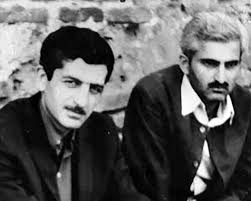
Gamsakhurdia and Kostava
This was a devastating blow to the human rights movement in the Soviet Union, and a surrendering of positions by the West, at the most crucial moment in our history. As a result, the “Helsinki process” lost all meaning and degenerated into a pointless talking-shop. For despite the propositions that underlay the Helsinki Accords, the West no longer “linked human rights and détente”. There were many reasons for such a Western change in course (we shall return to the subject in Chapter Nine, “Pages of Shame“), but no one would deny that Soviet disinformation played its part, as did the amazing readiness of the West to believe such propaganda, no matter how crude it might be. Our movement never recovered from that crushing defeat.
A year later, the Soviet leadership invaded Afghanistan, banished Sakharov to Gorky and, without any great fuss or protest, picked up the last dissidents. This happened to roars of approval from the crowds who had come to watch the Olympic Games in Moscow. In the circumstances that spectacle was a rare display of cynicism, but it did not stop the West. The Soviet way of thinking triumphed everywhere. It was their “truth” which won, their ideas of good and evil. Détente, which had been so dear to Western hearts, melted away dishonourably. Without the link to human rights it had no meaning and became an act of surrender.
Typically, the Soviet leaders kept up the pretence to the end. A decade later, at the height of “glasnost and perestroika” they did not abandon their legend and insisted that Shcharansky be treated like a real spy: he was taken to the bridge in Berlin where agents were exchanged and released in return for a genuine Soviet spy. Moscow did not back down, but the West … The West, alas, wiped the tears from its eyes, beaming with joy at its new friend Mikhail Gorbachov. As the English say, “With friends like these, who needs enemies?”
xxx
If a primitive KGB campaign of disinformation could play such a fateful role one may have no doubt that it operated yet more effectively on issues that attracted much less of the public’s attention. For instance, the “compromising measures” were often woven around purely personal qualities, weaknesses of character or unconventional lifestyles, exploiting the ignorance of the West and the ambition or defencelessness of the target.
These schemes could be exceptionally nasty. In the case of Shcharansky, for example, it was not enough to label him a spy – the KGB needed to invade his private life as well (R 25 December 1977, 12643-A , p. 3):
“… since the official authorities in the USA are actively using former Soviet citizen Stieglitz, who is alleged to be Shcharansky’s wife, in their anti-Soviet campaign, instruct Soviet ambassador Dobrynin to pass materials to President Carter that expose the amoral character of Shcharansky, including letters from Stieglitz’s father in which he categorically denies that his daughter is married to Shcharansky and denounces her provocative activities. These materials can subsequently be passed for publication to the foreign press.”
This was calculated to upset President Carter, a deeply religious man with views about marital fidelity that were much stricter than those common in our world. Without the slightest embarrassment, the vile insinuations were transmitted by the “usual diplomatic channels” and disseminated via the Soviet ambassador in the USA.
One can only guess at the filth being sent, behind the scenes, via KGB channels of communication (5 November 1969*, 2792-A):
“According to information in the possession of the Committee for State Security, the Adversary is considering publication of a new book by S[vetlana] Alliluyeva, “Only One Year”, as one measure in a wide anti-Soviet campaign to mark the centenary of Lenin’s birth…. In view of this, we propose the following operations to distract world public opinion from this defamatory campaign by the Adversary, using Alliluyeva’s book.
“Following the letter of Josif Alliluyev and Yekaterina Zhdanova to the Politburo, expressing their indignation at their mother’s treacherous behaviour, we consider it possible to prepare and publish abroad an open letter by the children of S. Alliluyeva, addressed to the famous political commentator and deputy chief editor of the “New York Times” H[arrison] Salisbury, who has frequently interviewed S. Alliluyeva and regards her in personal terms with a degree of contempt. This operation will be backed up by the publication of the said letter and interview with Alliluyeva’s children in a leading European magazine.
“A suggestion can be circulated in the Western press that the new book of Alliluyeva is the result of the collective labours of such people as G. Kennan, L. Fischer, M. Djilas, G. Florovsky, A. Belinkov and others, who are known to be fierce opponents of the USSR and specialists in the falsification of Soviet history. At the same time, information held by the KGB that compromises these individuals on a personal level can be added to these materials.
“Send a letter addressed to Alliluyeva from noted members of the Soviet intelligentsia who were personally acquainted with Alliluyeva (the writer Soloukhin, the dramatist Kapler, the chief editor of the “Soviet Screen” magazine Pisarevsky, Professor Myasnikov who was Alliluyeva’s supervisor when she wrote her dissertation, and others). This letter will contain a well-argued protest against the falsification of facts from the history of the Soviet State, and against her libel of Lenin. Such a letter could be passed to Alliluyeva via KGB channels in such a way that it becomes available to the foreign press.”
Such smear campaigns accompanied literally every event, from the publication of a book to arrests and trials, from dancers and directors who sought asylum abroad to major international gatherings. Not all the attempts to smear and discredit were successful, but it would be most naive to deny their significance.
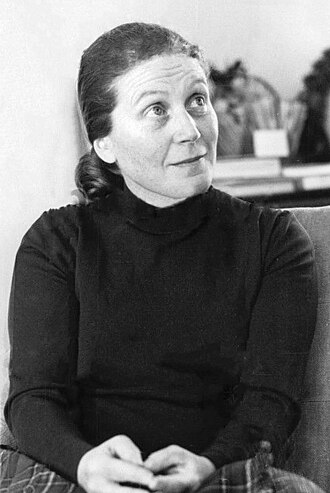
Svetlana Alliluyeva
A vast system of disinformation came into existence, with numerous “agents of influence” against whom the West had no defence. Most these “agents of influence”, moreover, were not in a literal sense KGB agents. Some distributed Soviet disinformation for idealistic reasons; others were paying off an old “debt” to the KGB or, on the contrary, expected some new reward or service; while others simply had no idea what they were doing. Often the information the KGB needed to circulate was, at one and the same time, of interest to your competitor, rival or ill-wisher. In such cases, all the KGB had to do was to slip the information to the person who wanted it. The examples are endlessly varied. Most Sovietologists and Slavists, experts on Russia and the Soviet Union, were dependent on the regime for permission to visit the USSR from time to time. A specialist could not maintain his place and reputation in the current academic world without that contact: anyone might accuse him of having lost touch and no longer retaining his expertise. The chance to travel to the USSR, however, was closely monitored in those years by the KGB. The reverse mechanism was yet more powerful: no Soviet person in any occupation could travel abroad, to a specialist conference, say, or to take part in a sporting competition or a ballet tour, without the approval of the KGB. Being declared “persona non grata”, that individual automatically lost his value and, sometimes, his job. The powers of the KGB, therefore, were practically limitless.
Looking now through Central Committee documents about these “compromising measures” I was impressed how adroitly the KGB operated. Noting that “on a personal level” Harrison Salisbury regarded Stalin’s daughter Svetlana Alliluyeva “with a certain contempt”, they immediately tried to turn this to their advantage. What could Alliluyeva say to Salisbury in such circumstances? Tell him that the KGB was using him as a channel for disinformation?
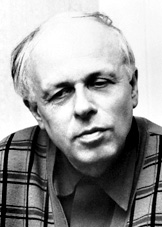
Andrei Sakharov
Or take another subject: Andropov’s note about “measures to discredit the decision of the Nobel Committee to award the peace prize to A.D. Sakharov” and the subsequent Politburo decision (15 October 1975*):
“Instruct the Central Committee Departments for Research, Educational Institutions and Propaganda together with the Presidium of the USSR Academy of Sciences to prepare on behalf of the Presidium of the USSR Academy of Sciences and leading Soviet scholars an open letter denouncing the act of the Nobel Committee in awarding the Peace Prize to a person who has taken the path of anti-constitutional and anti-social activities. The said letter, signed by members of the Presidium and by leading Soviet scholars, is to be published in the newspaper “Izvestiya”;
“The newspaper “Trud” is to publish a sketch in which the award to Sakharov of the Nobel Peace Prize worth 122,000 dollars is presented as a handout from reactionary Western circles for his constant slander of the Soviet social and State system;
“Use APN to promote materials in the West arguing that to award the peace prize to a person who is against a relaxation of international tension [détente] and interprets events in Chile, Vietnam, Cambodia and the Middle East from an extremely reactionary viewpoint is contrary to the policy of the Soviet State and of all progressive forces in the world, aimed at a relaxation of international tension and disarmament;
“In the West promote articles via KGB channels that show the absurdity of the Nobel Committee’s decision in awarding a peace prize to someone who invented a weapon of mass destruction.”
Everything has been taken into account in this document: the submissive behaviour of Sakharov’s fellow Academicians, who, it is said, fought for the right to sign the “open letter” of denunciation (only “leading Soviet scientists and scholars” were invited to do so!); the envy of manual workers who made up most of the readership of Trud, the paper of the Soviet trade unions, to whom the sum of 122,000 dollars was simply unimaginable; and the sentiments of the world’s “progressive forces”. The last item on this list was the suggestion that it was “absurd” to award a peace prize to the father of the Soviet H-bomb. This was promoted in the West by none other than Zhores Medvedev, and in Oslo itself when he spoke before the Nobel Institute. That was what he said, and God alone knows how he became a “channel” for such a suggestion: did someone give him the idea, or did he think of it himself? In any case, what good fortune for Andropov, that a famous dissident scientist voiced such an opinion.
Now tell me that the KGB was stupid and its disinformation did not work on anyone.
xxx
With a rare patience, they spent years preparing these channels of information, often playing with people as a cat plays with a mouse. Woe to the person who joined in their game, naively hoping to out-fox them. You can trick an individual or a group of people – you cannot deceive the system.
Andrei Sinyavsky (1925-1997)
In the autumn of 1968 the KGB sent the following request to the Central Committee (30 September, p. 2 in 14 January 1969*, Pb III):
“Sinyavsky, A.D., who was sentenced by the RSFSR Supreme Court in February 1966 to 7 years’ imprisonment under Article 70, part 1 of the RSFSR Criminal Code, is serving his sentence in the Dubrava corrective-labour camp.
“Observation of his behaviour in the corrective-labour camp has shown that he is thinking ever more often about his future, although he continues to deny his guilt. Unlike Daniel and members of his family, Sinyavsky and his wife do not take part in any anti-social protests.
“To prevent further use by the West of the conviction of Sinyavsky and Daniel for anti-communist propaganda, we consider it would be expedient to continue work with Sinyavsky so as to persuade him to submit an application to the Presidium of the RSFSR Supreme Soviet for a pardon. If such a declaration is received, we consider it would be possible to satisfy Sinyavsky’s request.
“We request authorisation
“Chairman of the Committee for State Security
“ANDROPOV“
Early next year the Politburo gave Andropov the go-ahead (14 January 1969*, Pb III). Two years passed. In mid-1971 Andropov, the Procurator-General and the Minister of Justice Gorkin submitted the following report (19 May 1971*, Pb 4/48):
“The literary figure A.D. Sinyavsky, author of books of an anti-Soviet content published in the West under the pseudonym “Abram Tertz”, was sentenced by the RSFSR Supreme Court in February 1966 to 7 years’ imprisonment. He has now served more than two thirds of his sentence.
“Observation of Sinyavsky shows that, while in the corrective-labour institution, he has observed the established regime, responded negatively to the attempts by certain prisoners to draw him into anti-social activities, and given no new reasons by his conduct for using his name abroad for purposes hostile to our State.
“His wife, Rozanova-Kruglikova, who lives in Moscow, has committed no reprehensible acts.
“At the same time, Sinyavsky continues to hold the view that he was not guilty, he denies the anti-Soviet character of his actions, and he still believes his trial was unlawful. With his agreement, however, Sinyavsky’s wife has submitted a petition for a pardon, choosing as an argument the difficulty of raising their under-age son.
“Having examined this application and analysed the materials, and bearing in mind that Sinyavsky’s term of imprisonment ends in September 1972, we consider it possible to give a positive response and reduce his sentence by one year and three months by issuing a pardon.
“This measure, in our opinion, would help to distance Sinyavsky from anti-social elements and could have a positive influence on his future behaviour.
“Drafts of a Central Committee Resolution and an Edict of the Presidium of the RSFSR Supreme Soviet on this matter are attached.
“We request authorisation.
“Yu. Andropov R. Rudenko L. Gorkin”
The edict was approved by the Politburo on 19 May 1971 and Sinyavsky received his pardon. He remained under the watchful eye of the KGB. Early in 1973 Andropov submitted another report and proposal to the Central Committee (26 February 1973*, 409-A):
“The Committee for State Security is working to exercise a positive influence on Andrei Donatovich Sinyavsky, who was released early from imprisonment, and to enable him to keep his distance from anti-social elements.
“The measures adopted have compromised the name of Sinyavsky to a certain degree in the eyes of that part of the creative intelligentsia which formerly sympathised with him. Some of them, according to our information, consider that he has links with the KGB. Sinyavsky is following the pattern of behaviour that was jointly developed after his return to Moscow, leading a secluded pattern of life and engaged in work on issues of nineteenth-century Russian literature and the history of mediaeval Russian art.
“Using the “authority” of Sinyavsky we have been able, through his wife Rozanova-Kruglikova, to influence in a manner favourable to us the attitudes of Daniel and Ginzburg, who are serving terms of imprisonment. As a result, they are not making attempts to participate actively in the so-called “democratic movement”, and avoid contacts with the Yakir group.
“At the same time, while Sinyavsky in general follows our recommendations, he retains his previous idealist creative attitudes and does not recognise Marxist-Leninist principles in matters of art and literature. Consequently, his new works cannot be published in the Soviet Union.
“Various bourgeois publishing houses are trying to make use of this circumstance by offering their services for the publication of Sinyavsky’s work. This could again lead to the creation of an unhealthy atmosphere around his name.
“On 5 January 1973 Sinyavsky applied to the Visa and Registration Section of the Moscow Internal Affairs department for permission to travel to France, together with his wife and son (b. 1965), for three years on the private invitation of Professor Claude Frioux of Paris University.
“In view of the above, and taking into account Sinyavsky’s wish to retain his Soviet citizenship, we consider it would be possible not to obstruct the departure of the Sinyavsky family from the USSR.
“A positive decision would reduce the likelihood of Sinyavsky becoming involved in a new anti-Soviet campaign, since it would deprive him of the position of an “internal émigré”, distance him from his creative milieu, and finally place Sinyavsky among the writers of the “emigration”, who are no longer of public significance.
“It can subsequently be decided whether it is expedient for Sinyavsky to return to the Soviet Union after his stay in France.
“We request authorisation
“Chairman of the Committee for State Security
“Andropov”
*
5.4: Intelligentsia dolorosa
I have presented this drama in documents almost in full because it illustrates, step by step, how patiently and thoroughly the Politburo worked.
If there was one group of people the Soviet leadership understood, knowing just when to use the carrot and when, the stick, it was their own intelligentsia. It was the self-admiration of the educated and the intellectuals in the USSR more than anything else that made them so vulnerable. I do not intend to “expose” or condemn anyone, especially when the documents I found in the archives contained nothing particularly new.
At the time, Maria Rozanova, Sinyavsky’s wife, made no secret of the “complex games she was playing with the KGB “. On my return from the camps in January 1970, as I still recall, I met her at a meal given by our common acquaintances. It was, curiously, our first and last meeting in Moscow. We had not been acquainted before that occasion but Mrs Sinyavsky talked and talked. “We writers,” she said several times (and as always with great aplomb), do not need all this fuss and bother, this “movement” and “politics”. “We writers,” were only harmed by such things: we should keep quiet and not get involved. Above all else, it was not worth getting mixed up with people like Yakir who just liked to cause a stir. On noting my sharply negative reaction to her proposed behaviour as a “writer” she made no further effort to see me. Since Rozanova was unable to exercise any influence on me by “using the authority of Sinyavsky” there was no point. That was why she needed to see me then, one must suppose, and got herself invited to eat with her friends on the very day that I would be there.
However, that is not my point here. It makes no difference to me whether she used “the authority of Sinyavsky” on her own initiative or as part of an “agreement” with a certain organisation. Neither is it of significance, after they had emigrated to France, whether she provoked endless squabbles – including constant attacks on Solzhenitsyn – as part of a “jointly agreed approach” or simply on the strength of her quarrelsome character. Either way, Andropov had not miscalculated. What was entertaining was the utter fury of Mrs Sinyavsky when these documents finally appeared in the Russian press. With no sign of embarrassment at the amusing contradiction, she declared in Moscow News (3 January 1993) that the documents were [1] stolen, [2] forged, and [3] misquoted by Andropov. Then, without drawing breath, Mrs Sinyavsky herself published the very same documents, announcing that this was “the whole truth”, neither stolen nor fabricated. Finally, in an interminable article in two successive issues (12 & 13 January 1993) of Nezavisimaya gazeta, she boasted about her extraordinary exploits: how, as an intelligent and fearless woman, she had hoodwinked the stupid and cowardly KGB, beating them at their own game, blackmailing the KGB (!), and falsely accusing them of stealing valuable books during a search. How very brave and ingenious! In such circumstances the poor KGB could do nothing but let them both leave for Paris.
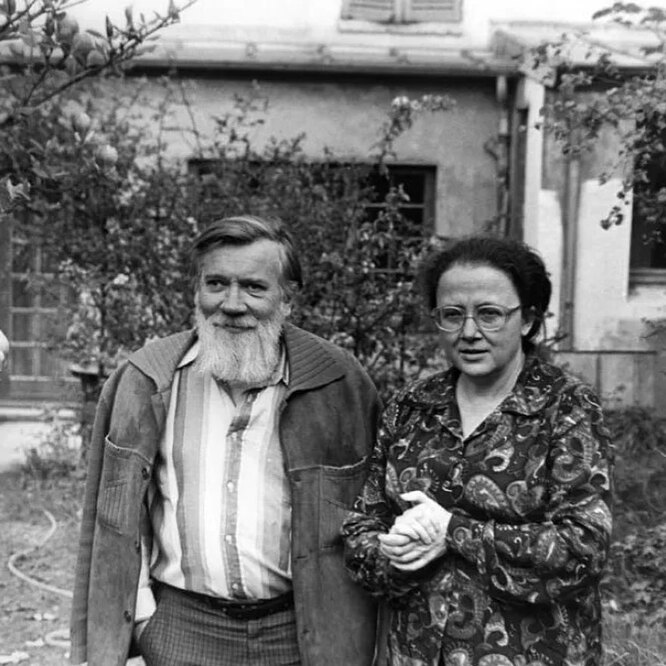
Sinyavsky and Rozanova
That would have been nothing exceptional for the time. In the early 1990s you could meet many statements of the kind. “You don’t have to listen if you don’t want to,” runs the Russian saying, “but please don’t stop me lying.” I would not have repeated these delirious assertions were it not for one paragraph in this memoir. Having stoked her fantasy to white heat, Rozanova shouted to all of us at once:
“… be off with you, shameless creatures, who are you showing your disdain to? To the Sinyavsky-Daniel case from which, forgive my stylistic liberty, you all emerged just as Russian literature came out from under Gogol’s “Overcoat”? Where does it come from, your present compulsion to besmirch your own past? Why do you have such a belief in the KGB and a loyalty to that firm? How could it happen that for you Andropov’s words became more valued than those of Sinyavsky? Why do you so yearn for your king to be proven naked?”
I shall not comment on the insolent and fish-wifely tone of this proclamation. Having read that we all descended, collectively speaking, from Mr and Mrs Sinyavsky, it was impossible not to be amazed by the dialectical shifts in their conscience and their self-admiration. Did they really believe what she said? Had it never occurred to them that Sinyavsky bore the same relation to the Sinyavsky-Daniel case as Alfred Dreyfus to the famous Dreyfus affair? When we were preparing our first demonstration on Pushkin Square in December 1965 we did not know what Sinyavsky looked like and we had not read his books (later I could manage no more than 20 pages …). We were concerned not so much about him as the need to test whether society would tolerate political repression in the post-Stalin era. Would we go back to the terror of earlier years or would people demonstrate their civic courage? It was simply a test of maturity, and not many passed. The majority remained Soviet, and Sinyavsky proved to be among their number (“A Voice from the Chorus”) and one, moreover, that did not ring true.
Those in the know understand what lies behind the dead and stilted language of Andropov’s reports. When the KGB chief said that Sinyavsky “has a negative attitude to the efforts of certain prisoners to involve him in anti-social activities”, this suggests he kept quiet when his cell-mate was being mistreated; he went out to work when his fellow prisoners in the camp were on strike; and, shamefully, he ate the camp food when the whole place had declared a hunger strike. What does it mean “to petition for a pardon”? De jure this is an admission of guilt, however much you later declare your innocence. That was all the regime wanted from us – at least to begin with. If any one of us agreed to ask for a pardon we would regain home, freedom, warmth and food; and our loving wife and the children, whom it was so difficult for her to raise on her own. A dying Yury Galanskov did not take that step, and rather than agree to such a proposal Anatoly Marchenko preferred to starve to death. The pardoned Zviad Gamsakhurdia, on the contrary, would live to become president of Georgia in 1991. We also know, all too well, that the Soviet regime would not remain content with that agreement but call in its “debts” many years later.
It was up to you, in short. Of course, you had a right to choose the easy way out, but you could not expect your fellow prisoners to respect you, and most certainly could not demand applause. “We writers” should have kept their heads down and written their books and essays about literature and not plunged into the vile politics of the past or the present. Mrs Sinyavsky, however, was now claiming the title of champions and founding fathers as well. As the English rightly say, “You cannot eat your cake and have it too.” To eat properly in the camps because you are keeping to the agreement, to receive a pardon from Andropov and move to Paris with every convenience, taking your icons with you and your Soviet passport, so that you could return as a hero and now pronounce grandly on the fate of Russia …
“I gained Sinyavsky’s release from the camps 15 months before the end of his sentence,” wrote his wife proudly in Nezavisimaya gazeta, justifying her games with the KGB. In that case, why not avoid the entire seven years of imprisonment by reaching agreement immediately and restricting yourself exclusively to the history of mediaeval Russian art? Many did just that, having first picked a “harmless” subject of study. Yet this was not just anyone, but Sinyavsky! She had liberated SINYAVSKY. Faced by this enormous achievement we were expected to lower our eyes, fall silent and secretly delight in the feat of his faithful companion. As if we didn’t know that Sinyavsky became SINYAVSKY thanks to the Sinyavsky-Daniel affair and all the fuss and bother that “we writers” apparently did not need.
It is of no consequence to me whether Mrs Sinyavsky used the “authority of Sinyavsky” on her own initiative or according to some agreement with the KGB. What is important is that they laid claim to a certain “authority”. Their self-admiration and sense of exclusivity grated on me. They were “gifted” and, it seems, convinced they should therefore be measured by other standards. An ordinary mortal would be ashamed for permitting himself a tenth part of such collaborationist behaviour. In the early 1990s the intelligentsia presented such acts as evidence of their heroic resistance or, at the very least, their justified sacrifice. And what provided the justification? Why, their own self-admiration.
xxx
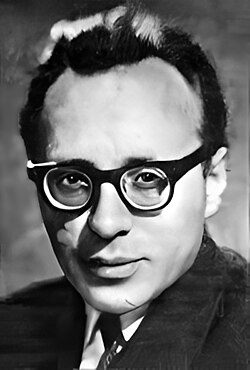
Anatoly Kuznetsov
In the late 1960s the KGB reported to the Central Committee about a different writer (R 4 August 1969, 1926-A):
“On 24 July 1969 Anatoly Kuznetsov, b. 1929 in Kiev, CPSU member since 1955, secretary of the Tula branch of the RSFSR Union of Writers, deputy secretary of the Party organisation at the branch, and board member of the ‘Yunost’ magazine since June 1969, went to England to gather more material for a new work about V.I. Lenin.
“According to information from the USSR embassy in England, Kuznetsov left the hotel on the evening of 28 July and, as the British Ministry of Foreign Affairs later announced, petitioned to be allowed to stay in the country. Kuznetsov’s request was granted.”
The Kuznetsov affair caused quite a stir at the time (cf. CCE 11.14 [1]). Not only was he a very well known writer: he openly acknowledged that he had collaborated with the KGB. To give him his due, he mentioned it at once, at the first opportunity, and insisted that this confession be published in full in the British press, wanting in that way to ease his guilt. It was an astonishing story.
According to Kuznetsov, he had played games with the KGB for more than a year: he had written false, fantastically absurd denunciations of his friends and colleagues, famous writers and actors who were supposedly involved in a plot against the Soviet regime. The purpose of these activities was to gain the chance of going abroad and not coming back. He could no longer remain in the USSR where his gifts, or so he said, were being stifled by the lack of creative freedom. That is by no means the worst example. At least Kuznetsov did not claim to be a hero or expect sympathy; he was quite open and honest about the entire story. At least, he sensed that he had done something unworthy. The majority did not feel that much. Cultural figures from the Soviet Union, allowed to travel abroad, were obliged to write reports of what they had seen and heard and, sometimes, to perform “individual tasks for the KGB”. They regarded this as absolutely “normal”, just as it was expected of them that they would inform on foreigners visiting the Soviet Union.
The essence of these relations did not lie in the links with the KGB. That never bothered me, neither did the ordinary informers. Twenty-five years earlier an informer told the KGB such ghastly things about me that I might well have died as a consequence. Meeting him by accident on the street in the early 1990s I felt nothing apart from a sense of pity. The way the intelligentsia behaved was something on a different level. The people I am referring to are those who never prompted feelings of pity and have never felt guilty themselves. Perhaps I am being too subjective, I don’t know, but somehow these people aroused in me a purely physical revulsion of the kind we experience when some unpleasant-looking insect appears.
*
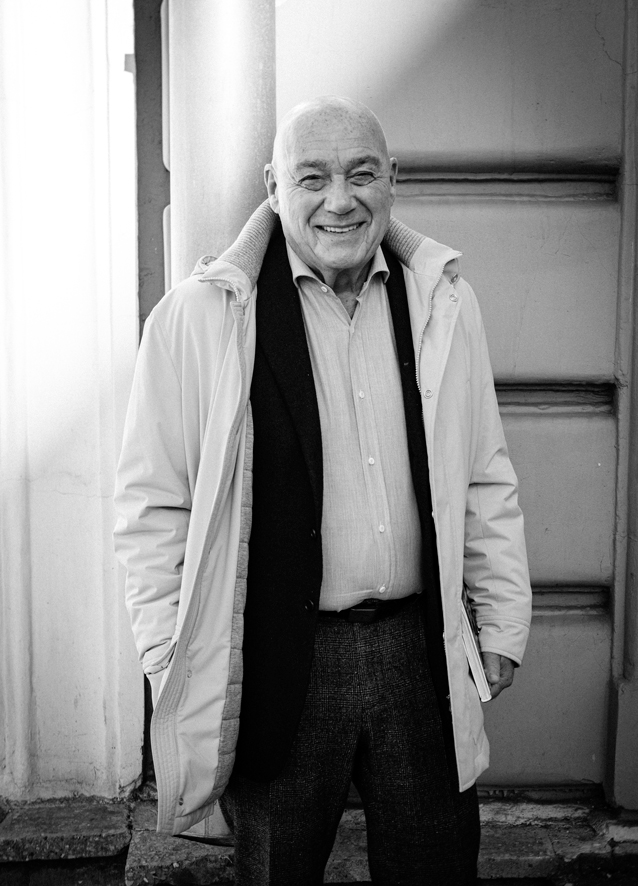
Vladimir Pozner
As I was writing these words the television (it was BBC2) was showing an extraordinary documentary about Vladimir Pozner, that “hero of our time”. For years, in his faultless French and English, he had persuaded TV audiences in the USA, Britain and France that the Soviet system was superior. Soviet foreign policy sought peace, he told his audience; Sakharov had rightly been exiled to Gorky, and Soviet forces had been right to intervene in Afghanistan; no one in the USSR apart from the mentally ill was sent to psychiatric hospital s. Now, choking with emotion, he told viewers with no less conviction how much he had suffered in the past. For a long while he was not allowed to travel abroad, he was not trusted or permitted to have his own TV programme. Of course, he had to lie – everyone did! – and this only increased his suffering. But you must make any sacrifice for your talent, and Pozner’s talent was that he lied better than others (and in perfect French and English).
The BBC worked hard to fashion a hero from the most meagre materials. It was, no simple task, like making a film in the 1940s that presented Ezra Pound with his fascist sympathies as a hero. The film-makers were very keen, however: it was the work, probably, of Pozner’s Western counterparts. The camera lingered on shots of Pozner going out for a morning jog; chatting to his American TV partner Phil Donohue; Pozner at home; and with his father. Here was the school in New York which he had attended before being sent back to the USSR; here was his house in Greenwich Village, in the very centre of liberal New York. It would then have been worth several million dollars. These joys had vanished forever because of McCarthyism. Pozner Sr. was a convinced communist. He was also a Soviet citizen, and because he did not want to surrender his passport he lost his job with a major Hollywood firm. He had to leave for the USSR and suffer there. Now, gazing at his photograph as a child, Vladimir Pozner was moved to tears.
The film reached its climax during the August 1991 events, with tanks on the streets of Moscow, “Swan Lake” continuously on Soviet television, and the liberation of Pozner. Just like the scene from “One flew over the Cuckoo’s Nest” when the passive Indian giant pulls the wash-basin and stand from the floor and smashes a way out through the window. Freedom! He plucked up his courage and off he went … “I shall never allow myself to believe in any person, government or ideology. Never again!” Pozner concluded, convincing as always … just like the worn-out, shabby slut who swears that she will never again pull up her skirts for anyone, never, not at any price. Just as well that no one was asking now. But why did Pozner mention belief? The film had already demonstrated that he never believed in anything, just lied (and suffered) all his life.
xxx
O, but they all suffered and struggled, they were all victims of persecution. That was how the Soviet regime was constructed, and in essentials it had not changed since the time of Stalin. The members of the Academy of Sciences, for instance, who fought for the honour of signing the letter against Sakharov; my chance acquaintance who for his free-thinking ways had been banished as ambassador to a run-down Western country; and Andropov – just imagine what he had to put up with from the ideologists in the Politburo! Some of them harassed and persecuted others while they themselves were persecuted, simultaneously executioners and victims. Everyone in the 1990s recalled that they had been victims yet none of them, somehow, wanted to remember how they had persecuted, imprisoned or, in some cases, killed others …
Those who made the biggest fuss about their sufferings were, of course, the creative intelligentsia who daily “sacrificed” their science, art or literature to preserve their talent. In the post-Stalin years, a writer needed to suffer just a little for his gifts to glitter and sparkle and catch the public’s attention. They were ““crucified at 33,” Vladimir Vysotsky ironized, “but not so it really hurt”.
Vladimir Vysotsky (1938-1980)
What kind of writer were you if you had not been harassed, just a little bit? Who in the West would have known of the existence of such a “poet” as Yevgeny Yevtushenko [Gangnus], member of the Komsomol Central Committee, if it had not been for his “reputation” as a disgraced and persecuted “angry young man”? This reputation was lightly won. In 1977 Glavlit, the body responsible for censorship, informed the Central Committee (R 16 May 1977):
“The Main Department for the Protection of State Secrets in the Press at the USSR Council of Ministers [Glavlit] reports that a poem by Yevtushenko, “The Northern Bonus” is in page proofs for the June 1977 issue of “Yunost” magazine. The hero of the poem, Pyotr Shchepochkin, has been working in the North for a long time. Sewing his “northern bonus”, ten thousand roubles, into his belt he goes on leave. He has been dreaming about getting on the Vladivostok-Moscow train and filling his belly with beer…. Having spent several days in the capital … he decides to visit his sister Valya who works as a nurse in the town of Klin nearby. Accustomed to throwing away hundreds and thousands of roubles, he is astounded when he meets his sister, living with her husband and child in a barrack on the outskirts of the town on a wage of 150 roubles [a month] …. In words addressed to the old caretaker, he formulates his conclusion: “You’re afraid of thieves? Work out who the thief is …” …
“The attention of the deputy editor of “Yunost”, A. Dementyev, was drawn to these aspects of Ye. Yevtushenko’s poem which, from our point of view, are unacceptable, in a conversation at the Department on 6 May this year. Comrade Dementyev agreed with these comments but said that it was unlikely that the magazine would be able to make the necessary corrections since the poet had supposedly declared that he would not change a single line.”
A week later, Glavlit contacted the Central Committee again to reassure it that the situation was under control:
“Glavlit USSR (Comrade Romanov) reports that a poem by Ye. Yevtushenko, “The Northern Bonus”, containing serious ideological and artistic shortcomings which distort our reality, is being prepared for publication in the next issue of the “Yunost” magazine (No 6, 1977).
“In accordance with instructions, a conversation with the people in charge of the “Yunost” magazine (Comrade Dementyev) and the Union of Writers (Comrade Sartakov) took place at the Propaganda and Culture departments of the Central Committee. As Comrade Dementyev reported, when the magazine was signed to the press substantial corrections were made that took into account the remarks of Glavlit.”
The authorities reproached Yevtushenko and made him stand in the corner, nothing more. The poem was corrected and published and no one was sent to the camps, but what a commotion! The Central Committee itself had intervened. Readers devoured the magazine and articles appeared abroad by journalists sympathising with the persecuted truth-seeker Yevgeny Yevtushenko. He had reasserted his authority among the intelligentsia.
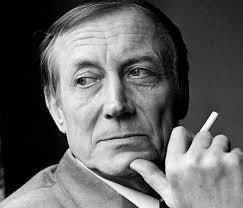
Yevgeny Yevtushenko
This was just another facet of the same propaganda machine. One was for domestic consumption, another was for export as can be seen from this Central Committee instruction (R 16 January 1981, St 246-49):
“The leadership of the French Communist Party (PCF) has requested that certain representatives of the Soviet intelligentsia who are well known in France send a letter of solidarity and sympathy to French Communists. The leadership is linking this act to the rally of the French democratic intelligentsia which will take place on 30 January 1981 in Paris and is seen by the Friends as a demonstration in support of the PCF General Secretary G. Marchais …”
The most progressive and liberal writers and directors – Trifonov, Katayev, Yutkevich and even Tarkovsky – hurried to sign a letter drawn up by some semi-literate official from the International Department. They had to provide something in return, and pay for the privilege of being “for export”:
“We express our fervent solidarity with your struggle for the flourishing of national culture, the development of international cultural ties between cultural workers of all countries, for peace, democracy and socialism. In our time the ideas of liberty, equality and fraternity are inextricably linked to the ideas of socialism, which makes all forms of culture and all the achievements of human genius available to the working masses.”
They signed and did not pull a face at the clumsy style or comment that “we writers” could have produced a better text. They knew that they would be forgiven, in turn, certain stylistic liberties in their own work. The censors would magnanimously give the green light: something was left unsaid here; something was merely hinted at there. The Soviet art and literature they created remained a game with the censors, played out at the level of hints and allusions comprehensible only to the initiated who, for their part, were expected to shiver with delight at the boldness of the author. They were inflated authorities and their works did not, and could not, survive the regime. Those whose novels and poetry have outlived the Soviet system never thought of going against their conscience to “save their talent”. Such an idea would not have occurred to Bulgakov or Platonov, Akhmatova or Mandelstam, Solzhenitsyn or Brodsky.
They were outcasts and, except for the last two, did not live to see their most important works published in Russia. On the other hand, they did not sit in the presidium, saving humanity from war, and they were not voices in the chorus. I remember how my father took me to see the dying Platonov in his caretaker’s room at Herzen House (they had been at the front together during the war). My mother was angry.
“What do you think you were doing? That man has an open form of TB and you drag the child off to see him.”
“Never you mind,” my father drily halted her indignation. “He’ll be proud when he grows up.”

Alexei Platonov (1899-1951)
I am proud. I laid eyes on a man who preferred to sweep the yard at the Literary Institute, but did not start to lie in the most terrifying years under Stalin. I later read Platonov’s books, those I could get hold of. What the other writers who visited or lived at Herzen House wrote is of no interest to me. But it is extraordinary to think that the sight of Platonov with his broom and shovel taught them nothing, although it could have been the most effective textbook in their entire study programme.
As I listened in the early 1990s to the groans of the intelligentsia about their sufferings and how they were forced to lie, I was bewildered: why did they have to become writers, professors and Academicians, no matter what the cost? It had nothing to do with talent: a caretaker, as we see, could possess talent. Everyone faced that choice but no one wanted to be a caretaker: they all wanted to suffer in comfort, so to speak. All wanted a noble justification for their own conformism.
xxx
When I was released from the madhouse in 1965, I remember how I suddenly found that all my friends from the “Thaw” years had vanished, as if they themselves had melted away.
Meeting one or another by chance on the street, they were always in a hurry to get somewhere else, with a folder or a briefcase or, better still, pushing a pram. “Sorry, old chap,” they muttered as they passed, without looking directly at me, “must finish my course first, then my dissertation and doctoral thesis,” “I must bring up the children first.” And they scurried on, looking neither right nor left. An entire generation of my contemporaries, it seemed, shielded themselves from life behind those briefcases and prams, those theses and books. Whom did they think they could fool? Themselves, the regime, their own children? Surely, they understood it was dishonest to leave these unsolved problems to their children?
Unlike the 1920s and 1930s, everyone knew that the regime would use their talents and achievements only to harm people. With time, the inhuman conveyor of the Soviet system would turn them into victims or executioners. That was all it existed for. Twenty years later, the children they conceived in self-deception and used to justify their own dishonesty were packed off to Afghanistan to kill or be killed. The country kept a dull-witted silence, while their parents, as usual, said nothing at work and kept their noses in their books and dissertations. Even this sacrifice was not great enough to disturb their little world with its own suffering and authorities.
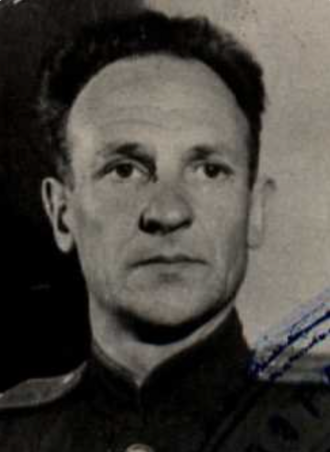
Konstantin Bukovsky (1908-1976)
When our parents, who had come through the dark ages of Stalinism, uttered like some incantation the triune assertion that they had “believed, feared or not known”, it was still possible to argue with them. Hearing the same from members of our own generation only prompted derision.
What had they believed? That the Soviet regime was unshakeable? That it would last out their lifetime? What did they fear? To lose their privileges and comfortable situation? What was it, finally, they did not know? That you cannot hide endlessly from retribution, one behind another?
Chapter 6: “The Coming of Gorbachov” (part one) …
===================================================
SOURCES
CHAPTER FIVE: “WHAT ‘THEY’ BELIEVED”
An asterisk (*) and bold type indicate that a file from the Bukovsky Archive has been fully or partially translated into English. Seven of the 33 links are to pdf versions of untranslated files; one of these (1 April 1978) is not available online.
(The archival description of the various sources mentioned in the text, indicating their size and contents and providing access to the original Russian text, were added to the notes in the book version.)
text translated & edited, and links restored, by John Crowfoot
(28 June 2026)
========================

