
PART ONE
- 3.1 The Stalinist void
- 3.2 Our “Thaw”
- 3.2 Our “Thaw” (concluded)
- 3.3 Rebellious Youth
- 3.4 Law and expediency
- 3.5 Glasnost
SOURCES
*
Judgement in Moscow (online)
*
For a long while I did not think such a turn of events was possible. Until Gorbachov appeared with “his” glasnost I had assumed the Communist system would collapse towards the end of the 20th century. Then, however, the change would be far more radical than what occurred. The inevitability of collapse was beyond doubt – but when would it happen, and how?
In the 1970s the question appeared largely theoretical. I recall the discussions prompted by Andrei Amalrik’s essay, “Will the Soviet Union survive until 1984?” (see 1970 Chronicle entry, 8 & 9). Logically and, as we were to see, quite rightly, he described a scenario in which the USSR disintegrated into separate countries. He predicted that a war against China would set this collapse in motion, but that was not significant. Far more important was his main argument: the regime was increasingly sclerotic, the opposition (which included various nations and ethnic groups) was growing and, consequently, the Soviet Union would not survive a major crisis. Many of the books published around that time — Solzhenitsyn’s The Oak and the Calf and my memoirs, To Build a Castle — were essentially about the same subject.
*
That this idea was far more contentious to others, I only realised after I arrived in the West.
What to us in the Soviet Union was obvious, thanks to our own experiences, was considered by most Westerners to be not merely debatable but the absurd and quite possibly dangerous ravings of émigrés. It was comparable, in their eyes, to the hubris of Cuban anti-Communists in the spring of 1961, confident that they would easily triumph over Castro at the Bay of Pigs. The West did not want to treat us seriously. At best, we were regarded as a curiosity. In Amalrik’s apt comparison, it was as though an ichthyologist suddenly heard a fish speak: it was curious, but the specialist remained sure he knew far more about the fish than the creature itself could tell him.
Western policy towards the Soviet bloc turned on this issue, however. If our description of the regime’s growing decrepitude was right, and we were correct in asserting that it could not withstand a serious challenge, the West should deliberately pile on the pressure, forcing the regime to squander its remaining resources. That, in part, was what happened in the early 1980s. The tougher policies of Ronald Reagan and Margaret Thatcher, coinciding with the crises in Afghanistan and Poland, forced the Soviet regime to over-reach itself, something it could not sustain. Ten to fifteen crucial years had meanwhile been lost. If in the early 1970s the West had followed our advice and ratcheted up the pressure rather than relaxing it under “détente” and, most important of all, if the West had mastered the tactics of ideological struggle, the Soviet Union would have collapsed in the early 1980s. The result would have been quite different. Then, at least, there would have been no doubt as to who the victor was and who, the vanquished. The healing process in Russia might have been as successful as in the Czech Republic.
In the 1970s one could only dream of such an outcome.
We were afraid that the very opposite might occur – the West’s total capitulation to the Soviet monster. On this issue, Russian émigrés were more or less united and we did all we could to bolster the faint-hearted West. How the Soviet regime would collapse, on the other hand, was a subject of debate among us. When Alexander Solzhenitsyn’s “Letter to the Soviet Leaders” was published in Paris early in March 1974 (he sent it to the Soviet leadership in September 1973 but received no reply [see later opinions in Chronicle]), it provoked a storm of protest. Influenced to some degree by Amalrik’s book, his “Letter” first raised the problem of the transition from totalitarianism to democracy. Looking back, it is amusing to recall how Solzhenitsyn was attacked merely for suggesting that such a period of transition was unavoidable: after a total lack of liberty for so many decades it was unrealistic, in his view, to hope for the immediate triumph of democracy. In Western and certain émigré circles he was denounced as a demagogue – a supporter of monarchy, theocracy, and (almost) of a coup d’état. Immersed in his study of the 1917 February and October Revolutions, Solzhenitsyn wanted simply to warn against a repetition of a similar scenario in post-Soviet Russia. Today we can see he was much nearer the truth than his opponents.
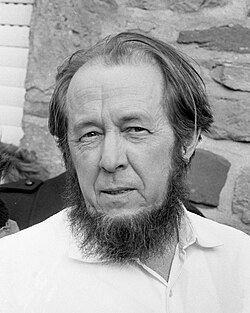
Solzhenitsyn
*
My participation in this debate was largely accidental and involuntary. By 1976, when I was released from prison and expelled from the USSR, the discussion had degenerated to the point where Solzhenitsyn was being openly persecuted.
I did not like speculating about the future. Such an occupation, in my view, was not only pointless: it was also harmful since it would further divide our very modest forces. What was the point in arguing about who might replace the Communists? They had no intention of stepping down and continued to starve our friends in their camps and prisons while the rest of the world, to borrow a phrase from biology, adopted “a submissive posture” in its dealings with the Soviet Union.
Having embarked on such a debate, the participants had reached the point where they began impugning each other’s motives. Each speaker swathed himself in the mantle of nobility, crushing his opponent with the moral superiority of his own goals. Let the intelligentsia talk about the future and it would inexorably conclude, with the lofty wisdom of all chatterboxes in history, that “nothing should be done now, because it might make things worse in the future”. That was the outcome on this occasion, although anything worse than the Communist dictatorship could hardly be imagined. Having argued ad nauseam and accused Solzhenitsyn, in passing, of all mortal sins, our intellectuals reached agreement that nothing should be done – God forbid: Communism might otherwise turn into a yet more terrifying beast, the National Bolshevism towards which the wily Solzhenitsyn was leading us. Professor of logic Alexander Zinoviev declared, with the incontrovertible manner of his discipline: “If I had to choose tomorrow between the Soviet regime and being ruled by Solzhenitsyn, I would prefer the former.” Such a conclusion, it hardly needs saying, was very welcome to the Western establishment, which constantly stoked the fires of this quarrel. As a result, the Soviet regime appeared not so very bad after all: it was unnecessary to fight it – indeed it would be harmful to do so! Best of all, the dissidents had fallen out among themselves. They themselves didn’t know what they wanted, so it was not worth paying attention to what they said.
I tried to avoid getting involved but purely practical considerations demanded that I intervene, if only to end a squabble that had done us so much harm. It was like withdrawing troops from the front at the height of a war in order crush a rebellion at home. Leafing through my 1979 article, “Why are Russians quarrelling?” (Kontinent, 23, 1980) I was curious to remind myself what I thought then about the transitional period.
“Undoubtedly, predictions of an imminent revolution in the USSR are absurd, and it is as criminal to promote such a revolution as it is to promote terror. Only sentimental writers claim that revolutions happen because people are impoverished and have no rights and take place now when the common people have been driven too far. No one fully knows why revolutions take place; but when a person is hungry and destitute, he is more inclined to steal, riot, commit acts of insubordination or display a dull-witted subservience. When someone has no rights, he does not know what his rights might be and he is too humiliated to demand them. A competent government can always bribe the most gifted and energetic among this mass of atomised and embittered people. This leads to stagnation and degeneration, as we can see in the USSR today. In these conditions, were some magical external force to remove the existing administrative structures the result would be a catastrophe, leading to anarchy and mutual destruction.
“Revolutions most often happen when true poverty and lack of rights lie far behind but the accumulated popular hatred and mistrust of the regime make any reform detestable and inadequate. In such circumstances an indecisive or incompetent government is a guarantee that revolution will occur.
“It is extraordinarily naïve to expect that revolution will bring justice and liberty. Any social upheaval mobilises the dregs of society and then, in the words of the Internationale, they “who were nothing, shall be all!” Revolution promotes the most cruel, deceitful and bloodthirsty individuals, those with strong despotic characters who lead gangs of thugs. After a determined struggle, the most cruel and crafty person among them will concentrate absolute power in his own hands. A revolution, in other words, always ends in tyranny, it does not lead to liberty and justice.
“Could the same happen in the USSR? Regrettably, it could, but it is unlikely to occur soon. For the time being the regime is still strong enough to reject any reforms: the emasculated Kosygin reforms were not implemented as originally intended – and with good reason. The authorities realise that the present clumsy bureaucracy could not cope with the forces unleashed by any significant reforms. There are no more fearless young men waving Mausers who know how to combat chaos. The Communist regime in the Soviet Union is, probably, the most conservative regime on earth today. It found Khrushchov too revolutionary. Thus far, no significant social forces independent of the regime and capable of forcing it to reform have emerged in the USSR.
“It may take any length of time for such forces to appear. It depends on the behaviour of the Soviet authorities, the international situation and yet other factors. Sad as it may seem, we should not expect rapid improvement, let alone radical change. In the present circumstances, economic difficulties will not force the regime to carry out significant reforms. All we can count on is the slow growth of independent forces in society against a background of stagnation and degeneration. So far, the contours of these growing forces have only been outlined: the national and religious movements, the civil rights movement (for the most part based on the intelligentsia) and the beginnings of a workers’ movement.”
As I then conceived it, this “transitional” or preparatory period was represented by the struggle of social forces within the country “for autonomy”, a struggle that would result in “less and less totalitarianism and more and more democracy until a point has been reached when revolution is no longer needed. That transitional period, in my view, has already begun.” Consequently, our task was to widen and strengthen this movement and its non-violent traditions, and to secure its recognition and support by the West. When the final crisis of the Communist system arose, there would be a force capable of ensuring a transition that was the least painful and shed the least blood. All our efforts within the USSR and in emigration were directed to this end. Naturally, no one could then foresee all the alternatives, every twist and turn, but knowing the subsequent course of events I cannot find any serious flaw in my argument. Apart from a peaceful revolution there was no other civilised way to resolve this problem: it would allow us to avoid, on the one hand, appalling bloodshed and, on the other, the slow degradation and death of the country together with the Communist system.
Yet for such a scenario to succeed homo sovieticus had to cease, at least for a moment, to be homo sovieticus. He had to reject the temptations of servile acquiescence and overcome his fear of punishment: he had to make an effort, to reach his own choices and simply become a human being.
xxx
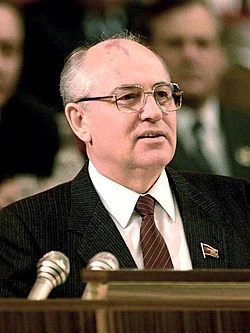
Gorbachov
(1931-2022)
Probably that is what would have happened, despite all the repressive measures, had not Gorbachov’s “perestroika” intervened. And we must suppose that the Central Committee, in its wisdom, invented this alternative as a way of avoiding such a denouement.
Hoping that the system could be saved by such overdue and half-hearted reforms, the Central Committee then found itself faced by the prospect of just such a loss of control. The Communist regime ended as dishonourably as it had begun, caught up in conspiracies and plunged into putsches, dooming the country to collapse and disorder. For the Gorbachov “reforms” were aimed at preventing, at all costs, the emergence of the independent social forces that could have secured stability during the transitional period.
The regime was doomed. Before gasping its final breath, however, it did people one last bad turn when it dangled before them the illusion that the country could be cured without effort or sacrifice. Ordinary people, it should be said, put very little faith in Gorbachov’s trickery. The Communists, confident as always, believed it would take only a little manipulation to get the economy working, to fool the people, to rewrite history and enter paradise before anyone realised what was going on. When I saw, however, how easily and willingly the intelligentsia believed in the possibility of salvation “from above” I was stunned. The success of this deception, especially amongst the intelligentsia, was far more depressing than all the perestroika posturing of the Soviet leaders. Was there anyone who failed to see that renewal could not have emerged from the depths of a Party that, for the past fifty years, had energetically recruited all the country’s careerists and scoundrels? Surely it was clear that a country they had driven to catastrophe must be saved, in the first instance, from them – not with them!
Of course, it was clear. It had been discussed and agreed, sitting around Moscow’s kitchen tables as far back as the 1960s. The intelligentsia was, however, the most corrupted and compromised of all social groups in the USSR. Like Professor Zinoviev it “preferred” the Soviet regime, while complaining about it in every way. Now (what joy!) the Master had finally allowed freedom of expression in the press. How could they resist? How could they fail to praise the Master? The Soviet leaders deserve credit for adroitly conjuring up, on the very brink of disaster, the latest version of the “bloc of communists and non-Party members”, and they did so, moreover, on the basis of anti-communist sentiment. At the same time, contrary to Chekhov’s behest, it was evident that the intelligentsia had not spent the intervening decades, squeezing out the serf within them, by drops or trickles. The intelligentsia proved as easy to trap and entangle with Gorbachov’s carefully dosed “glasnost” as the country’s ignorant masses in 1917, which followed Lenin after he incited them to “seize what was theirs” (to expropriate the expropriators). In both cases, the phoney threat that the “former masters” might return made the masses, and the intelligentsia, an obedient weapon in the hands of the Communist manipulators. The Original Sin of Gorbachov’s “liberties”, after all, was that they were a gift. And that which is given, not won, has this in common with stolen goods, that it may always be taken back: what’s more, you may be punished for its temporary possession. What alternatives were there in such circumstances? Only to pray that the Master would not return and send you to the stables for a whipping.
Gorbachov’s “glasnost” corrupted and subverted the intelligentsia far more than Brezhnev’s censorship. However foul things may have been before 1986, certain criteria of decency and rules of moral hygiene had survived. Consequently, there were morally healthy people, while those who had become infected understood their condition and it was noticeable to others. The coming of perestroika and glasnost introduced a particularly loathsome era when there was no way of distinguishing the sick from the healthy, and any criteria were sacrificed to “save perestroika” from imaginary “conservatives”. The intelligentsia all began to sound and behave like the ageing “rebel” Yevgeny Yevtushenko; the entire country began to think and write like court dissident Roy Medvedev. Suddenly they were all politicians while decent people were nowhere to be seen; going against one’s conscience was grandly termed “political compromise”. They marched together. Yesterday’s oppressor was moved by his new-found liberalism, while yesterday’s liberal discovered he was not averse to a little repression.
xxx
This was greatly helped, of course, by the West’s unconditional support for Gorbachov. The situation within the Soviet Union, by no means easy, became hopelessly complicated as a result.
At that moment of crisis “Western opinion”, in reality the views of the Western establishment, was just as infallible for vast numbers of people in the Communist world (unaccustomed to thinking for themselves) as Holy Writ was for practising Christians. If the “West” had proclaimed Gorbachov a hero and his “perestroika” democracy, then who in Russia would dare dispute it?
There were plenty in the West who wanted to believe Gorbachov’s nursery tales or, at least, thought it was reasonable to support the hard work of those implementing perestroika. They indeed appeared to be making an effort. The Berlin Wall came down; Soviet troops were withdrawn from Afghanistan; Article 6 of the 1977 Constitution, which gave a leading role to the Communist Party, was repealed; Alexander Solzhenitsyn’s Gulag Archipelago was published; and nobody was imprisoned for political offences. What more could one want? “You suffered too much at their hands,” people told me. “That’s why you’re incapable of being objective. There must be some point beyond which the Soviet regime ceases to be Soviet and the Communists cease to be Communists, and then our hostility should be replaced with friendship.”
What could I say? How could I explain to people who had never lived under Communism that it was not so much a political system or a criminal regime as a mass contamination comparable to an epidemic, like bubonic plague? You cannot take personal offence at what plague does to people, nor can you argue or reach agreement with it. Either you fall ill or you do not. Consequently, there is no way in which this plague can undergo “perestroika” or reform. You must tackle the disease with all your determination. The person who has ceased to fight the plague and becomes apathetic, as a rule, does not survive.
The unthinking euphoria in the West undermined the last opportunity to defeat Communism and, in so doing, removed the remotest chance of Russia’s recovery. It was as if at the end of World War Two the allies had demanded not the “unconditional surrender” of Nazi Germany but made do with the country’s “perestroika”, a certain liberalisation of the regime. Where would Europe be today if that had happened? There would certainly be no democracy but, to use an elegant phrase about former Communist countries, Europe would find itself in a “post-totalitarian period”. Marshal Petain would be the hero who saved France, unlike the irresponsible opportunists of the Resistance whose extremism obstructed the reasonable “reformers” in Vichy.
The results in the USSR were disastrous. Among other consequences, it made possible an emerging split within our movement, pushing one part headed by Sakharov into a suicidal union with the leaders of perestroika. Former political prisoner Father Gleb Yakunin called on people to vote for former KGB General Oleg Kalugin, who had organised the murder of dissidents. How could one know a true democrat from one of Gorbachov’s fakes? I shall never forget how Gorbachov opened the Congress of People’s Deputies, his imitation of a parliament, in the spring of 1989, by inviting Sakharov, with a broad gesture, to address the assembly. He thereby gained a screen for all his own deceit and for the manipulation and falsification of the dying regime. “Andrei Dmitrievich, please take the stand …”
That scene rises before my eyes today. It reduced almost thirty years of stubborn work to build up independent forces within society to nothing. To be fair, Sakharov understood his mistake. Not long before his death in December 1989, he tried to create an opposition party and called for a campaign of civil disobedience against the Gorbachov regime. By then, however, it was too late.
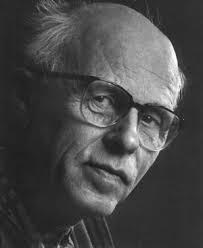
Sakharov
xxx
History has pronounced its verdict. The Communist regime collapsed despite the entire world’s efforts to save it, thereby confirming what the fish had tried to tell the ichthyologist. It was decrepit and could not be reformed; it should and it could have been dismantled. The threat of nuclear war would disappear only with the disappearance of the Soviet Union. The Communist reformers, so beloved of the West, left the scene without creating a “socialist model of the market”. What was left in the 1990s was a ruined country without a future or any hope of salvation, where gangsters ran the show and millions of impoverished inhabitants wandered, apathetic and downcast, past the ruins of their homes.
*
3.1 The Stalinist void
I copied hardly any archival documents about the repressive measures of the Stalin period; just a few that particularly astonished me by their cynicism. It was a conveyer belt of arrests and executions that, like all Soviet industry, had to meet its plan targets and never stopped working. We already knew most of these stories from books and what others had told us. The everyday inhumanity of certain documents, however, made an impression even on me.
Knowledge is one thing: seeing a scrap of paper with Stalin’s pencilled note condemning several thousand people to death at a stroke of his pencil, is quite a different matter (31 December 1938*): “Permit Krasnoyarsk Region 6,600 additional ‘1st category’ arrests. Stalin, I.V.”
The scale of the country’s transformation was so great that the Soviet leaders took no interest in individuals. People were also counted in thousands and tens of thousands and divided into “categories”. When the Republics and Regions of the USSR met their target for “Enemies of the People” they reported back to Moscow, just as they did about grain harvests or milk production. Then, as was the custom under Socialism, they asked permission to demonstrate their ardour by “over-fulfilling” the plan (4 February 1938*, No 95/III):
“The troika has completed its work within the targets set for the Region and convicted 9,600 kulak, SR, rebel and other anti-Soviet elements. In addition, kulak-White Guard elements who were carrying out subversive work have been uncovered, giving a total of up to 9,000 kulak-anti-Soviet elements throughout the Region.
The Regional Party Committee requests that an additional ‘first category’ target of 3,000 be established and a ‘second-category’ target of 2,000, with an extended deadline of 20 March.
Regional Committee Secretary, Yu. Kaganovich.“
After consultations, the Soviet leadership in Moscow agreed that the executions (‘first category’) and arrests (‘second category’) should continue and, we may imagine, went out to enjoy an evening at the Bolshoi Theatre. Or consider this Politburo decision (17 February 1938*, Pb 58/57): “Permit the Ukraine NKVD to arrest additional kulak and such like anti-Soviet elements and examine their cases before the troika, raising the target for the Ukraine … to 30,000.” The special troika in any Region usually consisted of the first secretary of its Party Committee, the head of the local NKVD and the chief procurator. Naturally, there was no way they could cope with such a volume of work. During 1938 alone the targets were raised several times, deadlines were extended, and the entire murderous process threatened to run out of control. Finally, in the autumn of that year Stalin, ordered the troikas to be wound up and any new cases transferred to the courts (R 15 September 1938, Pb 64-22).

Yezhov and Stalin (Djhugashvili)
It is hard to believe that anyone who lived through that period, as either executioner or victim, remained normal. Could the one be distinguished from the other? A year before, for instance, an NKVD officer informed Yezhov, then head of the secret police, that the machine was not running smoothly in the Kuibyshev Region (31 October 1937*):
“Several days ago, the workers at one of the collective farms of the Kuznetsk district complained to a visiting official of the Party’s Regional Committee that a mass murder had been committed during the night not far away. On investigation, it proved that eight Enemies of the People had been shot dead in the woodland during the night on orders of the special troika. The head of the NKVD in the district was expelled from the Party the night before for having been linked to the unmasked Enemies of the People. He committed a provocative, hostile act by not taking measures to ensure that those shot were buried.
“He was arrested. The executed Enemies of the People were buried.
“Because of poor security at the investigation offices of the Kuibyshev Region NKVD there were two cases when Enemies of the People who were being interrogated jumped out of the window. One jumped onto the street and was killed.”
How many did they murder?
I did not come across a figure for those who were shot. From a February 1939 report to Stalin by NKVD chief Beria and Procurator-General Vyshinsky it follows that, from 1927 onwards, the troikas and special boards of the NKVD (and its predecessor, the OGPU) sentenced two million, one hundred thousand people to terms of imprisonment and internal exile (R 5 September 1939, 530-B). This does not take into account the regular courts and tribunals that were tirelessly at work, nor does it include the mass expulsion of “kulaks” during the collectivisation of agriculture in the early 1930s.
Of course, the years 1937 and 1938 became particularly notorious because the Communist leadership was itself affected. For ordinary people, other times were little better. The beginning of war in June 1941 did not ease their burden.
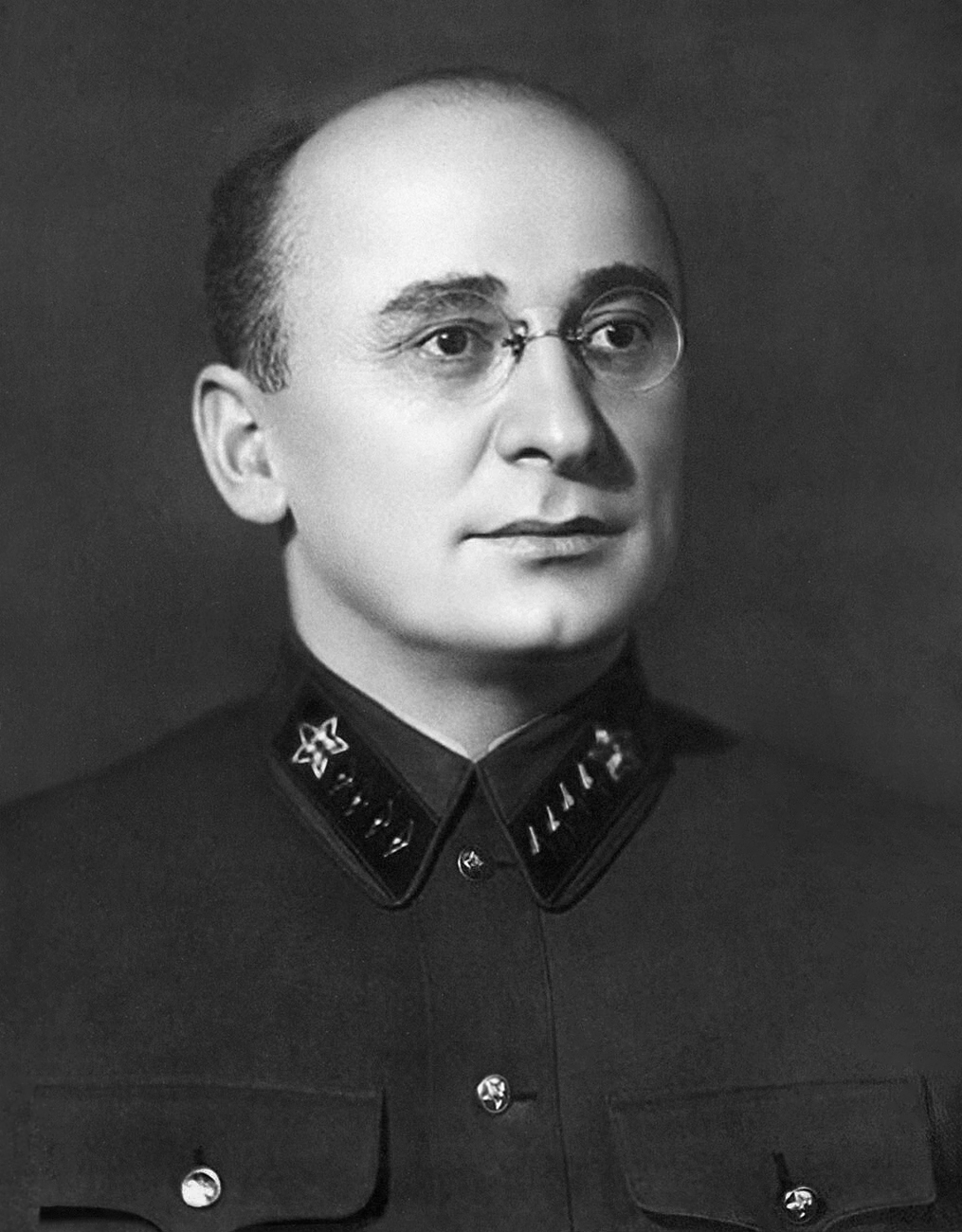
Beria
Entire nations were deported and millions of prisoners of war were transferred from German to Soviet concentration camps. It is less well known that the warlike spirit of the troops was also sustained through repression. “From the beginning of the war to 10 October 1941 657,364 soldiers who left their units and deserted from the front have been arrested by NKVD Special Sections entrusted with protecting the rear of the army,” the deputy head of the Special Sections, Commissar Milstein, informed his boss Lavrenty Beria (31 October 1941*):
“Among those arrested by the Special Sections are:
| Spies | 1,505 |
| Saboteurs | 308 |
| Cowards and scare-mongers | 2,643 |
| Deserters | 8,772 |
| Those spreading provocative rumours | 3,987 |
| Self-mutilators | 1,671 |
| Total: | 25,878 |
“In accordance with decrees issued by the Special Sections and the verdicts of the military tribunals 10,321 individuals were shot, 3,321 of them before their fellow soldiers.”
That was only at the front during the first three months of the war. For the NKVD, the front extended across the entire territory of the Soviet Union. The cruel ingenuity of their methods was taken to absurd extremes. Many of their so-called operations were made public only in 1956 during the “Thaw”, when the Party Oversight Committee re-examined the cases of Party members imprisoned or executed without having committed any crime. One case may serve as an illustration (4 October 1956*, St 1061):
“… it has been established that in 1941, with the permission of the NKVD in Moscow, the Khabarovsk Region NKVD set up near the border with Manchuria, a fake Soviet border crossing, a ‘Manchurian border police post’, and ‘a local Japanese military mission’, all in the area of the Kazakevichi village. NKVD officers referred to this in correspondence as ‘the Mill’. It was their idea to use the simulated Soviet border crossing, Japanese border and intelligence-gathering organisations to test Soviet citizens they suspected of being engaged in hostile activities.
“… The ordeal at the so-called Mill began with a suggestion to the person suspected of espionage or other anti-Soviet activities that he carry out a mission for the NKVD across the border. After obtaining the agreement of the ‘suspect’ there was a staged transfer of the individual onto Manchurian territory from the phoney Soviet border crossing followed by his capture by Japanese border authorities. The ‘arrested’ person was then transferred to the premises of the Japanese military mission where he was interrogated by NKVD officers posing as officials of Japanese intelligence and Russian White Guard émigrés. The task of the interrogation was to make the ‘person being tested’ confess to the ‘Japanese authorities’ that he had links with Soviet intelligence. To this end exceptionally tough conditions were created, aimed at breaking the individual psychologically, using various threats and forms of physical pressure.
“… At the end of the interrogations, which sometimes continued for days or weeks, the ‘arrested’ person was recruited by representatives of ‘Japanese intelligence’ and sent into Soviet territory to carry out a mission. This provocative game concluded with the arrest by the NKVD of the ‘person being tested’. He was then sentenced by the NKVD special board to a lengthy term of imprisonment or execution.”
From 1941 to 1949 (inclusive) 150 people were processed by this “Mill”. They were subsequently rehabilitated, for the most part posthumously. This entire undertaking was condemned during the Khrushchov period as an “anti-State” operation, but none of the officers involved suffered serious punishment. Most were pensioned off and General Fedotov, the man who invented this hellish “Mill” and oversaw its operation, merely faced “Party discipline”. There is nothing surprising in this. Almost the entire leadership of the Soviet Union was implicated, one way or another, in the so-called Stalin repressions – starting with General Serov, who now headed the KGB and had been directly involved with the Khabarovsk “Mill” (4 October 1956*, St 1061), and ending with Khrushchov himself.
Brezhnev’s career began comparatively late, but he also managed to participate in this nationwide annihilation during the last years of Stalin’s rule. On becoming first secretary of the Moldavian Communist Party in 1950, he asked if he might be given additional targets for the expulsion of hostile elements (R 6 October 1952). By then the “class struggle” had become much less heated. A few pitiful remnants, by some miracle, had survived the previous purges: 735 “kulak” families (2,382 individuals); 735 individual “kulak” farmers; and members of various sects (Jehovah’s Witnesses), 850 families; and 400 families of indigenous, loosely Christian sects (Innokentievites, Archangelists and Subbotniki) as well as Pentecostalists and Seventh-Day Adventists: in all, some six thousand individuals. Not a very good catch, but vigilance must be maintained.
*
These were Stalinist officials and one could not expect them to be particularly strict in their condemnation of “individual violations of socialist legality during the Cult of Personality”. Especially since they did not intend to end political repression as such. Contrary to common opinion, the “Thaw” did not go very deep. The style and scale changed, but not the essence. It is curious, much later, to note how KGB head Yury Andropov excused himself before the Central Committee in 1975.
Frustrated by our campaign to defend human rights in the Soviet Union, Andropov said that many more had been imprisoned under the “liberal” Khrushchov than he himself had managed to send to prison or the camps since 1967 (29 December 1975*, 3213-A):
“As concerns criminal charges against the so-called ‘dissidents’, by which the West usually means persons prosecuted under Articles 70 (Anti-Soviet Agitation and Propaganda) and 190-1 (Circulation of knowingly false fabrications, denigrating the Soviet system) of the RSFSR Criminal Code, the figures are as follows. For the period from 1967 (Article 190-1 was introduced in September 1966) up to and including 1975, 1,583 persons were convicted under these Articles. During the previous nine-year period (1958-1966) 3,448 persons were convicted of anti-Soviet agitation and propaganda. Incidentally, in 1958, i.e. during a time, as it happens, that the West frequently refers to as the ‘period of liberalisation’, and when N.S. Khrushchov made his statement (27 January 1959) about the lack of ‘prosecutions for political crimes’, 1,416 people were convicted under Article 70, i.e. almost as many as in the past nine years [1967-1975].”
The West always preferred to think in stereotypes and make a liberal of each new Soviet leader. No one escaped this praise: neither Stalin, nor Khrushchov, nor Brezhnev, nor Andropov – not to mention Gorbachov. This, one must suppose, was an expression of the constant Western dream that the Communist threat would somehow vanish of its own accord, without struggle or risk.
And the people who nursed this dream were not the worst. The worst proposed to choke the Soviet python “with kindness”, surrendering to it body and soul. I remember how the British intelligentsia turned on me in 1978, after the appearance of my book To Build a Castle, because I was insufficiently respectful towards Khrushchov and his “Thaw “. There was no limit to their indignation, especially in The Guardian (which has always known, better than us, about life in the Soviet Union). If Khrushchov did differ in some way from all the other Soviet leaders since Lenin it was in his rather naïve belief in the rapid triumph of Communism. While the West was getting ready to award him the laurels of a liberal, he was energetically preparing for that victory. A Top Secret (Special File) document (R 3 September 1953) contained a Central Committee Resolution for setting up a “special section” within the Second (Intelligence) Directorate of the USSR Ministry of Internal Affairs. Its tasks were
“… sabotage at the major military-strategic and communication installations on the territories of the main aggressive States, the USA and Britain, and on the territories of other capitalist countries being used against the USSR by the main aggressors.
“… carrying out
acts of terror[crossed out by hand and replaced by “active measures”] against the most active and ill-intentioned enemies of the Soviet Union among individuals in capitalist countries, especially dangerous foreign intelligence agents, the heads of anti-Soviet émigré organisations and traitors to the Motherland.”
All measures of this new special section were to receive “preliminary examination by and sanction from the Presidium of the CPSU Central Committee”, and the Resolution was authorised by “N. Khrushchov, Secretary of the CPSU Central Committee”. A fine liberal, wasn’t he? For those of us imprisoned during his “Thaw”, this document is no revelation. The murder and abduction of émigré leaders was a well-known practice at that time, as was the Khrushchov innovation of incarcerating people in psychiatric hospitals.
The course of partial de-Stalinisation after the Leader’s death was inevitable and, as we can now see from the documents (“The Beria Affair forty years on”, Russkaya mysl,18‑24 November 1993), the first person to propose it was not Khrushchov but Beria. Naturally, it was not his kindly nature or a striving towards the purity of Leninist ideas that led him in this direction: it was a fierce power struggle. At Stalin’s death Beria headed both the Ministry of Internal Affairs and the Ministry of State Security. He had access to the archives of both organisations and used them against his opponents. Beria began the process of rehabilitation for those convicted in cases where his rivals, but not himself, had been involved. In so doing, he set the terms for the entire post-Stalin struggle for power. Khrushchov and his supporters could do nothing but eliminate Beria and adopt his methods. The genie had escaped from the bottle and it was now impossible to put it back.
It is curious to note that Beria, who is remembered in history only as Stalin’s secret police chief and a pathological murderer, was, it seems, an imaginative politician. His struggle for power was not limited to a campaign of selective rehabilitation. He also foresaw a new course of destalinisation for the Party. He proposed that agreement be reached with the West to reunify Germany as a neutral State in return for 10 billion dollars, something the 1990 Nobel Peace Prize-winner Gorbachov achieved far less successfully 35 years later. It is easy to imagine how the West would have idolised Beria if he had won the struggle for power in the USSR. The post-Stalin period would have been called the “Beria Thaw” and no one today would remember Khrushchov.

Semichastny
The campaign of rehabilitation under Khrushchov was far less honest than most people then imagined. Almost until the end of Khrushchov’s time as Party leader, for example, the families of those executed on the orders of the troikas were told lies about the fate of their loved ones. A note provided to the Central Committee by KGB head Semichastny (25 December 1962*, 3265-S) showed that an instruction had been issued in 1955 that citizens interested in the fate of persons executed by the decision of extra-judicial bodies were to be told that their relatives had been “sentenced to 10 years in a corrective labour camp and died in a place of detention”. The reason for establishing this practice, he explained,
“… was that many individuals were unjustly convicted during the period of mass repression, and information about their real fate, therefore, might have a negative effect on the position of their families. Furthermore, it was considered that informing the members of the families of those who had been shot of the true fate of their relatives might be used by certain hostile elements to the detriment of the interests of the Soviet State.
“The existing practice of giving out fictitious information for the most part concerns those Soviet citizens who were innocent and shot on the decision of extra-judicial bodies during the period of mass repression.
“As a result of the re-examination of criminal cases from 1954 to 1961 about half of the total numbers shot by extra-judicial decisions have been rehabilitated. Relatives of most them have been told details of their deaths, which supposedly occurred where they were detained, and these details do not correspond to reality.”
Semichastny did not suggest that the Central Committee now admit it had been lying and tell people the whole truth. He merely recommended that those now requesting information “be told in person the real circumstances of death”. In any case their number, he wrote, was decreasing year by year. From now on “the registry office record of their death would indicate the date of execution without specifying the cause of death, as the Military Board of the USSR Supreme Court and military tribunals do when recording deaths of persons executed after a verdict in court”.
In other words, we did not then know the whole truth about that horrific period. We possessed fragments, incidents and stories about those “secretive, almost legendary times”, as Vysotsky so aptly put it. Soon people began digging up the once concealed mass burials. You could not reconstruct the truth from those scattered bones, but did we really want to know the truth? I am afraid that insane era will always remain a black, frightening void in the popular consciousness, no matter how many new documents we may find.
*
3.2 Our “Thaw”
Probably that is why I put more trust in the legends and songs, the pictures and sounds of my childhood. They provide, in my view, a more accurate reflection of that time.
While the pictures in my memory are invariably a dirty grey with coarse-grained images, like old photographs or the cinema newsreel of those years, the sound of my childhood is a steady, tense hum of engines, disquieting and alarming, somewhere beyond the horizon. It was as if my childish ear could detect what adults constantly engrossed in their own concerns did not hear: the hellish machine of the State in operation.
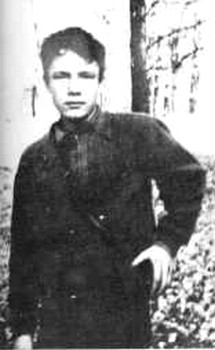
Teenage Bukovsky
It was a period of anguish, almost hysteria. There were the pompous Stalinist parades, with salvoes of fireworks and May Day demonstrations in which half Moscow took part. Meanwhile, we lived a wretched beggarly existence in barracks and communal flats, with endless fights and drunken abuse, the cripples always round the beer stalls and young hooligans who gathered down the side passage into the courtyard. The less appealing life became, the greater the heroic spirit projected through the loudspeakers, out on the street and inside each flat. Everyone was supposed to be a hero, that’s what the famous song said:
“When the country orders us to be heroes /
each one of us a hero will become”.
The liberated man of socialist society must become a Superman, conquering nature, turning back the rivers and transforming deserts into blooming orchards. There was an implacable logic at work. To create heaven on earth, after all, we had to achieve miracles every day. They were “made-to-order” heroes. Always half-starved, always in workmen’s padded jackets or military uniform (I can remember no other clothes from my childhood), while Soviet pilots stormed the heavens and our explorers conquered the North Pole. With little but their bare hands these “heroes” dug canals, erected dams and built the largest industrial complexes in the world. The triumphant proletariat strode from victory to victory, demonstrating the unshakable power of collective labour.
*
MAYAKOVSKY
This State romanticism, naturally, did not tally with the realities of our existence. Mayakovsky was a gifted writer and, no matter how much he wanted to glorify the feat of those who built a “garden city” in the impenetrable forests, he could not help conveying the crazy nature of the situation: “The workers sit in the mud / chewing their rain-soaked bread “. You can just imagine that picture. His emotional, not to say hysterical, conclusion carries no conviction:
I know the city will rise
I know the orchards will bloom
when such people are to be found
in the Land of the Soviets!
Of course, “such people” will not build any “garden city” if they cannot build themselves a clean canteen and protect their bread from the rain but prefer to sit submissively in the mud. These are not heroic warriors and conquerors of chaos, they were zeks in all but name.

Mayakovsky
(1893-1930)
Heroism is a cruel concept for it is based on the idea of self-sacrifice. When raised to the level of a State ideology it also becomes absurd. Nature does not provide us with many heroes, and in any epoch no nation possesses many. What then is meant by “mass heroism”, something so stubbornly exalted by the system, if it is not a mass and by no means voluntary form of self-sacrifice? Put simply, it means mass murder, just as the “conquest of nature” means its barbarous destruction. It was only much later that the people of that time, looking back, saw that the superhuman and the inhuman were identical. A few were inflamed with enthusiasm. The rest trembled with fear while the most cynical demagogues rose to positions of power and died in the successive purges. It was a generation that burned itself out, exhausted by work beyond its strength, perishing in the camps, sacrificing itself in “class struggle”, and all for no good reason. The sacrifice proved pointless. The magnificent canals and dams transformed the rivers into putrid bogs while the gigantic industrial complexes turned once flourishing regions into desert. It was as if nature, that eternal “Enemy of the People”, had decided to wreck the Party’s grandiose plans.
A further absurdity is that, like any emotional outburst, a heroic impulse may be easily stirred but quite impossible to regulate, let alone direct for the exclusive benefit of the State. The system tried to create “Soviet Man” but this was as impossible as an obedient rebel, a conformist revolutionary or a cowardly hero. This explains, on the one hand, the intoxicated anguish, the fights and the crime waves and, on the other hand, the endless and fantastic lies. The country cannot order you to be a hero only at certain hours of the day and in certain circumstances. If you have been brought up since childhood on the example of someone who used his own body to block the enemy’s machine gun, or of a girl who was tortured to death by the SS rather than give away her comrades, it is hardly possible to reconcile yourself to the atmosphere of lies and secret denunciations in which you are forced to live.
In any case, this romantic propaganda must have greatly complicated the work of State Security. It is astonishing to learn, for instance, that there were individuals processed by the NKVD “Mill” near Khabarovsk who did not give in either to the “Japanese” or to the “Soviet” side. After many weeks of torture, the State Security officers had to shoot them without trial to conceal what they were up to. One astonishing act at that hellish “Mill” sends shivers up and down the spine (4 October 1956*, St 1061): “On 21 November 1947 a Soviet citizen, Yan Lin Pu, who worked as a cook at the phoney border post (the official name of the fictional “Japanese military mission”), was incensed by the treatment handed out there. He broke the plates and destroyed all items of Japanese manufacture. Fearing that Yan Lin Pu might flee across the border, section head Popov and underground agent Chu Tsin Lin shot him”.
The unfortunate individual who jumped out of the NKVD investigations office window in Kuibyshev and died from the fall onto the street below also performed a feat of courage, exposing at the cost of his own life the lawless behaviour of State Security. How many were they, those who did not give in, who were not broken and who died, scratching and biting, without a hope that later generations would remember them with thanks? History has not preserved their names. Only the legends have survived, but they ensured that evil did not swamp the entire world and become a generally-accepted norm.
*
POST-WAR
Strange as it may sound, the war introduced a certain normality after the paranoid ravings of the 1930s. A quite real enemy appeared, as did a genuine threat to the lives of one’s family and, therefore, a quite understandable need to risk one’s life to save them. For the same reason, however, Stalinist patriotic propaganda so successfully infected the wartime and post-war generations with the virus of heroism. We grew up without knowing anything other than war, destruction and death, and from an early age thought how we could most dearly sell our lives: “While in the basements small boys longed to hurl themselves at tanks” (Vysotsky, ‘Ballad of Childhood’). Evidently, it was not just a matter of propaganda. Sometimes I think we were simply born with some mysterious goal implanted in our genes. In its last desperate effort to survive, it seems, the nation gave the earth a generation of kamikazes who, if Hitler had ever reached Siberia, would still have torn his hordes to shreds. Europe was very lucky that the war ended before we grew up. Still, the war came to an end and the tearful Soviet kamikazes were deeply disappointed (“there wasn’t a bullet for me”) and already proved incapable of doing anything but fight.
The consequences for the Soviet regime were alarming. The country was swept by a wave of criminal romanticism and, no matter how the regime fought against it, it would remain the dominant “ideology” among the young and, in the end, outlived the Communist ideology. When allowance has been made for post-war disruption, a fatherless generation and so on, the opposition to the State behind this impulse is obvious. These romantics emerged from the unlit courtyard side-passage (“from the gutter”). They were not drawn from among the Komsomol volunteers on the construction sites of Communism who, if they found themselves in the camps, suffered the most ferocious retribution. By 1956 “juvenile” offenders formed almost 40% of the camp population and the 22 commissions, sent out across the country by the frightened Central Committee to investigate this phenomenon, testified that they could not be tamed (R 22 August 1956, St 21/4, 26 pp).
Wartime heroism also stirred a spirit of resistance in the nation. There were uprisings in the camps, and outside the camps, which shook the very foundations of the system. Change had become unavoidable, even if Stalin had lived longer. His death was a turning-point, of course. The wave of uprisings in Eastern Europe, and especially the Hungarian Revolution of 1956, were undoubtedly linked to his demise, and they electrified the atmosphere in the Soviet Union itself. We did not have to throw ourselves at tanks. That fell to our contemporaries in Budapest and earned them our admiration. I suspect that most the 1,416 arrested in 1958 for anti-Soviet agitation and propaganda (29 December 1975*, 3213-A, p. 3), were imprisoned “for Hungary”, as the phrase then was. Leaflets, arson attacks or simply the refusal to take part in Soviet elections were common occurrences (R 5 March 1957, 465-S).
*
LEV LANDAU
The intelligentsia also revived, especially those surrounding the country’s major physicists for whom the microbe of free thought had never been fully exterminated, even under Stalin. “Landau has gathered around him a group of theoretical physicists from among anti-Soviet and nationalistic scientists of Jewish ethnicity,” KGB head Serov reported to the Central Committee (19 December 1957*). It was curious to read that report in 1992. Seventeen pages long, it was composed for the most part of remarks, very typical for the intelligentsia at that time, uttered by Lev Landau and overheard by State Security:
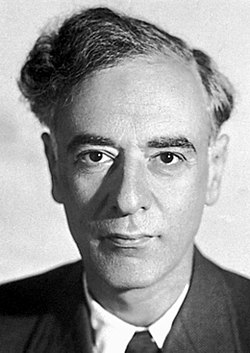
Lev D. Landau
(1908-1968; 1962 photo)
Identifying the rebels with the Hungarian nation and working class, he characterised the events in Hungary as ‘the Hungarian Revolution’, a ‘very good, joyful event’ in which ‘the warrior-nation was fighting for its freedom.
“… The Hungarian Revolution means that almost the entire Hungarian nation has risen against its enslavers, i.e. against a small Hungarian clique and mainly against our clique.
“… They are the true descendants of the great revolutionaries of all times… What they have now demonstrated is worthy of emulation. I am ready to get down on my knees before Hungary.”
Talking of the policy of the Soviet government on this issue, he declared:
‘… They have decided to bespatter themselves with blood.
… The people running our country are criminals.’
On 12 November 1956 Landau was asked, during a conversation at his apartment, about our actions in Hungary, whether ‘if Lenin came back, his hair would stand on end’. He replied:
‘… Lenin also got his hands dirty. Remember the Kronstadt Rebellion. That was a filthy business. The working class in Petrograd and the sailors at Kronstadt rebelled. They put forward the most democratic demands and were answered with bullets… It’s a fascist system.
‘The first thing they did as early as October 1917, in the space of a few months, was to seize power and transfer it wholly into the hands of the party apparatus. Without delay they established the Party principle of expropriating the expropriators. They did all that for sound reasons.
‘… It was no mistake; it was what they believed. That was how they carried out the revolution.’
When asked, ‘So, the whole idea is flawed?’ Landau replied, ‘Of course.’
‘I consider that as long as this system exists there will never be any hope of it leading to something decent. The very idea is comical. I’m not counting on it.
‘… Now the possibility, which I had never entertained, of a revolution in this country has arisen. Only a year ago it would have seemed laughable to think of a revolution here but it isn’t laughable. It will happen, it’s not inconceivable’.”
That is exactly how we thought and felt then, from a teenager to a member of the Academy of Sciences. It was that belief, and certainly not faith in the ‘liberalism’ of the Soviet leaders, which accounted for the ‘Thaw’. It gave rise to our movement and our struggle against the sudden return of winter. Those who have not lived in perpetual anguish, who haven’t heard with their own ears the hum of the hellish machine of State, those who have not prepared from childhood to hurl themselves at a tank, will not be able to grasp the meaning of our struggle.
x
RULERS
As for the country’s rulers, from Khrushchov to Gorbachov, they tried to extinguish this spark of hope, rightly seeing it as a threat to their own power. For them, the Stalin period forever remained a ‘golden age’, about which they wished to remember nothing apart from the official legends.
Thirty years later, as the following Politburo exchanges show, their only regret on the eve of ‘perestroika’ (12 July 1984*, Pb) was that Khrushchov had rocked the boat too hard during the struggle for the succession. How they wanted to rewrite history and cross out all the zigzags of the ‘Thaw’. How they missed the clear vision of the Leader and Teacher, with his steady hand and his eagle eye, fixed on the future! How they sympathised today with Stalin’s elderly comrades-in-arms …
*
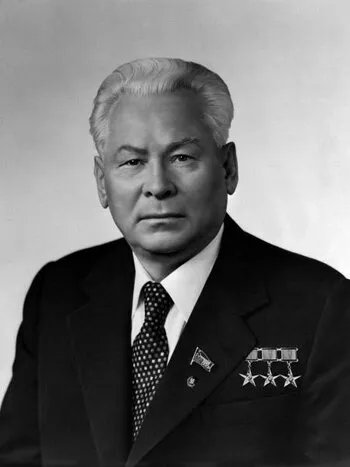
Konstantin Chernenko
(1911-1985; 1983 photo)
12 JULY 1984 (POLITBURO)
CHERNENKO. In addition to today’s agenda, I would like to inform you about certain letters I have received.
As you know, we have taken a decision in response to one of these letters. It was a request from Molotov to be re-admitted to the Party. I saw Molotov and talked to him. He received our decision with great joy and almost shed a tear. Molotov said this decision marked his second birth. He is now 93 but looks quite sturdy and speaks firmly. He declared that the Politburo has preserved and continued with determination the work which the Party had conducted. It’s just bad, he said, that you work until late at night as we did. Molotov says he takes an interest in the newspapers and reads the periodicals. You are managing things properly, he declared, and that is why the people support you.
USTINOV. That’s an important assessment on his part.
CHERNENKO. Molotov said he does not understand people who would be in opposition because of their grudges. He realises his mistakes, he declared, and has drawn the necessary conclusions. After our conversation, Victor Grishin at the Moscow Party Committee gave V.M. Molotov his Party card.
TIKHONOV. All in all, we have behaved correctly in restoring him to the Party.

Nikolai Tikhonov
(1905-1997; 1981 photo)
CHERNENKO. However, after this the CPSU Central Committee received letters from Malenkov and [L.M.] Kaganovich. There was also a letter from Shelepin in which he declared that he was ‘a consistent opponent of Khrushchov’ and he sets out certain requests. Let me read out the letter from Kaganovich. (Reads letter.) A letter of similar content, with an acknowledgement of his mistakes, was sent by Malenkov.
TIKHONOV. Perhaps we won’t do anything about these letters?
CHERNENKO. For the meanwhile we may do nothing about these letters and agree to return to their consideration after the 27th Congress of our Party [due to be held in 1986, tr].
USTINOV. In my view, Malenkov and Kaganovich should be allowed back into the Party. They were important figures, leaders. Let me speak plainly. If it had not been for Khrushchov the decision to expel these people from the Party would not have been taken. There would not have been the scandalous outrages that Khrushchov permitted in relation to Stalin. Whatever you may say, Stalin is our history. No enemy did as much harm to us as Khrushchov, with his policy towards the past of our Party and State, and towards Stalin.
GROMYKO. In my view, this pair ought to be allowed back into the Party. They were among those who ran the Party and State and for many years were in change of particular areas of work. I doubt that they were unworthy people. For Khrushchov, the main task should have been to select people for particular jobs and not to expose the mistakes made by certain individuals.
TIKHONOV. Perhaps we could return to this issue at the end of this year, or the beginning of next?
CHEBRIKOV. I would like to inform you that Western radio stations have already been reporting for some time that Molotov has been allowed back into the Party. Moreover, they claim that the toiling masses of our country and our Party know nothing about it. Perhaps we should put an announcement in the Information Bulletin of the Central Committee that Molotov has been re-admitted to the Party?
As for the re-admission to the Party of Malenkov and Kaganovich [expelled in 1961] I would ask that we be given a little time to draft a report about the resolutions they wrote on lists of the repressed. If they are allowed back into the Party, we may expect quite a few letters from those who were rehabilitated in the 1950s and, of course, will be opposed to their readmission to the Party, especially of Kaganovich. We must be ready for this. I think the Politburo should have such a note to hand when it takes a final decision.
TIKHONOV. If it hadn’t been for Khrushchov they would not have been expelled from the Party. He discredited and disgraced us and our policies in the eyes of the whole world.
CHEBRIKOV. Furthermore, a number of people were unlawfully rehabilitated in Khrushchov’s time. They had been punished quite correctly. Take, for example, Solzhenitsyn.
GORBACHOV. I think we could manage without publishing an announcement that Molotov has been re-admitted to the Party in the Central Committee Information Bulletin. The section for organisational and party work could inform the Party regional committees about this in its regular briefing.
As concerns Malenkov and Kaganovich, I am also in favour of re-admitting them to the Party. The time of their readmission, moreover, does not need, evidently, to be linked to the forthcoming Party Congress.
ROMANOV. Yes. They are already elderly and could die.

Dmitry Ustinov
(1908-1984; 1978 photo)
USTINOV. In my assessment of Khrushchov’s activities, I am ready, as they say, to fight to the death. He did us a great deal of harm. Just think what he did to our history and to Stalin.
GROMYKO. He did irreparable damage to the positive image of the Soviet Union in the eyes of the outside world.
USTINOV. It’s no secret that the Westerners never loved us. But Khrushchov gave them arguments and materials that discredited us for many years.
GROMYKO. It was thanks to this, in fact, that so-called ‘Eurocommunism’ came into being.
TIKHONOV. And what he did to our economy! […]
GORBACHOV. And to the Party, dividing it into industrial and agricultural organisations!
USTINOV. […] In connection with the 40th anniversary of the Victory over fascism I would suggest another issue for discussion. Should we not change the name of Volgograd back to Stalingrad? That would be well received by millions of people. But that, as they say, is an idea to be pondered over.
GORBACHOV. There are both positive and negative aspects of this proposal.
TIKHONOV. Recently a very good documentary film, Marshal Zhukov, was released, which provides quite a full and fair depiction of Stalin.
CHERNENKO. I’ve seen it. It’s a good film.
USTINOV. I must make sure to see it.
CHERNENKO. As concerns the letter from Shelepin, he requests that his material provision finally be raised to the level of former Politburo members.
USTINOV. In my view, what he has received since he retired is quite sufficient. There’s no point in him bringing up such matters.
CHERNENKO. I think that we shall limit ourselves, for the time being, to an exchange of opinions on these issues. But as you yourselves understand we shall have to return to them.
TIKHONOV. We wish you a good rest during your vacation, Konstantin Ustinovich.
CHERNENKO. Thank you.
*
“TOO FEW”
“There are too few of you,” people always told us: “what can you do?” We would always agree, “Yes, we are few.” Asked how many took part in the democratic movement or the number of political prisoners in the USSR we always preferred to underestimate. Sorry, we explained, that was the kind of society and country we lived in, where no more willing participants could be found. When people in Russia, especially those of my age, posed the same question in the early 1990s, I would add: “If you had joined us, there would have been at least one or two more.” They always found weighty and convincing arguments why they could not possibly have done so.
At the time, we also said it was not a question of numbers, or of practical results. What mattered was the principle of inner freedom and the individual’s moral responsibility, something that should be a normal human need, like the need to breathe, eat or move (Cf. (CCE 11.14 [1]). No one wanted to hear a word about that, however. There was already a great deal of philosophy in our life while the practical results were few. Why should people give up a normal life, and their careers, and go to prison – for their own good? What good did that do? With so few hopes for the future, and so many past decades of terror that (one might think) had uprooted any normal human impulses, there were more of us than we could have believed. Our influence on the regime, meanwhile, was of greater significance than we ourselves suspected. A superficial acquaintance with Central Committee documents was enough to convince me of this. The sheer quantity of material was astonishing.
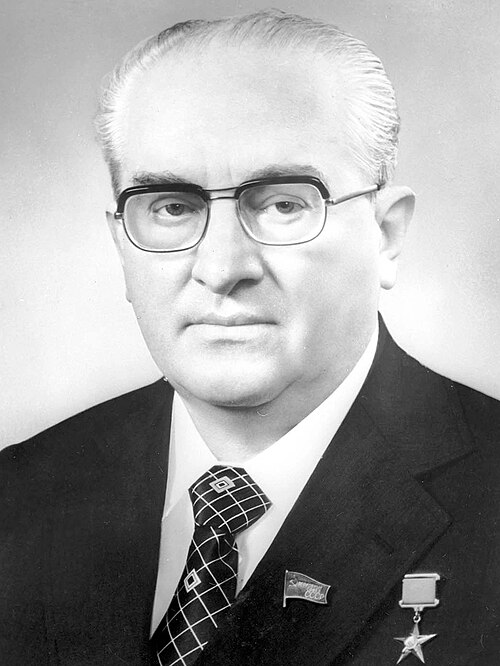
Yury V. Andropov
(1914-1984; 1982 photo)
The KGB reported literally everything, describing every trivial aspect of our movement to the Central Committee. Each time the Central Committee, and sometimes the Politburo, had to take a decision: the fifteen busy men who ruled the Soviet Union were informed not just about the searches, arrests, trials and terms of exile we endured. As this report by KGB head Andropov (31 July 1967*, 1931-A) to his Central Committee colleagues shows, they were briefed on the minutest detail:
“… according to information received, Zhores Medvedev, a Biology PhD who lives in the town of Obninsk (Kaluga Region), and his close acquaintance Valery Pavlinchuk, have begun making copies on typewriters of A. Solzhenitsyn’s unpublished novel ‘The First Circle’, with the intention of circulating the book among the scientific staff of Obninsk. Pyotr Yakir, a research associate at the USSR Academy of Sciences’ Institute of History, who is known as a participant in several anti-social actions and has made politically harmful statements, is planning to visit Obninsk for the same purpose. Bearing in mind that Solzhenitsyn’s novel ‘The First Circle’ is a politically harmful work, it would seem necessary if Yakir goes to Obninsk and obtains copies of the novel to arrest him and confiscate those manuscripts and, as concerns Zh. Medvedev, to instruct the Obninsk Party committee to take measures to halt his anti-social activities. I request authorisation.”
They gave it their thought. Then, in the margins, below the word “Agreed”, there followed the signatures of Suslov, Ponomarev, Kirilenko… An amazing sight. Andropov forwarded our samizdat, our underground literature, to them, for example, the first issue (11 June 1968*, 1372-A) of what became the Chronicle of Current Events: “Our sources have established that Litvinov, Gorbanevskaya, Yakir and certain of their like-minded acquaintances have prepared and are distributing a document entitled “Human Rights Year in the Soviet Union” (copy attached). This gives a defamatory account of the trials in Moscow and Leningrad with a summary of letters and appeals that discredit Soviet executive and administrative bodies. For your information.”
Just try to get a member of the Politburo to read your complaint. It was hopeless. Everything became caught up in the bureaucracy and returned to those you were complaining about. Yet they were not only reading our texts but reached decisions after reading them. It was miraculous, and a most effective way of making the authorities think twice. This refers to samizdat and the reports of their undercover informers. When it came to our arrests, trials and convictions they sometimes disagreed: they deferred a decision until the matter had been further examined and returned to their discussion several times. They gave it some thought and took decisions. They did not just add their signatures. I was touched to see that the entire Politburo, apparently, met to decide whether to publish a small item about my 1967 trial in the Moscow evening newspaper. Andropov informed them (4 September 1967*, Pb 1393):
“Bukovsky, […] the main organiser of an anti-social demonstration, tried during his speech in court to give the trial a political aspect. He declared that the authorities and the courts were acting in an unconstitutional way. His behaviour in court showed a clear wish to be reported in the foreign press not as an anti-social criminal but as a person accused of a political crime. […] Since reports, distorting the nature of this trial, have appeared in the West it would seem expedient to publish a short note (attached) in the ‘Vechernyaya Moskva’ newspaper.”
The draft, a fourteen-line note headed “In the Moscow City Court”, was enclosed. Its only purpose was to report that, supposedly, I had admitted my guilt and so all rumours about my speech in court were entirely fabricated by bourgeois propaganda. That was all; just the latest little lie in the cause of socialism. Yet gather they did, to discuss and vote, and the results of the vote were recorded: “Brezhnev, for; Voronov, for; Kirilenko, for; Kosygin, on holiday; Mazurov, no comment; Pelshe, agreed; Podgorny, on vacation; Polyansky, for; Suslov, on vacation; Shelepin, for; Shelest, on vacation”.
Sometimes there were also uncomfortable differences of opinion. Take the documents concerning the trial of those who demonstrated on Red Square in August 1968 against the Soviet invasion of Czechoslovakia. Nothing could be clearer, it would seem. As in our case a year before this was an “anti-social crime”. Send them off to the camps and have done with it. Yet in this case too it was not that simple. Ivy Litvinov, the widow of the former Soviet Commissar for Foreign Affairs, was evidently an old friend of Mikoyan and appealed to him (4 September 1968*) not to let her grandson Pavel be imprisoned. Mikoyan forwarded the letter directly to Brezhnev, adding by hand: “Leonid Ilyich! Please give this your attention. To put Litvinov’s grandson and others on trial at the present moment will give our enemies fresh ammunition. They have already spent time in prison. It would be more reasonable to let them off with a warning now. A. Mikoyan, 13 September.” Below in Brezhnev’s handwriting are the words, “Show to Politburo”, and the signatures of its members. That’s quite something. There was a trial but Litvinov and two more of the five convicted were banished to other parts of the Soviet Union rather than being sent to a corrective-labour camp, although banishment was not an option, under either Article 190-1 or Article 190‑3.
There are many thousands of such documents, representing a great many hours of work. If we achieved nothing else, at least we diverted some of the State’s energy away from World Revolution. The exceptional interest the authorities took in our activities was not paranoia. In a totalitarian system one dissident is dangerous, especially if that system has proclaimed itself to be perfect: there can be no dissatisfied people in the socialist paradise. It was not in their interests to become more repressive but it was dangerous to let political opponents operate unpunished when popular dissatisfaction was quite widespread. This accounts for their tactic of reducing the number of political prisoners while increasing pressure on dissenters, something they gave the elaborate title: “prophylactic work to forestall crime”.
The number of political prisoners, therefore, did not in itself represent the mood within the country, it was merely a measure of human determination: those whom they broke were, as a rule, not imprisoned. Bearing this in mind, we were not so very few. From Andropov’s report to the Central Committee (29 December 1975*, 3213-A) it follows that the numbers convicted solely for “anti-Soviet agitation and propaganda” were: 3,448 from 1958 to 1967 (inclusive); and from 1967 to 1975, 1,583. Later KGB reports to the Central Committee show that despite all their efforts and “prophylactic measures” they could not do much to reduce this level: 905 individuals were convicted between 1977 and 1987 (1 February 1987*, 183-Ch, p. 7): I was not able to find a total for 1976. These were individuals that the regime had to openly admit as its political opponents. The total does not include those confined to psychiatric hospitals or expelled from the country. The figures do not include individuals convicted of treason or illegal attempts to cross the border; or those found guilty of “religious” crimes or convicted of ordinary crimes in fabricated cases – we simply know nothing about them. During the entire post-Stalin period, therefore, the regime was unable to break the resistance of at least six thousand individuals.
Yet it was not, I repeat, a question of numbers. It was of immense moral significance for the country that there were people who would openly challenge the slavery of totalitarianism and continue to resist, despite the full fury of the State. In the same way, evidently, it is important for a Christian wallowing in the filth of this world to know that somewhere in a monastery there are simple mortals who are living “a righteous life”. At times, it is this knowledge alone that saves him from temptation. In any case, we experienced something of that attitude in prison, both from our jailers and the criminal inmates. I shall never forget the words of the man whom the ordinary criminal offenders in the camp recognised as their boss before he was moved somewhere else: giving his final orders he prodded me, the solitary political prisoner in the camp, and said severely: “And take good care of this fellow. We’re here for what each of us did; he’s doing time for all of us.”

Vladimir Central (Prison)
(1783-1978)
Decades of Communism, astonishingly, had not been able to uproot such attitudes.
The jailers, for their part, regarded us with almost superstitious reverence. There was always one among them, at the notorious prison in Vladimir as well, who would agree to post a letter illegally or pass a note to another cell. Given the volume and detail of reports about us in foreign broadcasts one can only guess what effect our presence had on the town’s inhabitants, especially when we went on strike or refused to eat. That was probably why no Party Committee would agree to our being imprisoned in their region. They always thought up a reason to get rid of us and the Central Committee did not know where else we could be sent. The correspondence went on for decades. In 1978, the KGB and the Ministry for Internal Affairs sent a joint memorandum to the Central Committee, supporting the proposal that “especially dangerous State criminals” be transferred from the prison in Vladimir to another corrective labour facility of the Ministry of Internal Affairs (17 March 1978*, 492-Ch). In their view, it was “expedient”
“… to transfer the said criminals (they number between 40 and 60) to prison No 4 of the Tatarstan SSR Ministry of Internal Affairs. Among the considerations was that there are no defence or especially important installations at Chistopol, the town where prison No 4 is located. The town is 144 kilometres from Kazan, at a distance from the country’s major industrial and cultural centres and is not linked by developed transport connections with other districts. Prison No 4 was built in the 18th century and has no association with the past imprisonment of revolutionaries and progressive figures …”
In numerical terms, naturally, this represented only the tip of the iceberg. Some idea of the true scale of the problem faced by the regime in the early 1970s can be obtained from figures about the KGB’s “prophylactic” efforts in a Top Secret (Special File) memorandum (16 November 1972*, Pb 67/XVIII):
“In accordance with the instructions of the Central Committee the agencies of the Committee for State Security have been carrying out extensive prophylactic work: to forestall crime; to suppress attempts at organised subversive activity by nationalist, revisionist and other anti-Soviet elements; and to localise groups of a politically harmful character that have arisen in several places. Over the past five years 3,096 such groups have been uncovered and 13,602 individuals belonging to such groups have undergone prophylactic treatment: 2,196 participants of 502 groups in 1967; 2,870 participants of 625 groups in 1968; 3,130 participants of 733 groups in 1969; 3,102 participants of 709 groups in 1970; and 2,304 participants of 527 groups in 1971.
“Such groups were uncovered in Moscow, Sverdlovsk, Tula, Vladimir, Omsk, Kazan, Tyumen, and in Ukraine, Latvia, Lithuania, Estonia, Belorussia, Moldavia, Kazakhstan and other places.”
The number of yearly arrests “for anti-Soviet agitation and propaganda” had declined as result of these measures, wrote Andropov and Procurator-General Rudenko. There were still those, however, who did not heed such warnings.
“The majority who underwent prophylactic treatment have drawn the correct conclusions. They have actively joined in public life and are working conscientiously in those areas of production and services with which they have been entrusted. Some, however, continue to commit acts that could under certain circumstances become criminal and do substantial harm to the interests of our State.
“To strengthen the preventative effect on individuals who are about to follow the path of serious crime, and to ensure the more robust suppression of undesirable behaviour on the part of anti-social elements, we consider it would be sensible to permit the KGB, when necessary, to issue an official written warning on behalf of the authorities with a demand that these individuals cease their politically harmful activities and to provide an explanation of the consequences that could follow its continuation.
“In our view this would substantially raise the moral responsibility of those subjected to prophylactic measures and if they then committed criminal acts and were prosecuted this would be of significance for assessing the personality of the criminal by bodies conducting the preliminary investigation and by the courts.”
The proposal was approved, of course, and an edict was issued by the USSR Supreme Soviet. Despite all the efforts of the KGB, however, resistance continued to grow within the country. Three years later Andropov reported (29 December 1975*, 3213-A): “Between 1971 and 1974 63,108 individuals underwent prophylactic measures. During the same period 1,839 anti-Soviet groups were suppressed in their formative stages merely through prophylactic treatment.”
The average number of groups uncovered each year, in other words, had not declined while the individuals subject to prophylactic measures had increased roughly fivefold. This was still not the whole story. As Andropov went on to explain in the same report, not all the active enemies of the KGB were treated in this way:
“Alongside the prophylactic measures, we have continued to use investigative and other measures that do not involve criminal prosecution. We have been able to break up several dangerous groups of nationalist, revisionist and other anti-Soviet tendencies when they were just beginning.
“By compromising authoritative figures who had inspired anti-social behaviour we were able to avert undesirable consequences in several regions. Such measures as depriving certain individuals of their Soviet citizenship and expelling them from the country have also proved their worth (Solzhenitsyn, Chalidze, Maximov, Krasin, Litvinov, Yesenin-Volpin and others). Permitting many extremists to leave the Soviet Union for Israel has also facilitated an improvement in our operational situation within the country.”
Chapter 3: “Too Few”? (part two) …
===============================================

