- 3.1 The Stalinist void
- 3.2 Our “Thaw”
PART TWO
- 3.2 Our “Thaw” (concluded)
- 3.3 Rebellious Youth
- 3.4 Law and expediency
- 3.5 Glasnost
SOURCES
*
JUDGEMENT IN MOSCOW (Online)
*
So, were we few or many?
Andropov believed that among the adult population which had come through the war “such people are numbered in hundreds of thousands” (29 December 1975*, 3213-A, p. 2). I think he seriously underestimated their numbers.
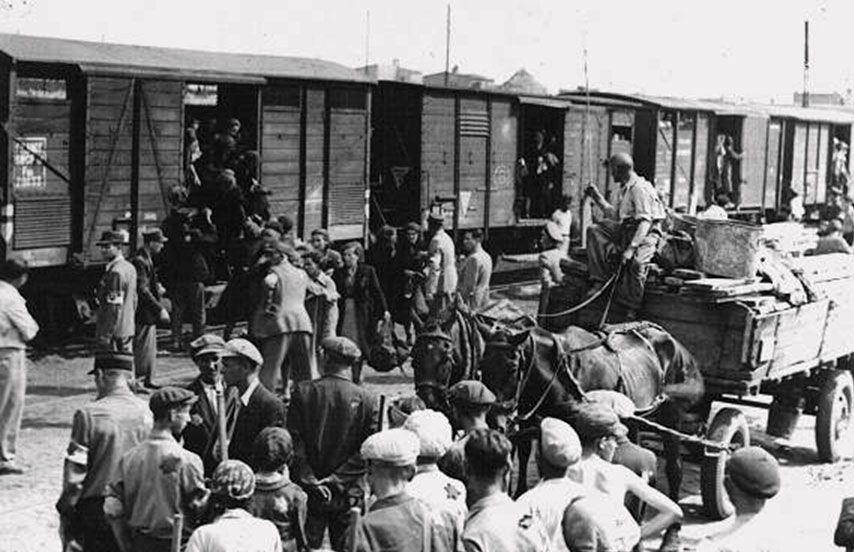
Deportation of Crimean Tatars (1944)
In his reports, for instance, he hardly makes any reference to the nations “punished” (i.e. deported) under Stalin, such as the Crimean Tatars or the Volga Germans, nor does he refer to religious movements, especially among the prohibited denominations and confessions. Yet they numbered millions for whom the Soviet Union was a prison, and our contacts with them began to develop as early as the 1960s. In 1968 Andropov submitted this brief memorandum to the Central Committee (10 June 1968*, 1342-A):
“The Committee for State Security has received information from its sources that Grigorenko, in conversation with one of his acquaintances, declared that the Crimean ‘autonomists’ intended to prepare an appeal to the United Nations. They would gather the signatures of 250,000 Tatars, appealing for support of their demands. Expressing approval for this action, Grigorenko said that it would have a ‘colossal impact’. The Committee for State Security is taking measures to prevent possible hostile acts by nationalist-minded individuals from among the Crimean Tatars and other anti-social elements.”
Here is another example of what was going on at that time. Andropov reported, at greater length, about the protests and petitions of “German extremists living in Kazakhstan and Moldavia” (R 12 June 1975, 1482-A) who intended
“… to incite Soviet citizens of German nationality to refuse collectively to take part in elections on the 15 June 1976 to the Supreme Soviet of the two republics and to the local Soviets of workers’ deputies. … To coincide with the elections an ‘activist’ of the ‘movement for German emigration to the FRG’, Leis (Moldavia) has organised a collective visit (70 persons) by Germans to the republic’s Ministry of Internal Affairs and its KGB committee, demanding that their request to emigrate from the USSR be granted.
“Extremists from Kazakhstan have prepared several defamatory appeals, signed by many, to international organisations and tried to send their representative to Moscow to present these appeals to foreign correspondents or for transmission abroad through A. Sakharov. Measures were taken on 7 June 1975 at Djambul [in Kazakhstan] to confiscate ‘appeals’ addressed to the UN, the Geneva Conference [CSCE, tr.], the Chancellor of the FRG and to other addresses from a certain Termer on behalf of 900 German families (more than 6,000 individuals). These appeals contained tendentious information about the situation of Germans in the USSR and requests for assistance in their emigration to the FRG.”
In other words, life in the Soviet Union seemed quiet and unperturbed only to Western politicians. The Soviet leaders knew very well what a volcano they were sitting on. The empire was splitting at the seams long before Gorbachov.
In the North Caucasus, it was already a matter of murder and mass disturbances (30 December 1980*, St 243/8):
“Among a certain part of the native population of the Karachaevo-Cherkessk Autonomous Region negative processes, characterised by nationalistic and anti-Russian feelings have been noted. These provide the basis for anti-social activities and criminal offences. Measures are being taken to anticipate and forestall such acts.”
Crimean Tatars and Soviet Germans, Jews and the nations of the Baltic States, Ukrainians and Moldavians, all were struggling, individually and together, by every means available for their right to national self-identity. The threads that linked together all the far-flung parts of that vast country met in Moscow where our channels of communication, our opportunities for contact with the outside world, and our glasnost were all in operation. For such groups we were both an inspiring example and an aid in organisation. Andropov had good reason to be concerned, and the Politburo kept track of our latest activities and publications.
The most “passive” forms of resistance were the most widespread: the banned religious congregations; the various anonymous protests; and the distributors of samizdat. We cannot now estimate how many millions were involved in such activities. The KGB itself could not put any final figure to this category. It is possible to quantify religious persecution, for example: on average two to three hundred individuals, it seems, were imprisoned each year while tens of thousands were subjected to prophylactic “chats” and warnings ( Peter Reddaway, “Reassessing the Past. Sovietology and Dissidence”, 29 January 1993). It is not possible, however, to establish an exact figure for religious believers. Equally it is impossible to say how many people read samizdat, retyping articles and magazines (entire books!) and passing them on to others. The figure certainly ran into the millions. The Politburo was also therefore obliged to read these materials. Its members had to know what millions in the USSR were reading, a country where not a comma on a price tag could be printed without first being approved by the censors.
*
A Chronicle of Current Events
(1968-1982)
The Politburo took these matters seriously, moreover. In 1971, for example, the Central Committee discussed samizdat three times, in January, in April and again in June. Thereafter the Central Committee would return to the subject almost every year. Discussion began with a memorandum from Andropov about the evolution of samizdat (15 January 1971*, St 119/11). “Analysis of the so-called samizdat literature being distributed among the intelligentsia and the student population shows that ‘samizdat’ has undergone qualitative changes over the past years,” the head of the KGB reported to the Central Committee.
“Five years ago, it was, for the most part, the circulation of ideologically flawed works of fiction; today, increasingly, documents of a programmatic and political character are distributed. In the period since 1965 more than four hundred different studies and articles have appeared about the [Soviet] economy, and on political and philosophical issues, in which the historical experience of socialist construction in the Soviet Union is criticised from various aspects, examining the domestic and foreign policy of the CPSU, and putting forward various programmes of opposition activity.
“… A definite consolidation of like-minded individuals is taking placing around the preparation and distribution of ‘samizdat’ literature and attempts to create the semblance of an opposition can clearly be traced.
“In late 1968, early 1969, approximately, a political nucleus calling itself the ‘democratic movement’ took shape among opposition-minded elements. In their own assessment, this movement possesses three features of opposition: ‘it has leaders and activists and depends on a considerable number of sympathisers; it does not adopt precisely defined forms of organisation but sets itself certain goals and chooses definite tactics; it strives to achieve legality.’
“… The distribution centres for these uncensored materials remain Moscow, Leningrad, Kiev, Gorky, Novosibirsk and Kharkov. In these and other cities roughly 300 people have been identified, calling themselves ‘anti-Stalinists’, ‘fighters for democratic rights’, ‘participants in the democratic movement’, who produce both individual documents and collections of texts, The ‘Chronicle of Current Events’, the ‘Ukraine Herald’, ‘Social Issues’, and so on. In 1970, a group of Zionist-minded elements in Moscow, Leningrad and Riga began to issue a magazine called ‘Exodus’.
“… The Committee for State Security is taking the necessary measures to forestall attempts by certain individuals to use ‘samizdat’ to spread libel against the Soviet State and social system. They are charged with criminal offences under the existing legislation and prophylactic measures are taken with respect to individuals who have come under their influence.
“At the same time, noting the ideological transformation of ‘samizdat’ into a form of expression for oppositionist attitudes and views, and the striving of imperialist reaction to use ‘samizdat’ literature for goals hostile to the Soviet Union, it would seem expedient to instruct the ideological apparatus to study the problem and devise the necessary ideological and political measures to neutralise and expose the anti-social tendencies represented in ‘samizdat’ literature, and also to make suggestions as to the factors that facilitate the appearance and distribution of ‘samizdat materials’.”
The regime was already recognising us as a political opposition. Despite its outward imperturbability, it was prepared to adjust but proved incapable of political flexibility. It was six months before the Central Committee adopted a Resolution “On measures to counter the illegal distribution of anti-Soviet and other politically harmful materials” and it was an exceptionally pointless document. Everything was reduced to a combination of repressive, educational and propagandist measures with the one and only concession in its final, ninth paragraph (R 21 April 1971, St 2-2):
“The Central Committee’s Culture Department, the Press Department at the USSR Council of Ministers, and the USSR Union of Writers are to study the issue and make proposals to the Central Committee about the expediency of publishing certain works by writers in whom some cultural workers and students have shown an interest and whose works that have not been republished in the USSR since the 1920s.”
As a result, I seem to recall, they published the poet Nikolai Gumilyov, and in a small print-run. This had no effect on the growth of samizdat. It continued to develop, offering an alternative to the official press and giving Andropov a constant headache. Such unofficial publications began to take new forms: films and tapes were also copied and circulated.
*
An alternative culture came into being, weakening the grip of the Party on the artistic intelligentsia and, especially, on the young. Once again Andropov sounded the alarm (R 19 June 1975, St 173-4):
“While implementing measures to forestall the hostile activities of the Adversary we have uncovered instances of a striving among the artistically gifted young, or those who are trying to make their mark in this way, to form unofficial groups engaged in literary readings, exhibitions of paintings and drawings, and theatrical performances staged in private apartments and in premises used just for the occasion. A tendency has been noted towards the issuing and distribution of typescript magazines, made up of unpublished works.
“Study of the circumstances of such groups in Moscow shows that when the young put on their own shows a part of the artistic youth does not find a socially useful application for its abilities and at times becomes involved in undesirable behaviour that, as a rule, is instigated either by persons engaged in anti-social activities or by foreigners.
“… Thus, a danger arises at present that unsupervised associations of artistic young people will be created in parallel with the official creative unions.”
These years, indeed, saw such extraordinary events as the exhibition of non-conformist artists in Moscow in the park at Izmailovo, the attempt to create a branch of the International PEN Club in Moscow (R 5 April 1975, 784-A), and the trial of Andrei Tverdokhlebov (R 12 April 1975, 878-A), who had set up a Moscow section of Amnesty International two years earlier.
Soon followed the organisation of the Helsinki Groups (CCE 40.14) in Moscow, Ukraine and Lithuania, and those in Armenia and Georgia, with all their commissions, committees and working groups, to monitor observation of the Helsinki Accords. The first independent trade union for manual workers appeared towards the end of 1977 (R 6 April 1978, 655-A). The opposition had begun to acquire form and structure and this coincided, evidently, with a loss of control over the young by the authorities, which was especially dangerous for the Soviet regime.
*
3.3 Rebellious youth
As far as I can recall, control or supervision of young people was never effective in the USSR. It existed, for the most part, on paper, in official reports by Komsomol and Party committees boasting about the scale on which they could mobilise the young and attract them to their propagandist events.
By the late 1960s and early 1970s young people in the Soviet Union were becoming notably more political. Most frequently this found expression in anonymous protests: leaflets, slogans written on walls, pre-Soviet national flags in the republics, or anonymous letters sent to the authorities. Any official event – a jubilee, a holiday or elections – usually provoked such “delinquent misbehaviour” by the young.
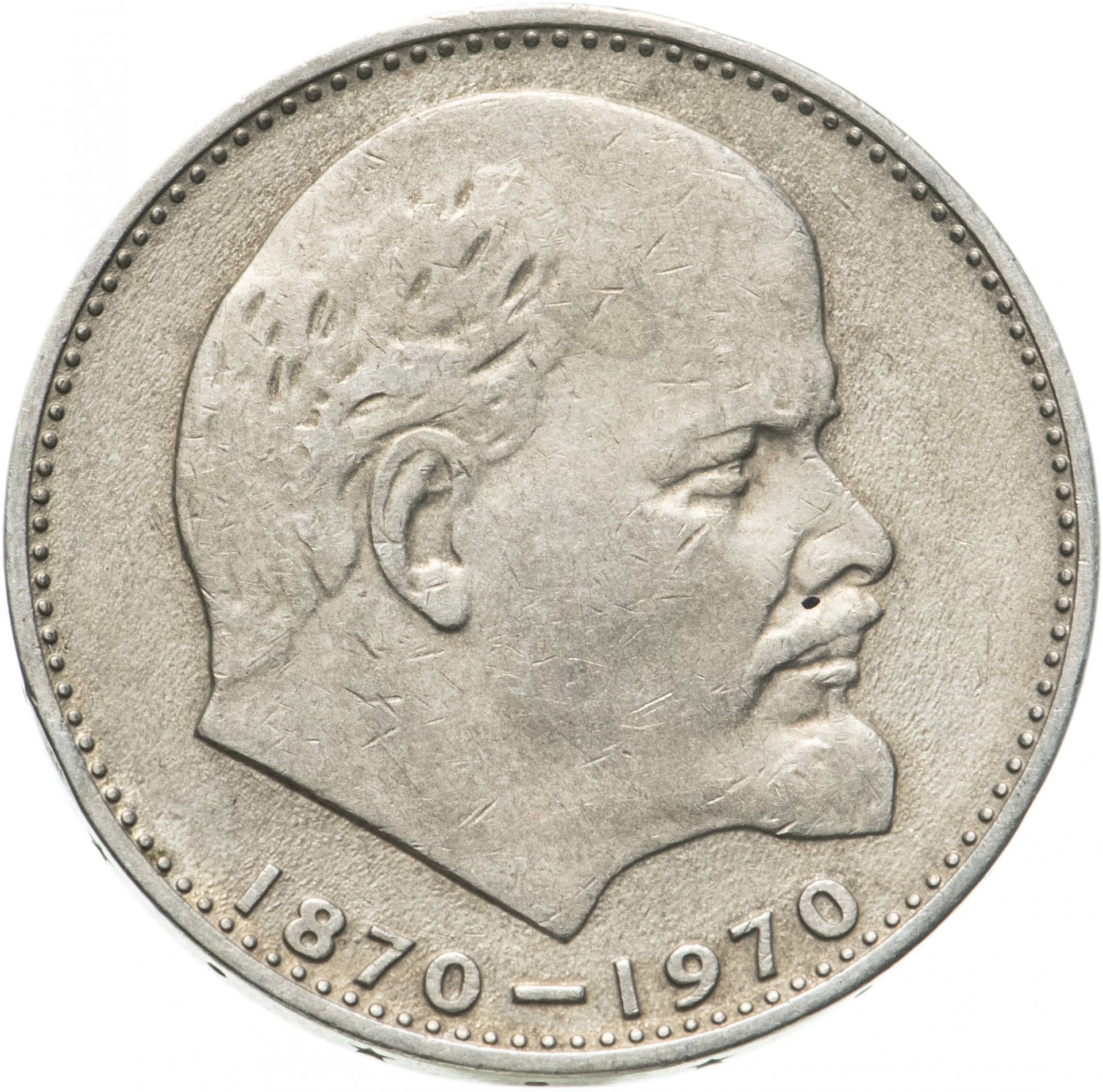
Lenin (1870-1970)
In April 1970, for instance, Andropov informed the Central Committee (27 April 1970*, 1118-A) that the birth centenary of the “founder of the Soviet State”, V.I. Lenin, had been celebrated
“… in an organised fashion throughout the country, in circumstances of great activity, and enthusiastic commitment by Soviet people to work and to our policies. It demonstrated, once again, their indissoluble unity and consolidation around the Central Committee of the Soviet Communist Party. At the same time, 155 politically harmful, delinquent acts, connected to the jubilee were reported in certain districts across the USSR during the preparation and the celebration of this event. 55 of these events took place in 1969; 100, in 1970.
“Such types of action were noted in Ukraine, Kazakhstan, Lithuania, Belorussia, Estonia, Latvia, Moldavia and Turkmenistan; and [within the RSFSR] in the Primorsky and Khabarovsk Regions, the Moscow, Leningrad, Kuibyshev, Rostov and other Regions. Several statues, busts and bas-reliefs of the Leader were destroyed or damaged, as were a significant number of paintings, stands and banners, and portraits, placards, reproductions, wall newspapers and other celebratory decorations…. 70 people have been charged with criminal offences for such politically harmful and delinquent acts; 65 more have undergone prophylactic treatment and 7 are now under observation. In 18 cases the act was particularly brazen and intended to cast a shadow over the celebration of the centenary of Lenin’s birth by Soviet people.”
Or consider this wholly typical information from the mid-1970s about the May Day celebrations (4 May 1975*, 1103-A) which were the occasion for “great political enthusiasm” although
“… isolated negative incidents were reported in certain parts of the country. In Moscow, Odessa, Kishinev and the Rostov Region leaflets of a hostile content were distributed.
“In the administrative centre of the Pustomyty district, Lvov Region [West Ukraine], 13 flags of the Union republics were burned on their masts before the obelisk commemorating the soldier-liberators. Flags were also destroyed in Moscow and Kharkov. In Grodno [Belorussia], it was discovered that a portrait of the Founder of the Soviet State had been defaced. The necessary measures have been taken in response to all the noted incidents. Most those taking part in this hostile behaviour have been identified.”
Usually, the authorities did not identify all those responsible. They caught or found half of the culprits, subjecting some to “prophylactic” treatment while the others were convicted, as a rule, of purely criminal offences (delinquent behaviour). When added to the anonymous letters the Soviet authorities received each year these “anti-social” acts reached an annual total of between ten and twenty thousand (Peter Reddaway, “Reassessing the Past”, 29 January 1993). Most often the offenders turned out to be young people, teenagers and schoolchildren. Sometimes they had set up an illegal organisation.
At the time we had no idea, of course, of the scale and extent of this phenomenon. We never heard about most of these incidents but any picture of the USSR and its prevailing mood at the time would be incomplete without them. The anxiety of the Soviet authorities cannot be fully understood without this background. Imagine how they felt when they received several of the following reports. The KGB in the Krasnodar Region, bordering the Black Sea, uncovered an illegal “Club to Fight for Democracy” in the town of Tuapse (19 March 1970*, 699-A):
“It is made up of 14 persons, for the most part school-children in the 8th and 9th classes of School No 3 [15-16-year-olds]. Seven of them are members of the Komsomol…. The participants have drawn up a programme and a constitution for the club, published hand-written magazines under the title ‘Democrat’ and ‘Russian Contemporary’ containing verse and articles written by members of the Club based on reports by foreign radio stations. Each member has sworn an oath, has a pseudonym, a membership card, and has paid a subscription.
“The Club’s programme envisaged the creation of a party of ‘democrats’ and seizure of power when the members of that party grow up. Its immediate aim was the preparation and distribution of anti-Soviet documents and attraction of new participants to the organisation. Implementing this programme, … in December 1969 the members wrote anti-Soviet texts in chalk on the asphalt and the fences in various parts of Tuapse to mark the 90th anniversary of Stalin’s birth. In February 1970, they prepared more than 40 leaflets, in the name of the ‘All-Russian Union of Democrats’, which called for the overthrow of the Soviet regime and the creation of illegal political organisations, and they distributed these texts in Tuapse. “All the participants of the ‘Club to Fight for Democracy’ are juveniles. It was decided, therefore, not to charge them with criminal offences but limit the response to measures of a prophylactic nature.”
In a part of the Soviet Union closed to foreigners and far from any border, the KGB for the Sverdlovsk Region “uncovered an illegal youth group” (12 June 1970*, 1610-A):
“calling itself the ‘Party of Free Russia’ or the ‘Revolutionary Workers’ Party’ …. Using a typewriter, the members of this group produced in two sessions about 700 leaflets, titled ‘A note to the Soviet government from the Working Youth of the USSR’ and ‘Minus a Future, Plus the Past = Contemporary Socialism’. On 7 November 1969 [anniversary of the October Revolution] a considerable proportion of these leaflets were thrown from the viaduct over Cosmonauts Avenue in Sverdlovsk on the column of workers from the Electric Train Repair Factory and a group of demonstrators from the polytechnic and law institutes.
Meanwhile, in Central Russia (R 26 August 1970 – 2353-A),
“… seven handwritten leaflets, signed the ‘Black Angels’, were distributed in February in the town of Ryazan. The authors slandered the Soviet government and called for the organisation of strikes and demonstrations. Measures were taken and established that the leaflets had been prepared and distributed by students of the 9th class in School No 42… They all repented of these acts and, in the presence of their parents, assured KGB agencies that they would not engage in any anti-social activities in the future.”
xxx
KGB REPORT ABOUT YOUTH
Such a mood among the young, combined with the growth of an organised opposition, created a highly dangerous situation for the Soviet regime. The authors of an extended report by the KGB “On the Nature and Cause of Negative Behaviour among Schoolchildren and Students” tried to attribute everything, as usual, to the influence of bourgeois propaganda and “subversive centres” in the West (R 28 December 1976, St 37-14, long KGB report).
At the same time, they mention some particularly interesting findings (see R 12 December 1976, 2798-A, pp. 3-24 in 28 December report). They analysed over three thousand “anti-social” acts committed by young people in the Soviet Union over a period of three years (Table One, below). While more than half of those involved were students in higher education, a little under one in four were still at school. Almost three quarters committed solitary acts of “anti-social” behaviour (3,174); the rest (1,232) were members of 384 groups.
A third of these acts arose from ideological stances hostile to socialism (Table Two) and were committed by 1,269 individuals (29% of the total). This describes those who could offer a precise formulation of their ideological platform, or who would take the risk of doing so. Those who were “un-ideological” were no better. Groups of “hippy imitators” were found in Moscow, Leningrad, Kiev, Vilnius, Tallinn and Rostov-on-Don. In the words of the study, they favoured a re-examination of the moral and ethical norms of socialist society; casting doubt on the revolutionary traditions of the past and the spiritual legacy of “conservative” fathers, they called for a surmounting of “inertia” and a “struggle for freedom and the democratisation of society based on hippy ideas.”
Table One: Anti-social behaviour among the young, 1972-1975 (R 28 December report, p. 11)
| TYPE OF BEHAVIOUR Slander and other politically harmful comments | INCIDENTS (1509) | % 45.4 | INDIVIDUALS (1598) | % 36.3 |
| Participation as a group in public disturbances | 99 | 3.0 | 495 | 11.2 |
| Participation as a group in imitation of “hippies” | 152 | 5.5 | 382 | 8.7 |
| Preparation and distribution of defamatory and ideologically harmful documents (excluding leaflets) | 252 | 7.6 | 323 | 7.3 |
| Preparation and distribution of leaflets, banners and placards | 167 | 5.5 | 277 | 6.3 |
| Desecration of the State crest, flag, monuments or portraits | 90 | 2.7 | 115 | 2.6 |
| Verbal and written threats towards Soviet and Party activists | 50 | 1.6 | 53 | 1.2 |
| Transmission (attempt to transmit) abroad defamatory and ideologically harmful documents | 26 | 0.8 | 33 | 0.8 |
| Preparation and distribution of anonymous letters of a defamatory and ideologically harmful content | 33 | 1.0 | 32 | 0.7 |
| Attempt to establish contact with foreign anti-Soviet centres | 16 | 0.4 | 17 | 0.4 |
| Preparation and display of nationalist flags | 6 | 0.2 | 15 | 0.3 |
| Other types of behaviour | 894 | 26.8 | 1066 | 24.2 |
| TOTAL | 3294 | 4406 |
Of all those who had prophylactic chats with the KGB or received warnings about their behaviour between 1970 and 1974 well over a third were young people below the age of 25 (R 28 December 1976, St 37-14, p. 17). Much the same was true of criminality as a whole: for example, more than half of those convicted in 1971-1973 for the preparation and sale of narcotics were under 29. There were 2,533,443 young people, aged 29 and under, among those who were fined or spent brief periods behind bars in 1973 for drinking hard liquor and appearing drunk in public. In 1974 that total rose to 2,616,708 (R 16 April 1974, St 121-23). On average juveniles, i.e. those under 18 years of age, were responsible for around 100,000 crimes, of which almost half were committed as part of a group.
Table Two. Ideologically motivated anti-social behaviour, 1972-1975 (R 28 December report, p. 13)
| Variety of hostile ideology | Act | % | Individuals | % |
| Bourgeois nationalism (excluding Zionism) | 364 | 33.7 | 674 | 43.0 |
| Zionism and pro-Israeli attitudes | 188 | 17.5 | 242 | 15.0 |
| Revisionism and reformism | 377 | 35.0 | 445 | 28.0 |
| Religious ideology | 88 | 8.2 | 128 | 8.0 |
| Fascism and neo-Nazism | 60 | 5.6 | 80 | 6.0 |
Curious data from other studies are cited in the December 1976 report.
The Academy of Sciences’ Institute for Sociological Research, for example, examined the audience of “Western radio stations in Moscow”. They found that “80% of students and about 90% of pupils from the older classes in secondary school, vocational and technical colleges listen with greater or lesser regularity. For most these individuals listening to foreign radio broadcasts has become a habit: 32.0% of students and 59.2% of 16-18-year-olds listen at least once or twice a week” (p. 18). This was our audience, who followed our activities thanks to broadcasts from London, Munich and Washington. Fifteen years later, as a generation of thirty- and forty-year-olds, they would join the demonstrations of the late 1980s and early 1990s.
“Many of the students who underwent prophylactic treatment”, the researchers wrote (p. 21)
“indicated in their confessions that they recorded ideologically hostile works broadcast over the radio on tape recorders or copied the texts on typewriters. This channel provided them with an idea of several of Solzhenitsyn’s anti-Soviet statements and lampoons, Sakharov’s ‘Thoughts about Peace, Progress and Intellectual Freedom’, and various ‘studies’, ‘appeals’ and other documents containing defamatory fabrications that denigrated Soviet reality… The most influential materials are those prepared within the USSR.”
At the same time, notes the report, there was declining interest in Marxist-Leninist theory at institutions of higher education and “passive participation by a sizable number of students in the socio-political life of their collectives.” There is every ground, in other words, for asserting that by the 1970s the regime had effectively “lost” the country’s young people, while our influence over them was growing all the time.
What could the decrepit and bureaucratised Party do to counter this alarming phenomenon? It had nothing to offer, apart from repressive measures, prophylactic chats and warnings (i.e. threatening to apply the same repressive measures), and a further “intensification” of its propaganda, of which all were thoroughly sick and tired by then. Yet in a Top-Secret report only a few years before the collapse of the Communist regime (26 December 1986*, 2521-Ch), KGB chairman Chebrikov, Procurator-General Rekunkov, Minister of Justice Kravtsov and Supreme Court Chairman Terebilov proudly informed the Central Committee (the underlined figures in italics were added, as usual, by hand):
“To expose the subversive activities of imperialist special services and hostile elements among Soviet citizens linked to those services we have carried out major work through the media. Over the past 10 years 150 films for cinema and television (mainly short documentaries and newsreel items) have been made with the participation, and using the materials, of the state security agencies. During the past four years 262 books and brochures have been published, 178 magazine and 250 newspaper articles. Staff from the KGB, the Procuracy, the Supreme Court and the Ministry of Justice constantly give propaganda lectures on these issues. Re-education of offenders in penal institutions is being carried out, with the systematic involvement of the public, and this has yielded positive results.”
It was, for them, an object of particular pride that between 1982 and 1986 they had been able to break the resistance of more than one hundred people. Not grudging its precious time, the Central Committee also oversaw this process. When to avoid inevitable disaster, they had to introduce a measure of “glasnost” they began by breaking the spirit of the country’s remaining political prisoners, thereby destroying the core of the opposition. Gorbachov would take personal charge of this process.
*
3.4 Law and expediency
This is a strange day for me,” I told the Constitutional Court in 1992. “For the first time in all my years in Moscow I find myself appearing in court as a witness, not as the accused.” The comical aspect was enhanced as I raised the very same issues as in 1967: lack of respect for the law and the unconstitutional status of the CPSU and the political repression in which it engaged. The continuity was so great that I could have repeated my earlier speech, word for word: no one in court that day would have noticed.
I could not help but recall how I prepared in 1967 for my “last words” in court – previously I had twice been pronounced insane and sentenced in my absence. By threatening a hunger strike, I forced the KGB at Lefortovo to provide me with the Criminal Code and the Criminal-Procedural Code. I also made them go out and buy a copy of the Soviet Constitution: there was not one to be had anywhere in the prison. Then followed the official tedium of the court hearing, and an anxious wait for the end of the proceedings when I was entitled to my last words, the only form of uncensored speech in the country. Who knew what would happen. Sometimes the judge interrupted and did not allow a person to finish. Finally, as the culmination of the entire drama, I managed to speak for almost 90 minutes, waving the KGB’s copy of the Constitution and waiting any moment for the judge to call a halt.
I truly was an expert on the “unconstitutional status of the CPSU”. Then such views were regarded as “slander against the Soviet system”. By 1992 they had become the highest form of wisdom, backed by the authority of the Russian President himself. Should I rejoice or be sad? Be glad that I had been 25 years ahead of my contemporaries, or perplexed that such an obvious truth had not occurred to them during the past quarter century?
xxx
The Communist regime’s violation of its own laws was well known, but the idea of demanding that these laws be respected was too complicated for some. “Why demand that everyone keep those laws?” they asked us. “What good would that do?”
“What is it you want?” Soviet people commented sarcastically, usually those who thought us too few to be worth joining: “to make the Soviet regime better?”
“When is your movement going to stop referring to Soviet laws,” demanded Westerners who had never lived under such a regime, “and finally turn to open resistance?”
Our movement’s emphasis on human rights led to countless misunderstandings and criticism.
There was no way of explaining to certain people that this was neither camouflage nor a tactical ruse: it was a principled position, like our rejection of violence. The problem with this position did not lie in its complexity. What was so hard to grasp when we had the example of the 1917 October Revolution and its consequences before our eyes every day? Anyone in the Soviet Union of the 1960s surely understood that violence would not result in a State governed by the rule of law, and that underground organisations could not lead to a free society. From a practical point of view, there were clearly not enough people capable of demanding what was theirs by right. Where then would we find enough fearless men and women to take up arms against the KGB, the Party apparatus and a large part of the Soviet army? And supposing, one fine day, so many were to be found, there would be no need for violence.
No, these objections were all excuses and self-justification. Homo sovieticus could not force himself to demand anything from a nuclear super-power. Steal, yes; demand, no. A simple refusal to cooperate with the regime was beyond most people. Yet someone had to do it – in full view, demonstratively – to disperse the mystic, irrational terror Soviet Man felt when faced by the regime’s aura of omnipotence. In that sense, nothing could be more destructive of its power than a demonstration that it was both ineffective and unlawful.
What else could be done? Scattering leaflets or creating an underground “party” of a few friends was for schoolchildren and they had already understood it would change nothing. There had to be forms of legal opposition that would allow independent social forces in the country to unite and grow. “Legal”, however, meant that they observed the law and operated within its framework.
xxx
The Soviet regime, meanwhile, had its own problems with the law. It had been unable to solve these problems ever since the revolution. In fact, it never did resolve them because ideology as a whole, and Marxism-Leninism in particular, was incompatible with the concept of law. An ideology is a myth or a legend and therefore inevitably contradictory; the entire meaning of law lies in its internal consistency.
Communist behaviour was a compromise between ideology and reality, and a source of yet more contradictions. What was acceptable at any moment was something known to those at the very top. In practice, law in the Soviet Union existed only on paper while the country was administered through endless orders or decisions issued by ministries, the State and the Party, which often contradicted one another and were, for the most part, secret. To make this all function as a coherent whole was beyond the powers of the Party. “Telephone law” flourished, and a call from the Party boss was the latest legislative act. It was necessary to know how to interpret secret instructions.
The Communist Party of the Soviet Union
The most important reason law and ideology were incompatible in a totalitarian society, however, was that ideology had to come first. And since ideology could not rule through the law then it must be above the law, ruling somehow from behind its back. In the same way the Party, the bearer of that ideology, ruled from behind the back of all other State structures and was a supra-State formation. Given the global aims of that ideology and the Communist Party the law was simply transformed into a fiction and a branch of propaganda that was intended to create the attractive image of the “world’s most democratic” Socialist State. The 1936 Stalin Constitution, then still in force, made this particularly clear. It had been written exclusively for reasons of propaganda and was, therefore, very well suited to our purposes.
To begin with the law became our weapon of choice simply because the State used this weapon against us. We became so skilled in its use that if any of us was put on trial the proceedings would be a defeat for the authorities. This was so obvious that, unlike the Stalin show-trials, our trials were held in camera and concealed from the public as far as possible. If they were reported in the Soviet press, it was only as a response to the “slanders of bourgeois propaganda”. Such an achievement, of course, did not come easy. It required great restraint on our part and behaviour calculated to ensure we were imprisoned “on our own terms”, causing maximum damage to the regime, i.e. forcing them to commit the most extensive violation of their own laws.
In 1967, for example, I did not just organise a demonstration and receive a three-year sentence: I also proved that Article 190-3 of the Criminal Code (introduced in 1966) was unconstitutional. The demonstration and our arguments during interrogation and in court were planned in such a way that the authorities, abandoning any appearance of legality, could only convict us despite the law. In this case, they were violating Article 125 of the 1936 Soviet Constitution, which guaranteed the right to freedom of assembly. I made a very good job of it. The director of Lefortovo himself admitted that we had been imprisoned “unlawfully”; the Procuracy found a plausible excuse not to conduct the case; and my KGB investigator shook his head and gave a sorrowful sigh. There was good reason, therefore, for the Politburo to meet and decide whether to print a mendacious report about the case in the newspapers. It was the equivalent, for me, of a Gold Medal or a doctoral degree.
Younger generations will probably find it hard to understand what purpose this served. Like the Chinese man smashing the Japanese plates at the Khabarovsk “Mill” (4 October 1956*, St 1061, p.5), we had no practical goals in the narrow utilitarian sense. None of us expected that our trials, our samizdat and our tiny, purely symbolic demonstrations would lead to the collapse of the Soviet regime. Certainly, no one was expecting that regime to become any “better”. The paradox was that although our movement had a considerable political effect it was itself not political but moral. We were driven principally by a desire not to change the system but to reject complicity in its crimes. Everything else was a logical consequence of that position. This stance of “non-participation” was society’s reaction to the horrors of Stalin’s rule or, to be more exact, their partial exposure under Khrushchov. “How could such monstrous crimes have occurred? Who is to blame?” Society, its best part at least, was tormented by these questions. The unavoidable answer was that everyone shared a portion of the blame since, willingly or unwillingly, actively or passively, almost all had been the regime’s accomplices. Not only the executioners and torturers, but also those who at rallies raised their hands in “unanimous approval” of reprisals against others; not just those who gave the orders, but those who preserved an obedient silence as well.
As in post-war Germany, this had a particularly strong influence on the younger generation who were, seemingly, not involved in their parents’ crimes. (Life is so organised that the children always pay for the sins of their fathers.) The Soviet leaders did not sit in the dock at Nuremberg but, in a wider sense, the verdicts of that tribunal applied to us in equal measure. Like our German contemporaries, we were duty-bound to remember that the opinions of the majority, the orders of our superiors, or a threat to our own lives, did not relieve us of responsibility for our choice. For us this meant confronting our still undefeated Reich (and our own SS), a system with which the Western world was striving for “peaceful coexistence “.
We could dream of no practical goals. No one attempted to define what could be qualified as victory. Our task was to set the written law constantly against its unwritten ideological interpretation, forcing the regime to expose its own unlawful nature. It was better not to dwell on what might happen to you as a consequence. You would end up with nothing apart from the longest possible term of imprisonment. Irrespective of the practical results, it was important to do all you could to serve your sentence with a clear conscience. In time, we came to see victory as the right to tell our descendants, “I did what I could.”
*
3.5 Glasnost
Looking through the Central Committee documents about our cases I was amazed: almost any of them could have been used as evidence in 1992. It was as if we had been preparing for years for the trial at the Constitutional Court. Our movement began, in formal terms at least, with our first demonstration on Pushkin Square in December 1965. Our slogan then was “Respect your Constitution!” and we were demanding glasnost, the public hearing of a forthcoming trial. You could not have made it up! (R 6 December 1965, 2685-S, NA.)
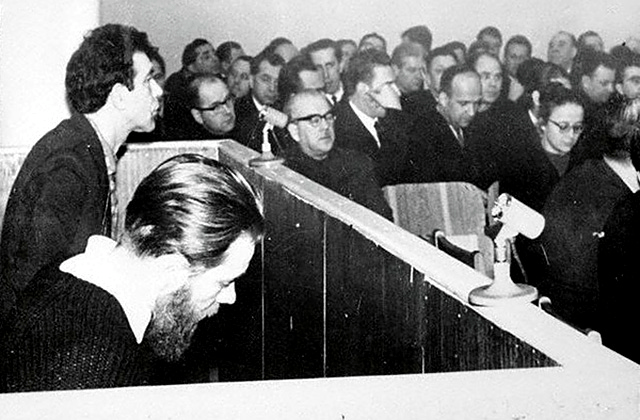
Daniel and Sinyavsky on trial
The occasion was the case of Sinyavsky and Daniel, two writers who had secretly published their books in the West. Their arrest had caused a great stir. The oddness of the situation was that the country, as under Stalin, was expected to “unanimously condemn the renegades and turncoats” without ever having seen what they had written. It was then that the word “glasnost” made its appearance in the Soviet Union. Our chief legal specialist, the mathematician Alexander Volpin, must have come across it when reading the section about trials (Article 18) in the 1958 Criminal-Procedural Code:
“Judicial hearings in all courts are to be open, except for cases when this contradicts the interests of preserving State Secrets…. In all cases the verdict of the court is announced publicly.”
The call for public court hearings, for glasnost, did not strike the most well-intentioned Soviet citizens as a threat. You have not allowed us to read their books but at least give them an open trial so that we can find out everything for ourselves. The regime was caught off balance. Soviet Man had never demanded anything before. They had to invent their own “glasnost”. Six weeks before the trial, KGB chief Semichastny and Procurator-General Rudenko made the following proposals (5 January 1966*, St-132/11, pp. 6-7):
“… the KGB, the Central Committee Culture Department and the USSR Union of Writers are jointly preparing reports for the press which will uncover the true character of Sinyavsky and Daniel’s literary activities. To provide the public with more detailed information, and avert similar activities on the part of certain individuals with hostile intentions, it would seem expedient to examine the case of Sinyavsky and Daniel in an open court hearing at the RSFSR Supreme Court and condemn the criminals to imprisonment under Article 70, part 1 of the RSFSR Criminal Code, for preparing and distributing literary works that contain defamatory fabrications against the Soviet State and system.
“It is proposed that the trial be held in early February 1966. The chairman of the RSFSR Supreme Court Comrade L.N. Smirnov will preside, Comrade O.P. Temushkin, aide to the USSR Procurator-General, is to serve as State prosecutor, and the case will be heard in a courtroom of the RSFSR Supreme Court. The room holds one hundred people and we propose inviting Soviet-Party activists and writers to attend the trial…. After the trial is finished the appropriate reports will be issued in the press and on the radio. We request your authorisation.”
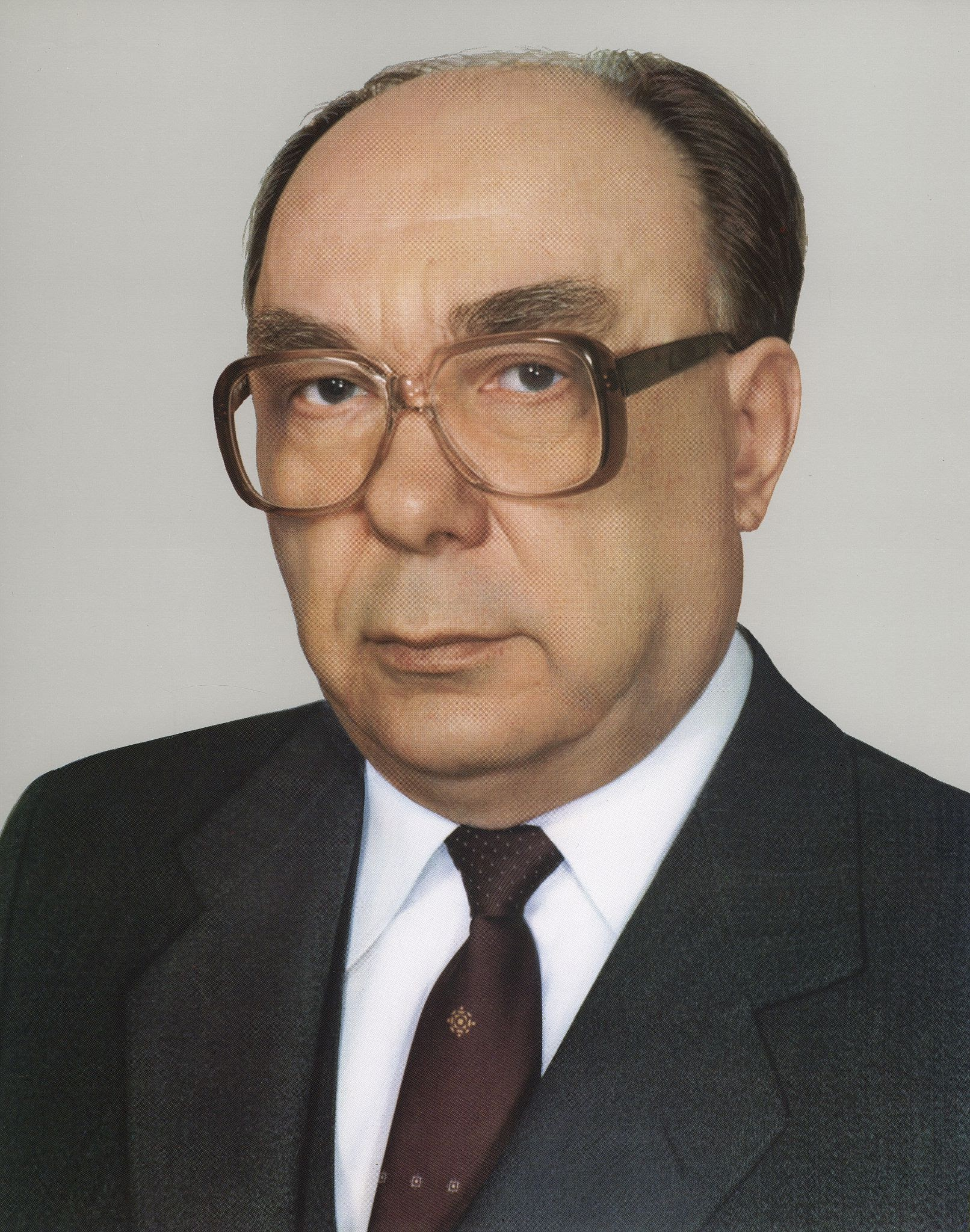
Alexander Yakovlev
The Central Committee agreed, but these were general proposals. The elaboration of the Soviet concept of “glasnost” was entrusted to quite a different person, the man who, twenty years later, would become the main architect of “glasnost” under Gorbachov: Alexander Yakovlev.
He was then deputy head of the Department for Propaganda at the Central Committee. Now he is an entirely historic figure and without knowing his past the origins of Gorbachov’s glasnost and perestroika are incomprehensible. This was how Yakovlev then defined “an open trial” (pp. 8-9 in 5 January 1966*, St-132/11):
“… the judicial hearing will proceed in the presence of workers, Party and Soviet activists, and writers and journalists from Moscow. The procedure for their invitation will be established by the Moscow city committee of the CPSU.
“Regarding the forthcoming trial, we consider it necessary to make these suggestions about its coverage in the press and on radio:
“1. The newspapers ‘Izvestiya‘ and ‘Literaturnaya gazeta‘ will publish daily accounts of the course of the trial by their own correspondents, and special reports by TASS. The editors of the newspapers ‘Pravda‘, ‘Komsomolskaya Pravda‘, ‘Sovetskaya Kultura‘ and ‘Sovetskaya Rossiya‘ can publish items from the courtroom by their correspondents, at their own discretion. All other newspapers are to publish only the official TASS announcements about the trial. Radio will broadcast reports from TASS and individual items from the newspapers.
“Novosti, together with the KGB, are instructed to prepare the appropriate articles about the trial for publication abroad.
“Correspondents of the aforementioned newspapers and of TASS and Novosti will be admitted to the courtroom (without cameras) on presentation of permits issued by the KGB.
“Foreign correspondents are not to be allowed into the trial.”
Yakovlev also suggested that a press group composed of comrades from various Central Committee departments (Culture, Agitation & Propaganda and Administration) and the KGB be set up to prepare official announcements and examine reports about the course of the trial. He had thought of everything, or so it seemed. The carefully chosen public “would greet the court’s verdict with applause”. The press, Party organisers and the KGB also played their part.
Afterwards the KGB proudly reported (R 16 February 1966, 346-Z): “The conviction of Sinyavsky and Daniel was approvingly received by the Soviet public. During the trial, many letters and telegrams were sent to the court and to newspaper editors by Soviet citizens, demanding that the slanderers be severely punished.” Yet, despite their efforts, the “last words” of the accused were already spreading across the country on thousands of pages of cigarette paper and everyone knew they had not admitted their guilt. Protests grew, and the world was indignant and outraged by this vengeful act. Our glasnost was at work. Yakovlev could do nothing but roar louder, issuing a stream of instructions (R 21 February 1966, Pb 255, NA) “to clarify the essence of the judicial proceedings against Sinyavsky and Daniel, and expose the defamatory fabrications of the bourgeois press”.
These involved talks
… at cultural organisations, newspaper and magazine offices, and publishing houses… at the humanities faculties of higher education institutions, in arts colleges, and in research establishments in the humanities, inviting authoritative literary, artistic, scholarly and scientific figures to speak and deliver lectures ….
Publication of the trial materials
to acquaint the Party and cultural activists, and correspondents from newspapers in the socialist countries and the Communist parties in capitalist countries ….
For the audience at home there would be letters, comments and theoretical articles:
“– publish a letter in ‘Literaturnaya gazeta‘ and ‘Izvestiya‘ on behalf of the USSR Union of Writers, which will contain a response to the statements of foreign writers and cultural figures about the trial;
“– the editors of ‘Izvestiya’, ‘Komsomolskaya Pravda’, ‘Literaturnaya gazeta‘ and ‘Sovetskaya Kultura” are to publish comments by readers and by leading representative of literature, art, scholarship and science, approving the verdict of the court and condemning the anti-Soviet activities of Sinyavsky and Daniel…;
“– the editors of ‘Pravda’, ‘Izvestiya’, ‘Literaturnaya gazeta’, ‘Komsomolskaya pravda‘, and the ‘Kommunist‘ periodical are to publish theoretical articles about the Marxist understanding of the issue of freedom and the responsibility of the individual in the conditions of socialist society.
For their audience abroad, meanwhile, the Committee for Radio and Television Broadcasting was to prepare and broadcast to foreign countries:
“– statements by representatives of the Soviet public in support of the court’s verdict in the Sinyavsky and Daniel case;
“– an interview with a leading Soviet legal specialist, justifying the verdict from the viewpoint of Soviet legislation …
“– materials exposing the defamatory nature of Sinyavsky and Daniel’s writings, their calls for terror, malicious anti-Semitic statements, and the wide use of their works for the purposes of waging the Cold War… materials showing the moral turpitude and political double-dealing of Sinyavsky and Daniel;
“– commentaries and talks about the freedom of creativity in the USSR and the persecution of progressive cultural figures in the West.”
As under Stalin, meetings were held in all factories and it was demanded that workers “unanimously condemn” the writers without having read their books. Hundreds of thousands of people in the USSR were forced to choose between their conscience and their material well-being. Some refused, the majority agreed – after all those who refused were “too few”. What was the point? To improve the Soviet regime?
That became the prototype for all our subsequent trials. It was the benchmark of Party “glasnost”: open trials held behind closed doors, with a specially chosen public, while a handful of foreign correspondents and friends of the accused waited outside. The deafening roar of Yakovlev’s propaganda followed each trial. Yet it could not drown out our glasnost and, instead, undermined confidence in the official press yet further. Is it surprising that the young preferred to listen to Western radio stations? If our glasnost had some practical aim, it was to deprive society of its future peace of mind. None of us believed we had the right to force our decisions on others or to draw them into our activities: that was left to the conscience of each individual. Unlike the Stalin years, however, no one in the West or the East could now claim ignorance as their justification.
Despite the intrinsically philosophical and ethical nature of our stance it had a considerable political impact to begin with. The trials that followed that of Sinyavsky and Daniel, especially the trial of Alexander Ginzburg and Yury Galanskov (CCE 1, 31 April 1968), provoked a storm of protest within the Soviet Union, a “chain reaction”. Direct repressive measures were not only useless: they were harmful to the regime. The greater the number of trials, the more people joined in the protests. The atmosphere also changed in the camps: those sent there no longer vanished from our lives but, on the contrary, joined the protests. Reports about hunger-strikes, strikes, and petitions – even the literary works of zeks – began to find their way out of the camps, as if mocking the idea of the prisoners’ isolation from society. Imprisonment in the camps, moreover, provided a link between different groups in a movement that was emerging all over the country. It was there we got to know one another and, through us, our relatives and friends also became acquainted. Judicial reprisals lost their significance. They aided a growth in the consolidation of a spontaneous and, at first, extremely varied movement, transforming it into a serious political force.
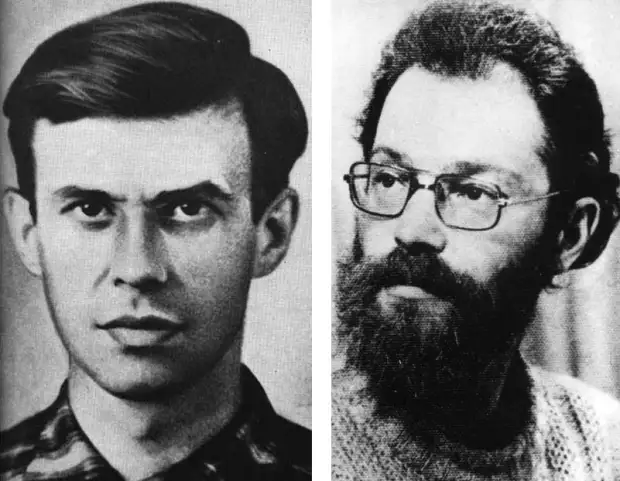
Yury Galanskov and Alexander Ginzburg
The Soviet authorities never forgot this lesson. The subsequent history of our relations was the story of their search for other ways to fight us and our response to their innovations. Arrests and trials became an extreme measure that was forced on them and very often represented a victory of sorts for us. The regime preferred other means, from incarceration in psychiatric hospitals, to campaigns of slander (“compromising measures”, the KGB called them) and expulsion from the country. In 1977, the authorities tried to “codify” the ideology in a new Constitution, which, for the first time in Soviet history, openly declared in Article 6:
“The leading and governing force of Soviet society, the core of its political system and its State and non-governmental organisations, is the Communist Party of the Soviet Union. The CPSU exists for the people and to serve the people.
“Armed with the teaching of Marxism-Leninism, the Communist Party determines the general trend of society’s development, the course of the USSR’s domestic and foreign policy. It directs the great constructive activities of the Soviet people, giving a planned and scientifically-based character to its struggle for the triumph of communism …”
They thereby accepted, in part, the rules of play we had suggested. As if to say, “You won’t be able to quote the Constitution to us now! It’s all legal.” Yet this was no help to them either. We had already begun referring to the 1948 Universal Declaration of Human Rights, and the United Nations’ Pact on Civil and Political Rights (1968); now we appealed to the 1975 Helsinki Accords. With time, curious to relate, the defence of human rights became extremely popular in Soviet society. It was apparently the most difficult aspect of our philosophy for people to assimilate but looking at samizdat documents from the late 1970s I was astonished at the skill with which manual workers referred in their petitions to all the nuances of the law. It had suddenly become very fashionable to “assert one’s rights”.
xxx
When the Soviet regime was on the brink of collapse it also tried to exploit this fashion. Somehow the “Party elite” must be saved. It was then, in 1986, that the “liberal” Yakovlev, the architect of perestroika, appeared. Suddenly our demands and definitions of twenty years before (a State governed by the rule of law, the era of stagnation and, of course, glasnost) were everywhere in Soviet newspapers.
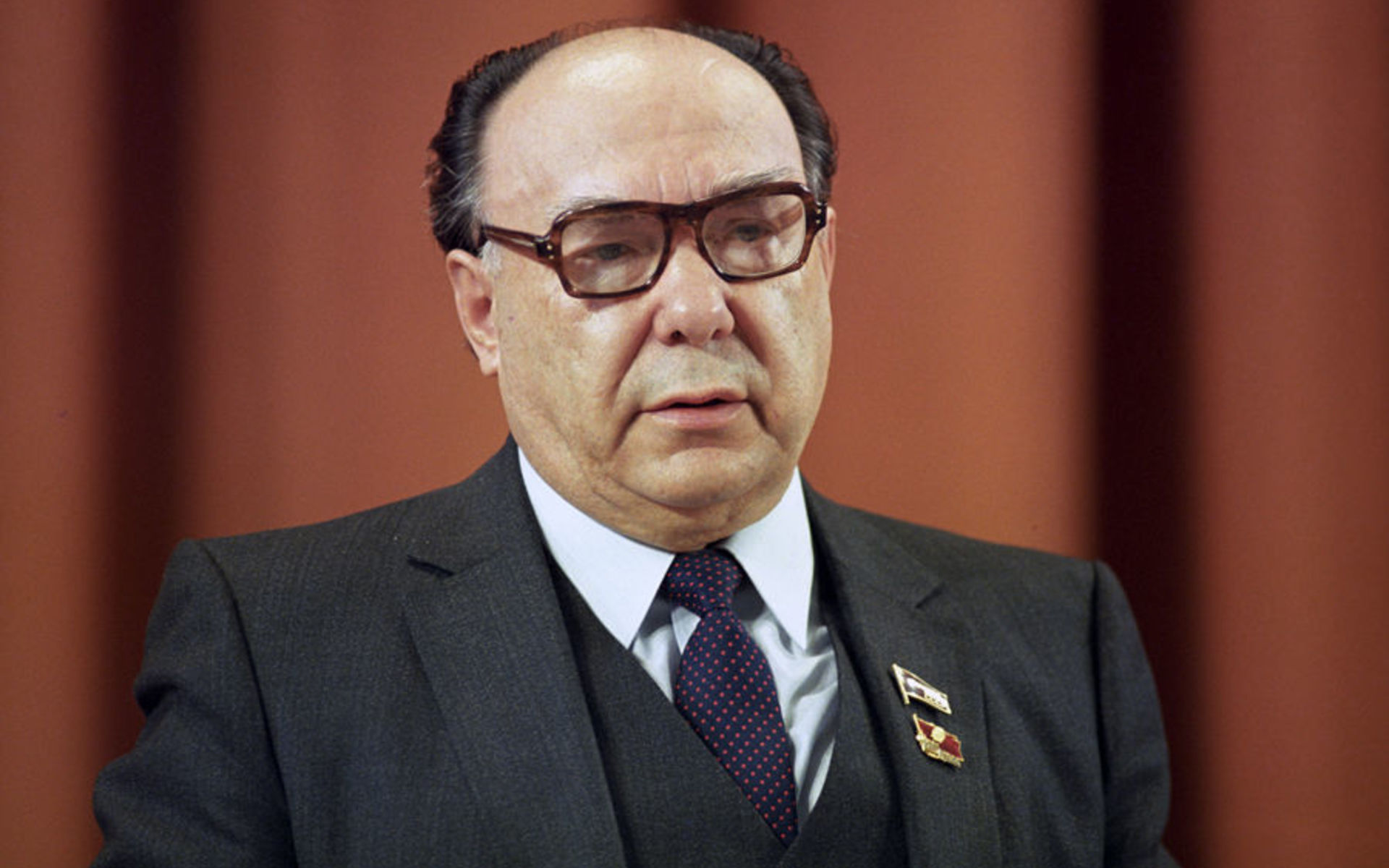
Alexander Yakovlev
Entire sections of our samizdat works were reprinted in the official press and included in the Party’s own decisions – though without inverted commas or any indication of their authors. What curious fellows those “reformers” were. Who did they think they were fooling? History? Logic? Themselves? Without our names glasnost could not be kept under control and the law remained incompatible with ideology. All it required was a few years without repression, a few years of comparatively free exchange of views, for the Soviet regime to collapse.
By early 1990, like an avalanche in the mountains, a growing wave of strikes and mass demonstrations swept across the Soviet Union from one end to the other. People were not demanding bread or money, although neither was easily available. No, the demand was for the abolition of Article 6 of the Constitution, which confirmed the CPSU’s domination of every public structure in the country. It was something I had talked about in court in 1967, waving the KGB’s copy of the previous (1936) Constitution. Watching the striking miners, covered in coal like devils, those half-starved people, entire families with the old and the young, demanding not vengeance but a change in the Constitution, I must confess I was ready to weep. Images from three decades passed before my eyes as if in a film, running inside my head: camp barracks, the cells of Vladimir Prison, the corridors of psychiatric hospital s smelling of carbolic, and the Moscow alleys where I grew up, feeling that I had been abandoned since childhood behind enemy lines. Suddenly this all acquired meaning and found its place in an ordered symphony of image, sound and scent … It would now take one or two years at most. The collapse of the regime, the disintegration of the Soviet Union, was just the logical conclusion. As if it had been waiting for this moment, the Supreme Court of the Russian Federation sent me two certificates confirming that my convictions in 1967 and in 1972 had both been revoked for lack of a corpus delicti. The two papers bore the same date, Constitution Day (5 December 1991*, No 90-680) – the day we had organised our first demonstration 26 years before.
Alexander Yakovlev retired from politics and became head of the Presidential Commission for the Victims of Political Repression. As if in 1945 Goebbels had been put in charge of rehabilitating the victims of the Nazis …
xxx
Most of the Central Committee documents concerning our trials held no surprises. We knew a certain amount at the time. We guessed about other aspects, and some things became known later. Nevertheless, they made a strong impression. Guessing was all very well. It was quite another matter to see the document, with all its signatures and stamps, and examine the subject of your past speculation expressed in their unspeakable officialese. All these matters were decided by the Party; that was clear. It would have been immodest until then, however, to suppose that the Central Committee, let alone the Politburo, were involved.
Alexander Yesenin-Volpin
Remembering the evasive euphemisms that the Nazi leadership adopted in their documents, I never expected such frank and cynical disregard for legal norms. Long before a trial, sometimes several weeks’ earlier, the Soviet leaders themselves decided who should be imprisoned and who should be pardoned: they were unperturbed by the principle, inscribed in the Constitution, of the independence of the judiciary. Search warrants were obtained from the Central Committee, not from the Procuracy. The Party and its leaders were above the law: they did not let legal concerns get in their way and daily adjusted legislation at their own discretion. All other institutions merely rubber-stamped their decisions. Soon after the Ginzburg-Galanskov trial, for instance, the Politburo decided to take reprisals against those of our friends who had been too active in defending the accused (R 15 April 1968, Pb 79-XI, p. 2):
“Acting as the accomplices of the most reactionary part of the bourgeois press and radio, they systematically supply them with defamatory materials; they try to hold private press conferences for foreigners; they incite anti-social elements to engage in politically harmful activities; they inspire the preparation and distribution of letters, declarations and “protests” that are hostile in content; and they act in a provocative way towards the authorities.”
What was the problem? Why not put them on trial? They had already committed more offences than Ginzburg and Galanskov by petitioning on their behalf. The document itself notes: “The behaviour of this group of individuals is increasingly reckless and the lack of punishment for their actions prompts disbelief among many citizens.” However, the Central Committee was not ready to put them on trial and imprison them at that moment because “this measure might prompt a new wave of demagogic demands from anti-social elements inside the country, and provocative acts by bourgeois propaganda.”
This explains the comprehensive response that, in the Russian saying, left the sheep whole and the wolves fed. Pyotr Grigorenko would be sent for psychiatric assessment. Alexander Volpin would receive permission to attend a mathematics symposium in the USA (it was not the first time he had been unsuccessfully invited there) and then, if “he compromised himself with unworthy behaviour” abroad, he would be deprived of his Soviet citizenship and “refused entry to the USSR”. Yakir, Litvinov and Bogoraz-Bruchman were to be summoned to the Procuracy. A “categorical demand” would be made that they immediately stop their “anti-social activities” (p. 7 in April 1968 document) or else they would be “deprived of their residence permit and removed from Moscow”. To implement this threat, it was necessary
“– to make an addition to the 15 August 1966 decree (No 658-211) of the USSR Council of Ministers’ ‘Concerning a strengthening of the passport regime in the cities of Moscow and Leningrad and the Moscow Region’ (draft attached);
“– To instruct the Moscow Soviet (if the warning does not have the [necessary] effect) to take a decision, based on the addition to the said decree, to deprive Yakir and Litvinov of their Moscow residence permit for a period of two years;
“– to instruct the Ministry for the Maintenance Public Order to remove Yakir and Litvinov from Moscow, having established a place of residence for Yakir in the Tyumen Region and for Litvinov in the Guryev Region of the Kazakh SSR;
“– to consider the removal of Bogoraz-Bruchman’s residence permit and her removal from Moscow, depending on her behaviour after the application of the said sanctions to Yakir and Litvinov;
“– to prepare an announcement about this matter and publish it in the “Sovetskaya Rossiya” newspaper on the day that the sanctions are implemented against Grigorenko, Yesenin-Volpin, Yakir, Litvinov and Bogoraz-Bruchman.”
The addition was immediately made to the law on residence permits. Now city soviets had the right “without issuing preliminary administrative reprimands, to cancel the residence permits of individuals who are engaged in anti-social activities, manufacturing defamatory fabrications, provoking anti-social elements to engage in politically harmful activities, and behaving in a provocative fashion towards the authorities … The expulsion of the individuals indicated in the present decree is to be effected within 24 hours after a decision is taken to cancel the residence permit.”
Not one of these measures was legal at the time, but what did they care? Without pretending to consult anyone else, the Politburo ordered that all should be made ready within ten days (R 16 May 1968, Pb 81-XVI, pp. 6-8). The Leningrad and Moscow City Soviets had no idea as yet of the new and unlimited power they had gained over the millions residing in their cities; the leadership of “sovereign” Kazakhstan did not know that Litvinov would be exiled to their republic; the editors of Sovetskaya Rossiya had no inkling about the announcement to be made in their pages; and the USSR Council of Ministers, supposedly the lawful government of the Soviet Union, would obediently sign the draft of its “decree”. A new era was about to begin when anyone, without warning, investigation or a court order, could be expelled from his home within 24 hours – and all because it was inconvenient at that moment for the regime to put three people on trial.
I have quoted this example not because it was the most outrageous or cruel. On the contrary, it was among the “gentler” acts of its kind. Furthermore, these measures were not implemented. Within a month, the fuss in the West died down. The Politburo could now imprison the citizens who had so infuriated it and a decision was taken, again without informing the interested parties, to withdraw the Resolution (R 16 May 1968, Pb 81-XVI, p. 1). Duly signed and stamped, these “laws” never saw the light of day. Six months later Litvinov and Bogoraz were indeed exiled from Moscow but for a quite different reason and after a “lawful” trial. In 1972 Volpin was allowed to travel to the USA and speak at a symposium. Five years later Yakir was exiled from Moscow, again for a different reason. This example is astounding in its absurdity and the appalling indifference of the highest Soviet authorities to the most elementary legal standards. This was what they called “socialist legality”.
The same day, curiously, the Politburo took a decision about two other people, Anatoly Marchenko and Ilya Gabai (15 April 1968*, Pb 79/XII). It proposed that they be deprived of their Soviet citizenship and expelled from the country (the formulation of the edict and the accusations against them were virtually identical). The decision was taken and the edicts of the Presidium of the Supreme Soviet were signed. After a month, the Politburo had second thoughts. Soon an excuse was found to arrest them and send them to the camps. Formally and legally speaking, they had already been deprived of their Soviet citizenship but no one remembered that. Later the two men died in tragic circumstances. Gabai committed suicide in 1973 and the imprisoned Marchenko died on hunger strike in December 1986, when “perestroika” had already begun. Fate played its hand. If they had been deported from the USSR they would probably still be alive.
xxx
Roman Rudenko
Of course, this was just the beginning. In time the regime learned to be more careful in its use of the law and to prepare its “measures” more thoroughly. This memorandum from Andropov and Rudenko (20 January 1977*, 123-A, p. 5) , for instance, shows how the Central Committee prepared its reprisals against the Helsinki Groups, set up in Moscow, Ukraine, Lithuania, Georgia and Armenia. It would be best, they suggested, to halt the “criminal activities” of the most active Helsinki Group members “by a variety of means”
“With regard to Yu. F. Orlov an investigation should be conducted into the criminal case opened earlier by the Moscow Procuracy so as to charge him under Article 190 of the RSFSR Criminal Code… During the investigation Orlov is not to be arrested unless his actions force us to do so.
“A.I. Ginzburg should be arrested and charged under Article 70 of the RSFSR Criminal Code. The investigation is to be carried out in the Kaluga Region, in accordance with his place of residence.
“N.D. Rudenko, who lives in Kiev, is to be arrested and charged under Article 62 of the UkSSR Criminal Code (corresponding to Article 70 of the RSFSR Criminal Code). The investigation is to be carried out not in Kiev but in Donetsk, for which there are procedural grounds.
“Since T.A. Venclova (b. 1937), a former research associate of the Lithuanian SSR Academy of Sciences’ Institute of History, has petitioned for a temporary trip on a private invitation to the USA, permission for such a trip is to be granted. The future fate of Venclova will be decided in accordance with his behaviour abroad.”
Preparations for putting them on trial were yet more carefully considered and with even less regard for the law. For purely propaganda reasons, for instance, all the political trials in 1977 were postponed for almost a year (1 April 1978*, 785-A).
“The completed investigations into these criminal cases should have been sent to court. Bearing in mind the very important political events then taking place within the country (discussion and adoption of a new Soviet Constitution, celebration of the 60th anniversary of the October Revolution), however, and the situation surrounding the Belgrade Conference, it was recognised to be inexpedient to hold these trials in 1977.”
Approval was sought in this way from the Central Committee not by the scribblers of Pravda or the agitprop head Alexander Yakovlev, but the three main legal authorities in the USSR: Procurator-General Rudenko, Chairman of the Supreme Court Smirnov, and head of the KGB Andropov. What could we expect of the Politburo or the Central Committee if those who bore the responsibility for upholding the law understood it to be merely an appendage of ideology? For them, the term “lawful” did not exist; there was the concept of expediency, meaning what suited the goals of ideology.
Yury Orlov
Of course, they knew the law. It was not a question of ignorance. For instance, there arose a legal complication in the case of Anatoly Shcharansky. The KGB had tried a little too hard in accusing him of espionage (R 25 December 1977, 12643-A, p. 5) and wanted to square this by legislating an exception:
“In accordance with Article 9 of the Statute concerning Military Tribunals this case should be examined by a military tribunal. However, this circumstance could lead to an intensification of the anti-Soviet campaign that reactionary circles in the West are now conducting in connection with Shcharansky’s case. In view of this, we consider it would be expedient to make an exception and change the jurisdiction of the case, examining it before the Judicial Board for Criminal Cases of the RSFSR Supreme Court. A draft decree of the Presidium of the USSR Supreme Soviet is attached.”
Any legal specialist would regard the proposed decree of the highest legislative body in the country as absurd: “By way of exception, permit the Judicial Board of Criminal Cases of the RSFSR Supreme Court to examine, as the court of first instance, the criminal case of Anatoly Shcharansky, who is accused of treason in the form of espionage.” Yet the lawmakers acted as requested by the executive, in accordance with “socialist legality”, and without objection since they all knew that the accusation of espionage was framed in terms of “expediency”. The real “guilt” of Shcharansky was (R 25 December 1977, 12643-A) that he had
“… systematically provided the West with defamatory information about the Soviet Union that has been actively used by US special services under the guise of the ‘defence of human rights’ in the USSR. These data were also used by pro-Zionist congressmen when adopting the Jackson-Vanik amendment to the ‘1974 Law on Trade’, which discriminates against the USSR.”
Chapter 4: “Deportation or the Madhouse” (part one) …
======================================
SOURCES
Chapter Three: “TOO FEW”?
An asterisk (*) and bold type indicate that a file from the Bukovsky Archive has been fully or partially translated into English. Two of the 19 untranslated Russian texts are not available (NA) online; the chapter contains 46 more notes.
(The archival description of the various sources mentioned in the text was added, indicating their size and contents, to the notes in the book version; they also provide access to the original Russian text.)
text translated & edited, and links restored, by John Crowfoot
(May 2026)
================================================

