- 1.1 Who cares?
- 1.2 Hard currency
- 1.3 “Firms Run by the Friends”
- 1.4 Intellectual Shenanigans
PART TWO
- 1.5 “Special Aid”
- 1.6 Sympathizers and Fellow-Travellers
- 1.7 So, who won?
SOURCES
*
Judgement in Moscow (online version)
*
1.5 “Special Aid”
There was yet another form of “international solidarity” which could not be measured in dollars or roubles, and it was not as harmless as scrounging an honorary degree. This kind of aid was so veiled in secrecy that any related documentation automatically bore the “Special File” designation. The Central Committee chose to cloak the subject further in vague terms such as “special training”, “special equipment”, “special materials”. The more specific details were added by hand: the Committee’s vetted typists were not sufficiently trusted (in the texts that follow hand-written insertions are indicated in underlined italic script).
Argentinean Communist Party
Woe betide the country which became the recipient of this sort of “aid”. It would shortly become one of the world’s “hot spots”, although it might hitherto have been prosperous and peaceful. This is how special training was detailed in one such Central Committee document (27 December 1976*, St 37/37):
“Meet the request made by the leadership of the Argentinean Communist Party, the People’s Party of Panama, the Communist Party of El Salvador and the Communist Party of Uruguay and receive 10 Communists from Argentina, 3 from Panama, 3 from El Salvador and 3 from Uruguay in the USSR for up to 6 months in 1977 for training in matters of party security, intelligence and counter-intelligence.”
The training would be organised by the KGB; the International and Administrative Departments of the Central Committee were to receive, accommodate and look after the visitors; while their round-trip travel expenses to Moscow from Buenos-Aires, Panama City, San Salvador and Montevideo, respectively, “should be charged to the Party budget”.
As KGB Chairman Kryuchkov and the head of the International Department Falin reported (10 April 1989*, St 99/248, p. 5) more than five hundred activists from 40 Communist and “Workers’” parties in various countries underwent such training between 1979 and 1989, including members of their Politburos and Central Committees. Such “special training” by the KGB was usually only the first step. For one of the four countries mentioned in 1976 the next step was marked, a few years later, by the following Central Committee Resolution (18 August 1980*, St 224/71):
“Meet the request of the leadership of the Communist party of El Salvador to give military training instruction for up to 6 months’ duration in 1980 to 30 Salvadoran Communists who are currently in the USSR.
“The reception, accommodation and provision, and the organization of training for 30 Salvadoran Communists, as well as their travel expenses from Moscow to El Salvador to be entrusted to the Ministry of Defence.
“Results of vote (signatures): For, Kirilenko; for, Zimyanin; for, Gorbachov; for, Kapitonov; for, Dolgikh”
To get to the heart of the matter, though, one had to examine the documents attached to such a resolution, or the request from the comrades itself.
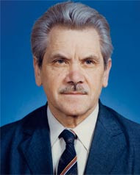
Anatoly Chernyaev
(1921-2017)
*
And here it was, translated from the Spanish, an appeal in late July to the Central Committee:
“Dear comrades!
“I am writing to ask your agreement that 30 of our young Communists, currently in Moscow, be accepted for courses in military training for a period of 4-5 months in the following fields:
“6 comrades for army intelligence,
“8 comrades to be trained as commanders of guerrilla units,
“5 comrades to be trained as artillery commanders,
“5 comrades for training as commanders of sabotage squads,
“6 comrades for training in communications.
“Thanking you for the assistance which the CPSU gives our party.
“SCHAFIK HANDAL
General Secretary of the Central Committee
of the Communist Party of El Salvador”
More documents followed (20 August 1980*, St 225/5). The Central Committee adopted a Resolution and telegrams were sent to the Soviet ambassadors in Havana and Hanoi:
“(1) Meet the request of the leadership of the Communist Party of El Salvador and charge the Ministry of Civil Aviation to arrange, in September-October, the delivery of a consignment of 60-80 tons of Western-manufactured firearms and ammunition from Hanoi to Havana, to be passed on to our Salvadorian Friends via Cuban comrades.
“Expenses connected with the delivery of the firearms from Hanoi to Havana should be charged to the State budget as gratis aid to foreign countries.
“Approve the texts of telegrams to Soviet ambassadors in Cuba and Vietnam (appended)
(signed: A. Chernyaev)”
xxx
“Urgent
“To HAVANA, SOVIET AMBASSADOR
“Inform the General Secretary of the Central Committee of the El Salvador Communist Party, Comrade Schafik Handal, or, in his absence, a representative of the leadership of the El Salvador Communist Party, that the request for the transport of Western-manufactured firearms from Vietnam via Cuba has been examined at the appropriate level and received a positive response. Also inform the Cuban Friends’ leadership of the above, stressing that we took this decision knowing that Comrades F. Castro and S. Handal have reached agreement on this matter.
“For your information: the firearms will be delivered by Aeroflot. Give all necessary assistance in organizing the transfer of this cargo via Cuban comrades to our Salvadorian Friends. Report upon completion.
“(signatures: Chernyaev, Rusakov)”
xxx
Vietnam flag
“Urgent
“To HANOI, SOVIET AMBASSADOR
“Comrade Schafik Handal, Central Committee General Secretary of the El Salvador Communist Party, tells us that the Vietnamese leadership has reported its readiness, from 1 September onwards, to begin loading a batch of Western-made weapons to be sent to Salvadorian comrades in Havana.
“Contact the Friends and find out who the Aeroflot office must establish contact with in order to receive the said weapons. Provide the necessary support in ensuring that this cargo is received and despatched.
“Report when the task is completed.”
Then came the final stage of the process, after which the world press was filled with reports about a “crisis” in that unfortunate country, the suffering of its people and the evil doings – not of Moscow-trained Communists, but of the beleaguered government, which was stigmatized by the media as a “bloody junta”. And why not? The government was a visible entity. Its members could be shown on television and bombarded with wrathful protests with complete impunity. The comrades in Moscow were a different kettle of fish. It was better not to tangle with them.
xxx
I selected this, from dozens of similar examples, because of the outcry in the left-liberal press over subsequent events in El Salvador. This was prompted by the government of that country which, instead of bowing to the historically-inevitable advance of progressive forces (and then dying quietly in the Salvadorian Gulag), had the temerity to fight back.
The greatest outburst of righteous indignation was directed, of course, at Ronald Reagan, who decided to help El Salvador instead of sitting back and waiting his turn. Heavens above, what a to-do there was! What hoarse cries greeted the “violations of human rights” by the Salvadorian army, as though one can talk of human rights in the middle of an epidemic. As if there has been a single civil war in history (including the US Civil War) in which the sides behaved in strict accordance with the Geneva Conventions. Did any of these loud-mouthed champions of the Left condemn the atrocities perpetrated by the Bolsheviks during the Civil War in Russia? Of course not, these were invariably justified as a historical necessity. The left intelligentsia, as I recall, wrote that “the birth of a child is always accompanied by pain, suffering and blood”. So, one should be careful what kind of child to have: if it is a “progressive” baby, then the bloodshed is justified.
Incidentally, the left-liberal intelligentsia went into similar hysterical convulsions over neighbouring Nicaragua. No effort was considered too great to help ensure victory for the Sandinistas and to wipe out all opposition. The US Congress dreamt up the most unbelievable stratagems for tying President Reagan’s hands while there was a noisy world-wide campaign of “solidarity” with little, defenceless Nicaragua, “a victim of American aggression”. In 1985, a group of friends and I addressed a petition to Congress (See New York Times (18 April 1985), Frankfurter Allgemeine (30 March 1985), Le Monde (21 March 1985), De Telegraaf (27 March 1985), and Le Soir (27 March 1985). We expressed our support for Reagan’s policy in Nicaragua and pointed out, inter alia, that the Sandinistas’ aim was to establish a totalitarian, Communist regime with the help of the USSR. Western democracies, therefore, should support the opposition of the Nicaraguan people to this prospect. The outcry was hard to believe. At best, we were depicted as victims of paranoia who saw Reds under every bed. Yet now, in black and white, I read (R 18 April 1980 (St 204/57 NA):
“Secret
“CPSU Central Committee
“On the signing of a plan of ties between the CPSU and the Sandinista Front of National Liberation (SFNL) of Nicaragua
“At a meeting with the temporary Soviet charge d’affaires in Nicaragua (encrypted telegram from Managua, spec. No. 47, 26 February 1980), Henri Ruiz, a member of the national leadership of the SFNL, suggested that there should be a discussion of ties between the CPSU and the National Front, to which the Nicaraguan side attributes great significance, during the visit of the Nicaraguan Republic’s party-government delegation to the USSR.
“The SFNL is the ruling political organization. The SFNL leadership considers it essential to create a Marxist-Leninist party based on the Front, with the aim of building socialism in Nicaragua. At present, for tactical reasons and in view of the existing political situation in Nicaragua and in the Central American region, the SFNL leadership is making no public statements about this ultimate goal.
“We believe it would be possible to accept the offer made by the SFNL leadership, and suggest that the delegation sign a plan for such links between the CPSU and the SFNL for 1980-1981 during its visit to Moscow.
“Expenses for undertakings envisaged by the plan for bilateral ties could be covered by the Party budget. The matter has been agreed with Comrade E.M. Tyazhelnikov.
“Draft resolution of the CPSU Central Committee appended.”
The Nicaraguan revolution occurred on 17 July 1979. Within less than a year, an agreement was signed in Moscow by Ponomarev on behalf of the Communist Party and by Henri Ruiz for the SFNL. By December 1980, the SFNL newspaper Barricada was already being printed on Soviet paper (R 15 October 1980, St 233/8 NA) , and up to one hundred Sandinista activists received “special training” each year in Moscow. At the time of our petition in 1985, this “small, defenceless country” was a Soviet puppet, plain and simple. And yet the uproar…
Sandinista National Liberation Front
Ten years later there was no reason to write in the past tense. All those vocal champions of liberty were still thriving and “shaping” public opinion. It had not entered their heads to repent, or at least apologize for the past. Investigations into the US financing of the “Contras” continued in the United States. In March 1993, a body set up by the United Nations (it bore the Orwellian title “The Truth Commission”) completed its review of the violent events in El Salvador over the previous 13 years. It recommended the retirement of several army officers but said nothing about punishing the commanders of “guerrilla units” or “sabotage squads”. The Commission made no mention in its conclusions about Soviet aggression, the “special training” received in Moscow by Communist thugs and the delivery of “Western-made” firearms, all of which, mark you, took place before Ronald Reagan became President of the USA. Yet his administration was subjected to severe censure. Learning of the conclusions of this eminent body, I could not help but wonder, had the Cold War ended or not? And if it had, who won?
This was just one example. A small, jungle-covered country which was really of no use to anyone. Yet there were countless similar examples. My desk was covered with hundreds of “resolutions” and “decisions” concerning dozens of countries, the whole blood-soaked history of the twentieth century. On rare occasions, the whim of Fate turned potential tragedy into farce. This only served to underline the criminal nature of Communist “business”, as in this Top Secret (Special File) document, on “special aid to the Communist Party of Italy” (5 May 1974*, Pb 136/53):
“- Meet the request of the leadership of the Italian Communist Party and receive, for special training in the USSR, 19 Italian Communists, including 6 for training in radio communications, work with BR-3U radio stations and encryption (up to 3 months); 2 instructors for the preparation of radio telegraphists and cipher officers (up to 3 months); 9 in methods of party organization (up to 2 months); 2 for a course in disguise techniques (up to two weeks); also the training of 1 specialist as a consultant on special types of internal broadcasting (up to one week).
“… – The Committee for State Security of the USSR Council of Ministers is charged with developing a communications program and ciphered documents for one-way radio transmissions of circular ciphered telegrams to 13-16 regional centres of the Communist Party of Italy, and ciphered documents for re-ciphering within the two-way radio network.
“- Meet the request of the PCI leadership and prepare 500 blank and (for senior PCI workers) 50 named Italian foreign and internal identity documents, 50 spare sets of the same documents modelled on Swiss and French samples, also wigs and disguise necessities. Preparation of the forms and disguise necessities will be the responsibility of the International Department of the CPSU Central Committee and the Committee for State Security of the USSR Council of Ministers.
“- Approve text of telegram to the KGB station chief in Italy.”
The story, it seemed, is as follows. In 1974, the Italian Communists raised such a hullabaloo about a possible “right-wing” coup that they finally came to believe it themselves. They took fright and sent tearful pleas to Moscow to help them prepare to go underground. One can only imagine how tickled the comrades in the Kremlin were by the mental picture of 50 Italian comrades, sneaking across France in wigs and false beards like villains in a comic opera, clutching French passports forged by the KGB!
The episode was an amusing exception.
Usually there was nothing to smile about in these secret documents. On the contrary, behind their dry, official clichés one could imagine the scenes of death and destruction, so familiar from the nightly TV news broadcasts of those thirty years. Almost every such tragedy had its beginnings in a neatly-typed resolution of the Central Committee, voted in the customary “round robin”, with the invariable clarion call in the top right-hand corner “Workers of the World, Unite!” The extent of this murderous activity across five continents amazed me. Hitler could not have dreamed up anything like this. The tempest they unleashed swept away millions of lives in Ethiopia, Vietnam and Central America and it threatened to rage on in Angola, Sudan, Somalia and Afghanistan long after the last Communist regime had vanished from the face of the earth.
xxx
The Middle East was one more part of the globe where blood and violence had become so commonplace, that nobody now recalls how it began.
Because of the Gulf War in 1991 there was renewed discussion of the role played in the region for decades by the Soviet Union through its support for the regime of Saddam Hussein. Yet this was only one episode in a long-term strategy, and not the worst at that. Lebanon was all but annihilated as a State with the active involvement of the Soviet Union.
“Special assistance” for Lebanese “Friends” began at the end of the 1960s and continued, on a vast scale, until the early 1990s. The supply of arms, usually channelled through Syria, went back at least to 1970 and within five years had grown so immense that a single delivery consisted of 600 Kalashnikov submachine guns, 50 machine guns, 30 anti-tank RPG-7s, 3,000 hand grenades, 2,000 mines and 2 tons of explosives (R 10 October 1975, Pb 192-6). By the mid-1980s, the USSR Ministry of Defence reported, the Soviet Union was training at least 200 Lebanese thugs each year, of whom 170 were activists of the Lebanese Communist Party and 30 from the Progressive Socialist Party (R 9 Feb 87, St 39-65). Another example is Cyprus, where an agreement about the same “special assistance” to the “Progressive Workers’ Party” was reached in 1971 (R 19 July 1971, St 10/53 NA). The delivery of arms began just before the outbreak of civil war (R 8 July 1974, 1853-A).
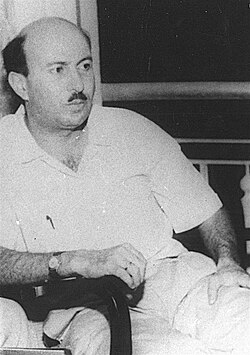
Wadie Haddad
Finally, there was Palestinian terrorism, any connection with which was vehemently denied by the Soviet leadership and its Western apologists. Several eloquent documents, such as this memorandum from Andropov to Brezhnev (23 April 1974*, 1071-A/ov) – it was classified as Top Secret (Special File) and “Of Particular Importance” – gave the lie to those assertions:
“Since 1968 the KGB has maintained secret working contact with Wadie Haddad, Politburo member of the Popular Front for the Liberation of Palestine (PFLP), head of the PFLP’s external operations section.
“In a confidential conversation in April this year at a meeting with the KGB station chief in Lebanon, Wadie Haddad outlined a long-term program of sabotage and terrorism by the PFLP, which can be summarised as follows.
“The main aim of special actions by the PFLP is to increase the effectiveness of the struggle of the Palestinian resistance movement against Israel, Zionism and American imperialism. Arising from this, the planned sabotage and terrorist operations will mainly be directed towards:
“– employing special means to prolong the “oil war” of Arab countries against the imperialist forces supporting Israel,
“– carrying out operations against American and Israeli personnel in third countries with the aim of securing reliable information about the plans and intentions of the USA and Israel,
“– carrying out acts of sabotage and terrorism on the territory of Israel,
“– organizing acts of sabotage against the Diamond Centre, whose basic capital derives from Israeli, British, Belgian and West German companies.
“To implement the above measures, the PFLP is currently preparing several special operations, including strikes against large oil-storage installations in various countries (Saudi Arabia, the Persian Gulf, Hong Kong et al), the destruction of oil tankers and super-tankers, actions against American and Israeli representatives in Iran, Greece, Ethiopia and Kenya, an attack on the Diamond Centre in Tel Aviv, etc.
“Haddad has requested that we help his organization to procure several kinds of special technology necessary for carrying out certain sabotage operations.
“In cooperating with us and appealing for our help, W. Haddad is fully aware of our opposition to terrorism in principle, and has not raised any questions with us concerning this area of the PFLP’s activities.
“The nature of our relations with W. Haddad allows us a degree of control over the activities of the PFLP’s external operations section, to exercise an influence favourable to the USSR, and to achieve some of our own aims through the activities of his organisation while preserving the necessary secrecy.
“In view of the above, we feel it would be expedient, at the next meeting, to give a generally favourable response to the request of Wadie Haddad for special assistance to the People’s Front for the Liberation of Palestine. As for specific issues in the supply of such aid, it is envisaged that every instance will be decided on an individual basis, in accordance with the interests of the Soviet Union and averting any possible harm to the security of our country.”
Across the top of the first page, Brezhnev wrote: “Inform Comrades Suslov, M.A., Podgorny N.V., Kosygin A.N., Grechko A.A., Gromyko A.A. (circulate)”. The signatures of the named comrades, in the above order, follow that of Brezhnev in the left-hand margin. At the end of the last page, there is a handwritten addition: “Consent reported to the KGB of the USSR (Comrade Laptev P.P.) 26 April 1974.”
Obviously, they did not feel this was against the interests of the Soviet Union because the romance with Haddad continued. Later that year the Politburo sanctioned his secret visit to Moscow and gave its blessing to further cooperation (16 May 1975*, 1218-A):
“To Comrade L.I. BREZHNEV
“In accordance with the decision of the CPSU Central Committee, on 14 May the Committee for State Security gave trusted KGB intelligence agent W. Haddad, head of the external operations section of the People’s Liberation Front of Palestine, a consignment of foreign-produced arms and ammunition (53 submachine guns, 50 hand guns including 10 fitted with silencers, 34,000 rounds of ammunition).
“The covert delivery of arms was carried out in the neutral waters of the Gulf of Aden at night, with no direct contact, and with full observance of secrecy by an intelligence-gathering vessel of the Soviet Navy.
“Haddad is the only foreigner who knows that the arms were supplied by us.
“KGB CHAIRMAN ANDROPOV”
Naturally, the Politburo had dealings not only with the PFLP, but also with other terrorist organizations. At Yasir Arafat’s request, it supplied “special equipment” to the PLO in Tunisia (R 21 June 1983, Pb 113-110), issuing the necessary directives to the Council of Ministers and instructions to Soviet ambassadors. They were not squeamish, apparently, about buying stolen goods from the Palestinians or, rather, exchanging them for weapons. Only two of the five “Named Recipients”, the Minister of Defence and the KGB chairman, received all four sections of this highly classified document (27 November 1984*, Pb 185/49):
“1. To endorse the suggestions of the Ministry of Defence and the USSR Committee for State Security, set out in a memorandum of 26 November 1984.
“2. Charge the KGB of the USSR to
“a) inform the leadership of the Democratic Front for the Liberation of Palestine (DFLP) of the Soviet side’s agreement in principle to supply the DFLP with special equipment to the value of 15 million roubles in exchange for a collection of art objects of the Ancient World,
“b) accept DFLP requests for delivery of special equipment within the limits of the above-named sum,
“c) join forces with the USSR Ministry of Culture in taking the necessary steps concerning the legal aspect of acquiring the collection of artefacts.
“3. Charge the State Committee for Economic Ties and the Ministry of Defence with studying the request of the Democratic Front for the Liberation of Palestine for special equipment to the sum of 15 million roubles (within the scope of the list of supplies permitted to national liberation movements), forwarded via the KGB of the USSR, and record suggestions for their fulfilment, agreed with the KGB of the USSR, in the standard fashion.
“4. Charge the USSR Ministry of Culture to:
“a) receive a collection of art objects of the Ancient World, detailed in a special list, from the KGB of the USSR,
“b) in consultation with the KGB of the USSR, determine the place and special conditions for housing the collection (“The Golden Hoard”), its secret expert study and future exhibition. In consultation with the USSR Ministry of Finance, submit an estimate according to standard procedure for the necessary financial assignations
“c) confer with the KGB of the USSR about the display of individual items or parts of the collection.”
On a visit to Moscow I tried to track down this collection. Most of it, apparently, was kept in a safe in the Kremlin Armoury. Nobody had opened it or dared to touch it, though the Politburo and the KGB no longer existed. It remained a mystery what the collection contained and where it was stolen. How many people, I wondered, were killed with the “special equipment” it paid for?
*
1.6 Sympathizers and Fellow-Travellers
It seemed unlikely we would ever learn the answers to all these questions. The powers that be had little interest in digging for the truth. Who knew what they might find? You might start with the Communists but end up with yourself. As the English wisely say, people in glass houses should not throw stones.
Of course, it was not good that foreign Communists received handouts from Moscow. But were they the only ones? One resolution of the CPSU Central Committee concerned “A request by the American public figure and financier Cyrus Eaton to be presented with a new troika of horses by the Soviet government” in September 1968 (R 20 September 1968 (1712, St 13/9 NA). Such a well-to-do gentleman would be able buy the horses he fancied, one would imagine, without going bankrupt. Think of the honour, though – a gift from the Soviet government! This was shortly after Soviet troops invaded Czechoslovakia. He could drive his troika grandly over American soil at the same time as Soviet tanks occupied Prague. Any more questions to the Communists about handouts?
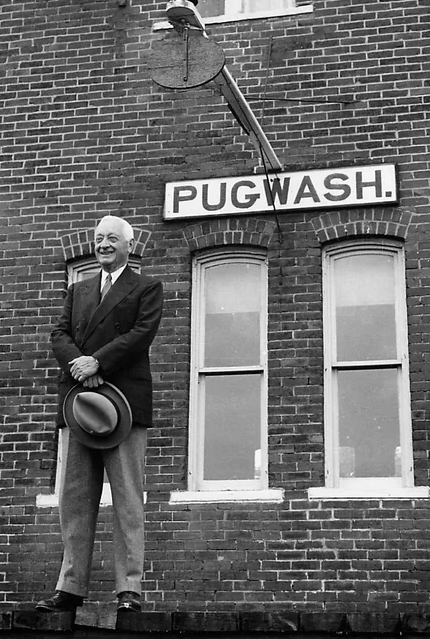
Cyrus Eaton
(1883-1979)
*
Yes, the Communists were undoubtedly agents of evil and used their money to spread Communist lies throughout the free world. They were not alone in this, however. In 1966, the Central Committee received the following proposal (27 August 1966*), marked Secret:
“The Novosti Press Agency [APN] has received a request from representatives of the American television company ABC to produce a joint report on the life of a worker’s family from the agricultural machinery factory in Rostov-on-the-Don. The film will show various aspects of the life of a working-class family, and the family will be used to illustrate the achievements of the Soviet government over the past 50 years.
“The film will be shown to APN for approval before it appears on television. The Radio and Television Committee (Comrade Mesyatsev) has no objections to the project.”
The deputy chairman of APN thought it would be “advantageous” to accept the offer and requested authorization to proceed further.
I accumulated a pile of documents showing the involvement of most of the world’s leading television companies with the Soviet Union – and they paid the USSR hard currency for the privilege. It went further than that, however. US soldiers were fighting the Soviet “Friends” in Vietnam. Meanwhile, a leading American TV network considered buying a Soviet propaganda film about that country (6 March 1967*):
“The senior APN correspondent in the USA, Comrade G.A. Borovik, has sounded out the possibility of broadcasting a program about Vietnam on the network of one of the largest American television corporations. The program is based on Soviet documentary films with a commentary by Comrade Borovik. The company will pay between 9,000 and 27,000 dollars for the program.
“The US department of the USSR Foreign Ministry (Comrade G.M. Kornienko) supports Comrade Borovik’s suggestion and considers it essential that the commentary to the program should be agreed with the Foreign Ministry. “Sovexportfilm” (Comrade A.B. Makhov) has consented to the inclusion of Soviet documentary footage on Vietnam in the program.”
The chairman of APN forwarded this proposal to the Information Department of the Central Committee, which in turn requested authorisation from the Central Committee and suggested that it would be “expedient”:
“(1) to endorse Comrade Borovik’s suggestion that a television program on Vietnam be prepared for American television, bearing in mind that the commentary to the program will be vetted by the USSR Foreign Ministry;
“(2) to authorise Comrade Borovik to negotiate with American television companies about broadcasting a programme about Vietnam on propagandist and economic terms that are favourable to us.“
This went on, year after year, and it was not limited to the USA. It happened in Japan, Britain, Finland and France. The subjects were as varied as the sums in hard currency. Only one basic condition remained unchanged: “note that according to the terms of the contract, the film may only be shown on American [British, Japanese, etc.] television after it has been approved by APN.” There was so much material that I finally gave up noting it down.
Here is a brief resume of what I did record from the Central Committee archives:
- 6 January 1969. “On APN negotiations with the New York Times on the joint preparation in 1969-70 of materials about the USSR.”
- 30 July 1970. “On the joint television program ‘In the Land of the Soviets’ by APN and American producer J. Fleming.”
- 20 May 1971. Joint APN and Granada (Britain) television program “Soviet Women”.
- 26 May 1971. Joint APN and BBC television program “The Culture and Art of Georgia “.
- 28 December 1971. On TASS negotiations with Reuters.
- 22 August 1972. On joint APN and Granada filming on “The Educational System in the USSR”.
- 13 March 1973. Joint APN and BBC film about Novgorod.
- 28 June 1973. On the joint APN and BBC production of the film “Kiev – city, events, people”.
- 10 July 1973. On the joint APN and Thames Television production of a 4-part series about the role of the USSR in World War Two [World at War].
- 24 October 1973. On joint production by APN and the BBC of a documentary film about Shostakovich.
- 27 May 1974. On the shooting of a BBC television program on matters of European security under the supervision of the State Committee for Radio and Television.
- 18 June 1974. On joint APN and BBC filming of television program “Lake Baikal”.
- 14 February 1975. On production and consultation assistance to the BBC in the making of a feature film about the Soviet conductor Alexandrov.
- R 9 April 1976, St 5/6 (NA). On the joint APN and London Weekend Television production of a program, “The Soviet Union After the 25th Congress of the CPSU”.
- R 26 May 1976 (St 10/23 (NA). On the joint production by APN and Yorkshire Television of a film about “A Soviet Family”.
- R 10 July 1979, St 166-12. On production and consultation assistance to the American television company PTV Productions Inc. in filming a multi-series documentary film about the museums, architecture and historical monuments of the USSR.
- R 3 April 1980, St 205/31. On production and consultation assistance to the American company Foreign Transactions Corporation in creating a series of documentary films devoted to the cultural program of the 1980 Olympic Games in Moscow.
Last in this list was a proposal for “Consultation and production assistance to the English television company Granada in filming a documentary on the history of Soviet cinema” (R 1 July 1980, St 217-10). What was wrong with that, you may ask. It seemed a perfectly innocent subject. Yet the USSR embassy believed “a series of films about Soviet cinema could have a desirable propaganda effect, especially in view of the current situation in England”. It was sad but true that Western television companies, always so proud of their independence, constantly made programmes under the ideological control of the Central Committee – and paid hard cash to do so. In short, they served as channels for Soviet propaganda. How could we expect them to censure the Western Communists who had done just the same as a duty to the Party?
Beyond any doubt, the activities of the Communists undermined and threatened the security of the West. Yet in this dangerous game they were not the only ones who danced to Moscow’s tune. There were the mass marches for “peace” and for unilateral (!) disarmament. Millions of people were infected by this madness, including a significant part of the intelligentsia. They hardly now wished to dig through the archives to find indisputable proof of their folly. In The Peace Movement and the Soviet Union (1982) I wrote about Moscow’s cynical manipulation of this movement, which became a virtual instrument of Soviet foreign policy. It was amusing to recall how the liberal intelligentsia then castigated me for my views. Now I had documents which justified every word I had written, but nobody wanted to publish them.
There were certain documents which I found disconcerting. Some concerned the creation of the Palme Commission and its activities. Set up in September 1980 on the initiative of Olof Palme, former Prime Minister of Sweden, this organization rapidly became the most authoritative Western forum on matters of disarmament and security. One of the most important reasons was the Commission’s reputation as an “objective”, non-governmental body, independent of any “blocs”. That, and the high profile of its members. Apart from Palme himself, it included such prominent politicians of differing political views as former US Secretary of State Cyrus Vance, former British Foreign Secretary Dr David Owen, federal secretary of the West German Social Democratic Party Egon Bahr, General Obasanjo of Nigeria, and the leader of the Dutch Labour Party Joop den Oyl. It was, in other words, a veritable political Olympus of the time, and its opinions could not be ignored by any Western government.
Alas, this Olympus also proved to be a Soviet instrument “to promote, in influential political circles of the non-socialist part of the world, Soviet proposals for the end of the arms race and to expose the militaristic policies of the US leadership and NATO” (R 14 November 1980, St 237/54, p. 4). So successful did it become, that it appeared to be trying too hard and began to be accused of prejudice: “Many of the proposals and recommendations approved and adopted by the Commission for inclusion in the final document reflect the Soviet position on the key issues of disarmament and security in direct or indirect form,” stated the Soviet “Commissioner”, Georgy Arbatov, in his end-of-year report for 1981 to the Central Committee:
“However, despite agreeing in general with the Soviet point of view on many issues, such members of the Committee as C. Vance, D. Owen, E. Bahr and a number of others tried to avoid wording which would be an exact repetition of Soviet terminology, and explained in private conversations that they had to beware of accusations that they are following ‘Moscow’s policies’ (indicating, in this connection, that a number of articles had appeared in the Western press, particularly in the USA, which accuse the Palme Commission of doing just that.)”
As God is my witness, “paranoid” though I may be, I never would have expected such cynicism, especially from Dr David Owen. However, he was not the only prominent person I respected who proved to be a bitter disappointment. Much as I wanted to spare them and not mention their names, I did not think I had the right to do so.
There was one Secret communication to the Central Committee from the chairman of the USSR State Film Committee, which I found extremely upsetting (17 July 1979*, St 167/18):
“During the visit of the USSR Goskino delegation to the 32nd International Film Festival at Cannes (France) in May this year, there was a meeting with the prominent American film producer and director Francis Ford Coppola.
“Coppola told the chairman of Goskino that he had talked with the President of the United States, J. Carter, who expressed an interest in making a joint Soviet-American film about disarmament. According to Coppola, the president linked this project with the forthcoming summit in Vienna and the signature and ratification of the strategic arms limitation treaty (SALT-2). The American side feels that such a film would promote the growth of mutual trust between the Soviet and American peoples, the formation of a positive international attitude to the treaty, and serve the further development of Soviet-American cultural cooperation.
“Speaking on behalf of his own company, Zoetrope Films, Coppola said he was ready to take on the financial and organizational aspects of the project for the American side. Since Coppola is acknowledged to be one of the most influential American cinematographers in both business and creative circles, his participation could ensure a definite guarantee of high artistic merit and the subsequent widespread distribution of the film.
“If agreement is reached, the Soviet side will reserve the right to exercise control over the ideological and artistic content of the film at all stages of production. The most outstanding Soviet and American film-makers could be assigned to write the scenario and shoot the film. Under such conditions, it would seem expedient to agree to the Soviet-American production of such a film.
“To advance the implementation of the film at this stage, there must be negotiations with Coppola and the signing of a preliminary agreement. This could be achieved when he comes to the 9th International Film Festival in Moscow in August this year.”
I was unable to find out whether Francis Ford Coppola made this film. I sincerely hope that something happened to prevent it. It was too distressing to think of this wonderful director making a film about disarmament “under the ideological and artistic control” of the Kremlin godfathers.
So, the press, the business world, the public figures and cultural heroes of the West did not preserve their innocence. Communism collapsed, but they remained pillars of society and the establishment. They were the most vociferous in claiming that the Cold War was over, but refused to say who were the losers. As I sat writing these words the BBC World Service was broadcasting an episode in a series about the Cold War. The cynicism of its participants astounded me: the same people were interviewed, repeating the same clichés about “anti-Communist paranoia”, “McCarthyism “, and the poor intelligentsia (Western, of course) which suffered such persecution. There was no hint of penitence, not the slightest effort to reassess their own past, not a grain of honesty. Unbidden, lines from a poem by Alexander Galich came to mind:
And the looters stood around the grave
As guards of honour…
xxx
No matter how cynical people might be, it was extremely naive to think that we could step over mountains of corpses, wade through rivers of blood, and keep going, without looking back, as though nothing had happened. The past would inevitably come back to haunt us, poisoning public life for generations. Yet our “looters” did not care about the future: all they wanted was to preserve their position, if only for a few years more, by suppressing the truth at any cost. They proved remarkably successful, moreover, despite all the vaunted freedom of the press.
The best illustration I can offer is the fate of this book in the United States. It was bought by Random House in August 1995 for a considerable amount of money, but they did not finalise or sign the contract. Instead, over the next five months (!), their senior editor, Jason Epstein, tried to make me re-write the whole text from a liberal-left perspective (cf. his critical article “The CIA and the Intellectuals”, New York Review of Books (20 April 1967). Of course, he did not say that he disagreed with me politically – on the contrary, in almost every fax he emphasized his sympathy for my views. He just wanted to “improve” the book by correcting “certain factual inaccuracies and overstatements”. American readers would be “surprised to read” this, they “would not understand” that …
“You have written an important book, whose message should not be weakened by the … overstatements and unproven assertions … The contribution that you make in your book toward an understanding of the Cold War will be much strengthened if you will consider the editorial suggestions I have made here …”
The trouble was that his “suggestions” concerned the most fundamental concepts underlying this book:
“Is there really any doubt about who lost the Cold War? Your suggestion that there is will puzzle American leaders, since everyone here assumes that we won and the Russians lost…. Nor did the Soviets come close to winning the Cold War, so your remarks to the contrary will be puzzling.
“One of our readers alerted me to the fact that you seriously misrepresent the meaning and significance of the Helsinki Final Act which [contrary to my assertions] was a win-win document for the West.
“It will also surprise American readers to learn that such ‘liberal’ foundations as Ford, Rockefeller, etc. gave ‘billions’ of dollars to the peace movement. This simply isn’t true and will lead Americans to mistrust your argument in general. Similarly, your criticism of Helsinki Watch that it worried more about problems in the US than in the USSR is untrue and will offend American readers.”
In vain did I try to explain that my “misrepresentation” of the Helsinki Accords was, in fact, the predominant view among Russian dissidents, and had been publicly expressed by us on numerous occasions; that the source of my information on the policy of the “liberal” foundations in the 1980s was a New York Times article (which, in turn, quoted the President of the Rockefeller Brothers Foundation): “Philanthropies focus concern on the Arms Race”, New York Times,25 March 1984; while the source for the critical view of Helsinki Watch was one of their own publications. As for “surprising” the American public, I firmly responded in October that I would be happy to do so (letter faxed from Bukovsky to Epstein, 5 October 1995):
“I suspect they ought to be surprised quite a lot if they are to learn the truth about the Cold War. In fact, I will be delighted if they are surprised: I could never understand the motivation of an author who writes unsurprising books.”
All to no avail. Mr. Epstein objected to almost everything else in the book: my “supercilious tone”, my “rhetoric”, my “treatment of documents” and, ultimately, the documents themselves. Some of those objections verged on the absurd:
“… I think you are making more of the Sorsa memorandum than the language justifies. Was Sorsa really ‘Moscow’s Man’, or merely someone who maintained positions congenial to the USSR but was otherwise his ‘own man’?
“As for the memorandum concerning the ABC … the real issue here is that … ABC may have agreed to submit the film for approval to Soviet censors. Yet did ABC actually do this?… If the film was made, was it Soviet propaganda?… It is of course perfectly normal that in a joint production both sides should have the right to approve the final product, and if either side insists on language unacceptable to the other, the project is terminated. There is nothing sinister here in principle, but there would be if the resulting product amounted to Soviet propaganda.
“I don’t understand what you mean…, when you say that the press, the business world, etc. failed to preserve their innocence. If you mean to imply that the press, etc. were in the service of the USSR, nobody here will take you seriously. …
“It should be easy for you to learn whether Coppola made such a film and agreed to accept Soviet censorship. Mr. Coppola is an important figure in the US, as you know, and a letter or phone call from you to him would settle the matter.”
In short, I was required, in no uncertain terms, to drop some documents while re-interpreting others to show that “the Soviets failed and their attempts at manipulation seem now, in retrospect, to have been pathetic or even comical. What strikes me in the documents you reproduce – and will strike other American readers as well – is how clumsy, self-deceiving and stupid these Russians were.”
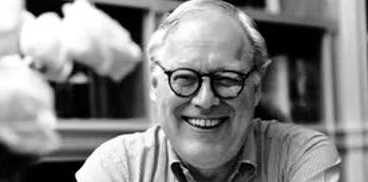
Jason Epstein
That was more than I could stand. Politely but firmly, I explained to Mr. Epstein, at the end of 1995 (letter faxed from Bukovsky to Epstein, 27 December 1995) that
“due to certain peculiarities of my biography I am allergic to political censorship.
“Surely, Mr. Epstein, we do not need to prove that a documentary on the life of a ‘worker’s family’ in Rostov-on-Don, or the one about ‘Soviet Women’, made under Soviet supervision and with their approval, couldn’t be anything but Soviet propaganda (not to mention the one on Vietnam, with the text approved by the Soviet Foreign Ministry).
“How would you feel, Mr. Epstein, about a film on ‘German Women’ made with the approval of Dr. Goebbels in 1938? Would you need a particular ‘proof’ that it is, indeed, Nazi propaganda? Would you demand such a proof from a survivor of Auschwitz?
“Surely, you do not expect me to falsify history in order to please your liberal ‘readers’? For if you do, you are going to be disappointed. And if you don’t, why do you insist on your own interpretation of the Soviet efforts as ‘pathetic’, ‘comical’ or ‘clumsy’? Since I am the author of this book, I will be the judge of whether the ‘Russians’ were ‘self-deceiving and stupid’ or clever and cunning. And, somehow, I do not recall anyone laughing at them at the time (including your liberal ‘readers’).”
Furthermore, I explained that only he and his friends seem to be puzzled by my concept of the Cold War.
“I can think of a few more (most of them among the so-called ‘liberal Left’), who have strived all these years to present the Cold War as some obscure quarrel between the ‘Russians’ and ‘Americans’. The rest of the world perceived it as an ideological confrontation between Communist dogma and democracy, between the Communists and their sympathizers, on the one hand, and the democrats, on the other, be they in the East or in the West.
“Only if you accept this concept will you understand why, despite the collapse of the Soviet Union, the Communists are still in power in Russia and in almost all former Soviet republics, in Poland, Hungary, Rumania and Bulgaria, while their accomplices in the West are still very much a part of the establishment.”
As for his suggestion to call Coppola and ask him about the documentary on disarmament, I responded with the advice that he call Georgy Arbatov and find out how far his memo on the Palme Commission proceedings was “self-serving”.
This was our last exchange: Mr. Epstein dropped the contract. In a short parting message, he wrote:
“I don’t want to involve myself in a quarrelsome editorial relationship. From your letter it seems certain that were we to proceed, such a relationship would be inevitable. … The last thing I want to do is challenge your politics, with which in any case I don’t disagree, but I simply can’t publish a book that accuses Americans like Francis Ford Coppola of unpatriotic – or even treacherous – behaviour.”
I hardly need add that Random House is one of the biggest and most influential publishers in the English-speaking world. Its rejection was bound to affect any other attempts to publish Judgement in Moscow in the USA or in Britain. Meanwhile the book had already been successfully published in France and Germany.
The most disturbing aspect of this story was that a blatant attempt at political censorship in a country so proud of its freedom did not provoke public indignation. I talked to many journalists and people in positions of authority, offering them my correspondence with Mr. Epstein as a proof. They shrugged it off. “So what? Who cares?” As someone aptly said: “This is worse than a conspiracy – this is consensus”.
*
1.7 So, who won?
And that was how this war, the strangest war of our times, came to an end.
It began without declaration and ended without celebration. We could not precisely date its start or its finish. It probably swallowed more lives than World War Two, but we had no desire to count its victims.
No monuments would be erected to mark this war; no eternal flame would burn on the grave of its Unknown Soldier. It was decisive for the fate of humanity, but its soldiers did not march away to the sounds of a band or return to be greeted with flowers. It was, it seems, the most unpopular war we had known, at least, for the winning side, but there was no rejoicing now it was over. The losers signed no instruments of capitulation, the victors received no medals. On the contrary, the supposed losers were now dictating the terms of peace and writing the war’s history, while the supposed victors maintained an embarrassed silence. Could we say who were the victors and who, the vanquished?
A minor incident in Western society often comes under the scrutiny of some commission or other, especially if people have been killed. Whether it is a plane crash, a railroad disaster, or an industrial accident experts will argue, conduct tests and checks; they determine the relative guilt of contractors, builders, service personnel, conductors, inspectors and the government itself, if it has the slightest connection with what happened. As for any armed conflict between countries – that will certainly not escape examination. Yet here we had a conflict which lasted 45 years or, possibly, all the 75 years of the Soviet Union’s existence, and affected almost every country in the world. It claimed millions of lives, cost billions of dollars and (as was often asserted) almost brought about global destruction, but it was not investigated by a single country or international organization.
A petty crime is subject to investigation, judgment and punishment in the West. War crimes are no exception. I am not talking about the Nuremberg Tribunal and the subsequent trials which, to this day, investigate crimes committed during World War II. When I started writing this book there was a current example: the war in Bosnia had not finished but an international tribunal had already been established to investigate the crimes then committed. Our strange war was again an exception to the rule. Was it over, or not? Had we won, or had we lost?
In many instances, it was not necessary to convene a special court. The mass murder of captive Polish army officers in the forest near Katyn was acknowledged at Nuremburg in 1946 as a crime against humanity. In the mid-1990s the man in charge of that atrocity, Pyotr Soprunenko, then head of an NKVD directorate, was alive and well, living on a good pension in the centre of Moscow. Everyone was aware of the fact. Muscovites willingly pointed out the building on the Garden Ring where he lived and the windows of his apartment.
MGB investigator Daniil Kopelyansky, who interrogated Raoul Wallenberg, was also thriving; as was the organizer of Trotsky’s assassination, General Pavel Sudoplatov. Yet Poland, Sweden and Mexico did not seek to extradite these criminals. A more recent example was that of former KGB General Oleg Kalugin. On his own admission, he orchestrated the 1978 murder of Bulgarian dissident Georgy Markov in London, the famous case of the poisoned umbrella: “I Organized Markov’s Execution” was the title of his article in the popular British newspaper Mail on Sunday (4 April 1993). It appears that the grateful Bulgarian “brothers” rewarded him with a hunting rifle. Kalugin then travelled abroad frequently, promoting his book and giving interviews to the press, and it never entered anyone’s head to arrest or question him, though the Markov case was still open. (In 1994, much to his indignation, General Kalugin was detained overnight at Heathrow airport, questioned, and released the following day.)
Thousands of thugs who received KGB “special training” were still at large and living among us. So were those who received illegal funds from the USSR and its “commercial” Friends; so too were the countless sympathizers and accomplices who had justified or concealed its crimes, and the millions who set the intellectual fashion whereby “all animals are equal”, but the Communists were “more equal” than others. If anyone had really wanted it would not have been hard to track down these individuals. They would have been much easier to find than former Nazis in Paraguay. No one was ready to tackle this task for one simple reason: before a Nuremberg-style international tribunal could be convened there must first be a victory. Rudolf Hess died in Spandau prison while Boris Ponomaryov was a pensioner living freely in Moscow, because National Socialism was defeated but International Socialism was not.
It was easier with Nazism. It was more open about its reliance on brute force and made less effort to masquerade as humanism. It forced its neighbours to resist and, if at first unwillingly, they took up the challenge.
Just imagine, however, that the “phoney war”, which began in 1939, had continued for the next forty to fifty years with no further military action. Life would have gone on as usual, despite a certain chill in relations with Germany. In time, the regime would have “mellowed”: there would have been nobody left to kill or put in concentration camps. Eventually, domestic reformers would have appeared, especially after Hitler’s death, and proponents of “peaceful coexistence “, especially after Germany acquired nuclear weapons. Trade and common interests would develop. In other words, the Nazi regime would become quite respectable, without changing its nature one iota; it would acquire contacts and well-wishers, fellow-travellers and apologists. Some fifty years later it would collapse, having exhausted its economic resources and the patience of its people. I would wager that with such a scenario, there would have been no Nuremberg Tribunal.
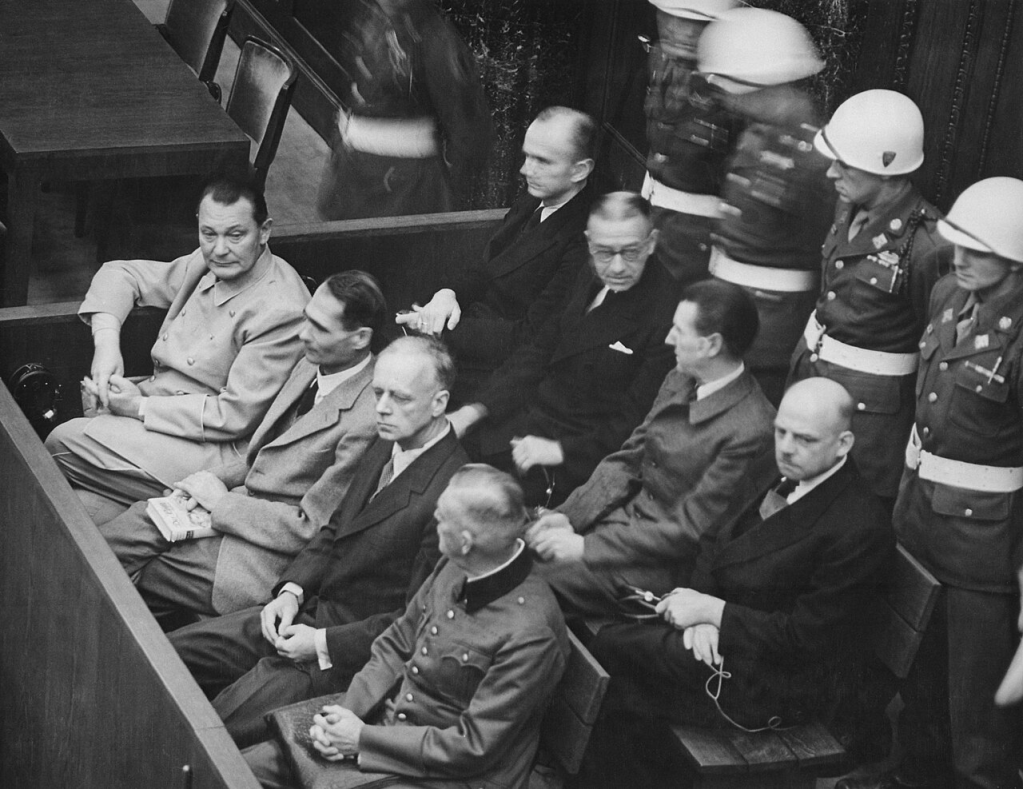
Nuremberg Tribunal (1946)
Events took a different course. After finding the courage to resist evil, humanity also found the honesty to look into its own soul and, no matter how painful the process, to condemn all forms of collaboration. Yes, it was easier for those people; they had won and had something to be proud of. They had a moral right to judge those who capitulated. The Nuremberg Trials were not beyond criticism but their achievement was immense: they restored absolute norms for human behaviour by reminding a shattered world of the basic principle of our Christian civilization, that we have freedom of choice and, consequently, bear personal responsibility for how we exercise it. At a time of collective insanity and indiscriminate terror, they affirmed the simple truth, known since Biblical times but lost to sight in the bloody tribulations of the 20th century: neither the opinion of the majority, nor an order from a superior, nor a threat to one’s own life, releases us from personal responsibility.
***
What happened after the Soviet regime disappeared was in direct contrast to Nuremberg. The world has nothing of which it can be proud. It found neither the courage to withstand evil nor the honesty to admit its failure.
Our misfortune was that we did not win: Communism collapsed of its own accord, despite universal efforts to rescue it. This, if you like, was the greatest secret contained by the Central Committee documents lying on my desk. Was it really any surprise, then, that nobody wanted to publish them? A readiness to examine everyday accidents was accompanied by a refusal to investigate the greatest catastrophe of our time. For in our heart of hearts we already knew the conclusions such an investigation would yield, as any sane person knows full well when he has colluded with evil. The intellect might provide specious, logical and outwardly acceptable excuses, but the voice of conscience whispered: our fall began from the moment we agreed to a “peaceful coexistence” with evil.
This manifested itself when Stalin was acclaimed, before Nuremberg, as a great defender of democracy; when the Soviet Union sat among the prosecutors, and not the accused, at the Nuremburg Tribunal; and, in the late 1950s and early 1960s, when Khrushchev’s term “Peaceful Coexistence” entered the political lexicon. Each time a price was paid, as in any pact with the devil, by shedding the blood of the innocent: the blood of the Cossacks handed over to Stalin, the blood of East European nations betrayed at Yalta, the blood of the Hungarians, Cubans, Cambodians…
The final pact with evil was concluded in our own day, however, when Brezhnev was in power. It is useless to plead ignorance and claim we did not know how to resist. When in the West we refused to maintain “good neighbourly relations” with evil, rejecting it as unacceptable, we knew perfectly well what to do. If racism, for example, was declared such an evil, nobody sought to combat it by increasing trade or cultural cooperation with South Africa. On the contrary, a boycott was deemed the only adequate response, and it was enforced so strictly that not a single sportsman could tour South Africa without destroying his career. Yet it was considered acceptable to attend the 1980 Olympic Games in Moscow at the height of mass arrests in the USSR and Soviet aggression in Afghanistan. I should like to see what would have happened to anyone who suggested holding the Olympic Games in Johannesburg or Pretoria…
As racism was proclaimed an evil, moreover, not a single newspaper would publish anything by supporters of apartheid, notwithstanding all the proud declarations about freedom of the press. Racist groups were subject to open harassment by the police, and anyone suspected of racist sympathies would be unable to make a career in any field. Yet there were no outcries about “witch-hunts.” Surrounded by a cordon sanitaire of intolerance, racism was unable to spread further or become an accepted fact of life. Communism, however, was made respectable and accepted. It was improper to fight against it, “broadening contacts” was the recommended approach. So, it grew and flourished, engulfing half the world. This was painfully obvious. Was there a single person on earth who did not understand this?
Western politicians who encouraged the growth of economic relations with the Soviet bloc realized that they were breeding Hammers, Maxwells and Bobolases. When they welcomed delegations of Soviet leaders and “people’s deputies” they knew these were not statesmen and parliamentarians, but cut-throats and their puppets. When they signed agreements on “cultural exchanges”, “scientific cooperation” and “human contacts” they were buttressing the power of the KGB over society, for it would be the KGB choosing “the right candidates” for such contacts.
Everyone understood. They knew or guessed the truth but they did not want to discuss it because their aim was not to combat Communism but to survive. To survive at any cost, sacrificing conscience, reason, innocent people and entire countries in the process. In the final instance, they were sacrificing their own future, because the logic of survival has its roots in the attitude of the concentration camp inmate: you die today, I’ll die tomorrow.
The world was immeasurably lucky that “tomorrow” did not come. The monster died before it reached the world’s jugular. Communism collapsed and the Iron Curtain fell, exposing a vista of poverty and devastation. The crimes of the Soviet regime could no longer be swept under the rug, “coexistence” could be seen for what it really was. The myth was dispelled, fear took flight, and “coexistence” stood exposed as no more than moral capitulation to evil and criminal complicity. What could we say in justification to future generations? That we had to survive? But the Germans also needed to survive after the First World War, so they followed Hitler. Why, then, were they judged at Nuremberg? Because they had sacrificed Jews, Gypsies and Slavs – just as we sacrificed dozens of other nations, to secure our own survival. Just like the Germans in 1945, we were reluctant to scrutinize ourselves, we did not want to “dig up the past” or risk a public row. Like them, we closed our eyes and reiterated that we “knew nothing” and “took no interest in politics”. And, had we known, “what could we have done?”
But was it, really, just a German phenomenon? I can well remember the perplexity of my parents’ generation when the crimes of “the Cult of Personality”, of Stalin, were aired for the first time. They knew nothing about it, of course. And if they knew just a little, they believed that it had all been for the good of mankind. Confronted with indisputable facts (it was hardly possible not to notice the slaughter of 60 million people), they suggested, as the ultimate justification for their behaviour, that they had been scared. Scared when they marched under red banners and sang revolutionary songs; scared when they raised their hands at mass meetings in support of the Party’s policy; scared when they were rewarded, decorated, and promoted for doing good work. Just like the three lucky monkeys who see no evil, hear no evil, and speak no evil, they “believed” in Communism, because they “didn’t know” about its crimes, and they didn’t know because they were afraid to open their eyes. One must survive somehow, after all…
xxx
As a youth in post-Stalin Moscow I remember watching a film in which every frame, every word, was like a breath of fresh air. It was about a wise old judge who had come to Germany from small-town America and was trying to understand how seemingly normal, honest and hard-working people with an old and established culture could have sunk to the horrors of Auschwitz. I can recall the closing scenes as if I watched them only yesterday. I can hear the words of the judge, pronouncing sentence:
“The real complaining party at the bar in this courtroom is civilization. But this tribunal does say that the men in the dock are responsible for their actions …. The principle of criminal law in every civilized society is the same: any person who sways another to commit murder; any person who furnishes a lethal weapon for the purpose of the crime; any person who is an accessory to that crime: is guilty.”
Then, as now, it was not easy to say these simple words. Political interests, the very same need to survive, and the moral blindness of Man which prevents him from seeing his own part in a crime against humanity. What could he do, a lone individual? He ignored the voice of his conscience, like everyone else, but he could not possibly have known that this would lead to mountains of corpses and torrents of blood. “Why bother?”
“I’ll make you a wager. In five years time those you have sentenced will be released,” says the smart young defence lawyer.
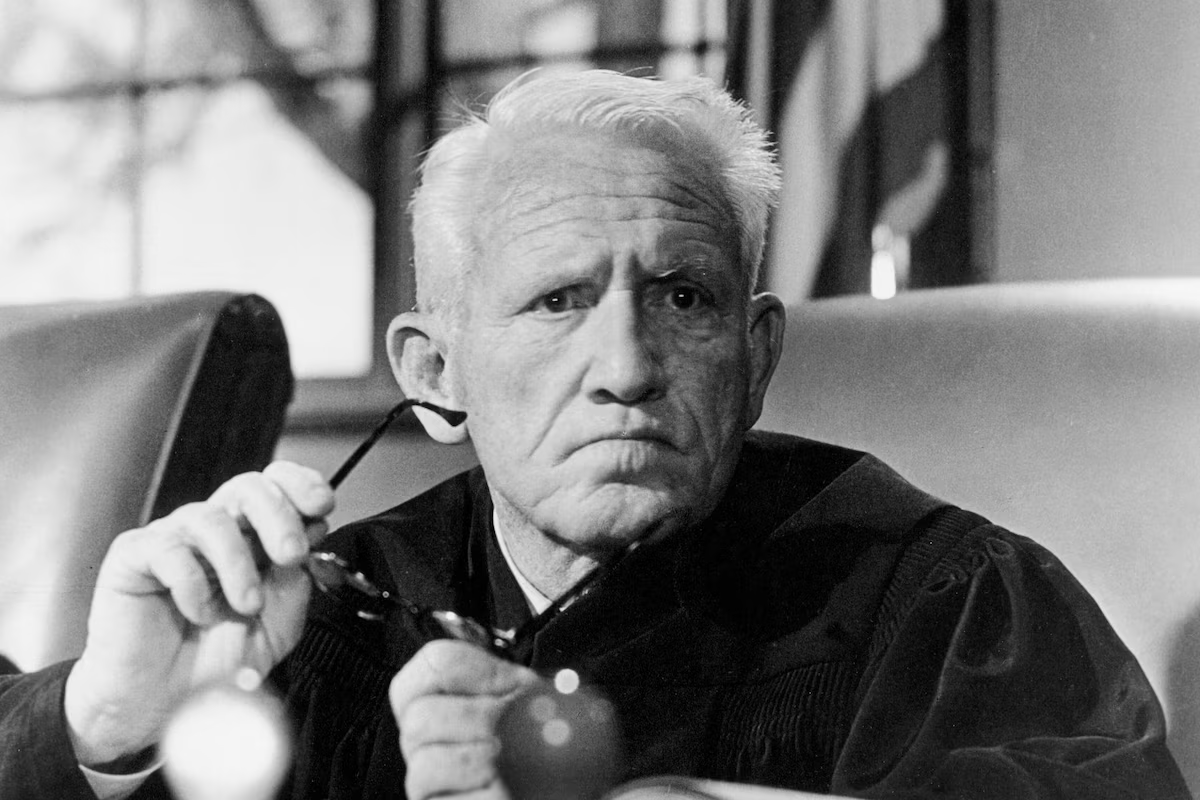
Judge Haywood (Spencer Tracy)
“What you suggest may very well happen,” responds the wise judge. “It is logical, in view of the times in which we live. But to be logical is not to be right. And nothing on God’s earth could ever make it right.”
A lifetime has passed, but I have not forgotten this film despite long years of imprisonment and exile, cruelty and bitter disappointments. Sometimes I think that I would not have endured otherwise, for logic was always against us. But I remembered: Nothing on God’s earth can ever make it right. The film was called Judgement at Nuremberg (1961).
Chapter 2: “Night of the Looters” (part one) …
(Original translation by Alyona Kojevnikov; edited by John Crowfoot)
========================================
SOURCES
Chapter 1: “A Phoney War”
In this text links are provided to online translations of many documents and, in 14 cases, to the pdf of the original untranslated document in Russian.
An asterisk (*) and bold type indicate that a file in the Bukovsky Archives has been fully or partially translated into English. The letters NA mean that the Russian originals (R) of 11 documents cited in this chapter are not available online: links are provided to over seventy other notes in Chapter One.
(The archival description of the various sources mentioned in the text, indicating their size and contents, and providing access to the great majority of original Russian texts, was added to the notes in the book version. Compare A PHONEY WAR with its 83 notes.)
JC, May 2026
=============================

